DbcultAccessing Vault...
3.6/10
Senior Film Conservator
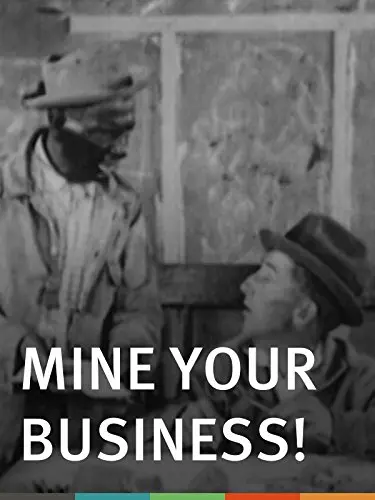
A definitive 3.6/10 rating for a film that redefined the boundaries of cult cinema. Mine Your Business! remains a cornerstone of transgressive art.
Is Mine Your Business! worth watching today? Short answer: Yes, but with significant caveats and a strong stomach for historical context. This film is a challenging, often uncomfortable, artifact that offers a peculiar lens into early 20th-century American cinema, particularly its deeply problematic racial depictions and nascent Western tropes.
It is absolutely for film historians, scholars of early American cinema, and viewers interested in the evolution of racial representation (or misrepresentation) on screen. It is decidedly NOT for casual viewers seeking pure entertainment, anyone easily offended by blackface minstrelsy, or those unprepared to critically engage with a film's historical baggage.
This film works because of its unexpected genre shift and its raw, unpolished energy typical of early features. It fails because its central premise is rooted in racist caricature and its narrative often feels disjointed. You should watch it if you are prepared to analyze its historical significance rather than simply enjoy it as a piece of escapism.
At its core, Mine Your Business! presents a premise that is, by modern standards, deeply unsettling and utterly indefensible: a white man adopts blackface to secure employment. This isn't merely a plot point; it's the entire foundation upon which the film's initial act is built, a stark reminder of the pervasive and unchallenged racism embedded within early American popular culture.
The film doesn't attempt to critique this act; it presents it as a narrative device, a means to an end for its protagonist. This uncritical portrayal is precisely why the film demands a rigorous historical lens. It forces viewers to confront the uncomfortable truth of minstrelsy's ubiquity and its role in shaping public perception.
What's perhaps most surprising, or perhaps jarring, is the film's abrupt pivot. From the racially charged urban setting, the narrative jettisons its protagonist into the rugged, untamed American West. This genre shift is so sudden it feels less like an organic development and more like two disparate film ideas awkwardly spliced together.
The transition from a shoeshine operating under a racist disguise to a prospector embroiled with claim-jumpers is a narrative leap of faith that few contemporary films would dare to attempt. It speaks to a certain narrative freedom, or perhaps a lack of narrative cohesion, prevalent in early cinema.
The film's title itself, Mine Your Business!, cleverly plays on both the gold mining aspect and the protagonist's initial venture, but it's a superficial connection. The 'business' of the title feels far more invested in the western adventure than the ethical minefield of its opening.
Evaluating the performances in Mine Your Business! requires separating the craft from the deeply offensive content. George Tyron, as the lead, carries the burden of the blackface portrayal. His performance, by design, leans into the exaggerated, often grotesque, caricatures typical of minstrel shows of the era.
It's not acting in the sense we understand it today, but rather an embodiment of a harmful stereotype. To call it 'convincing' would be to endorse the caricature itself. Instead, it's a stark document of how such performances were constructed and received by audiences.
Once the narrative shifts to the West, Tyron's performance likely sheds the blackface (though the plot description doesn't explicitly state this, it's implied by the change in context). Here, he transitions into a more traditional Western hero archetype, albeit one whose initial actions cast a long, problematic shadow.
The supporting cast, including names like Fred Parker, Teddy Reavis, Bob Harrington, James Sheridan, Joe Doakes, and Jack Grey, are largely functional. Their roles are subservient to the unfolding Western drama, providing the necessary foils and allies for the gold mine conflicts. There's little room for nuanced character development when the plot is driven by such broad strokes.
One could argue that the most impactful 'performance' is the film's very existence, showcasing the cultural landscape from which it emerged. The actors are less individuals and more conduits for the prevailing social attitudes, particularly in the initial sequences.
The film's most striking failure isn't its blackface, but its inability to weave that premise into a compelling narrative beyond mere shock value. The Western elements are surprisingly pedestrian, almost as if the filmmakers ran out of ideas after the initial disguise.
John Tansey's direction in Mine Your Business! is characteristic of early feature filmmaking – functional, direct, and often lacking the sophisticated visual language that would emerge later in the decade. The camera work is likely static, favoring wide shots that capture the entire scene, reflecting the theatrical staging common at the time.
The visual contrast between the two distinct settings is perhaps the most notable aspect of the cinematography. The urban environment, with its implied grime and narrow confines, would have been captured with a certain utilitarian realism. The Western landscapes, conversely, would have offered opportunities for grander, more expansive vistas, even if crudely shot.
Consider the shift: the cramped, potentially dingy setting of a city shoeshine stand, likely shot indoors or on a studio backlot, gives way to the vast, sun-drenched (or dust-blown) expanses of the frontier. This visual dichotomy, even if unintentional, provides a certain raw appeal to the film's structure.
Editing would have been rudimentary, focusing on continuity rather than artistic cuts. The pacing, therefore, is heavily dictated by the scene length and the actors' movements within the frame. There's an unpolished energy to it, a sense of discovery that defines much of early cinema's output.
Tansey, as a director, seems more concerned with moving the plot forward than with stylistic flourishes. This pragmatic approach, while understandable for the era, results in a film that is more historically significant than aesthetically groundbreaking.
The pacing of Mine Your Business! is undoubtedly its most jarring structural element. The abrupt transition from urban drama to Western adventure creates a narrative schism that prevents the film from ever truly settling into a consistent rhythm. It feels less like an evolution and more like a hard cut from one story to another.
The initial sequences, centered on the protagonist's disguise and city life, likely unfold with a certain deliberate exposition, establishing the character's desperate circumstances. This then gives way to the faster-paced, more action-oriented tropes of the Western genre, with its conflicts over gold and land.
The tone is equally conflicted. The inherent 'comedy' or 'drama' derived from the blackface disguise in its original context would have been perceived very differently then than now. It's a tone steeped in minstrelsy, which is impossible to reconcile with modern sensibilities.
Once in the West, the tone presumably shifts to one of adventure and peril, typical of frontier narratives. The film attempts to juggle social commentary (however flawed) with straightforward genre thrills, and it largely fails to integrate these disparate elements into a cohesive whole.
The narrative feels like two short films awkwardly stitched together. The first, a problematic social commentary; the second, a generic B-movie Western. This disjointedness is a significant flaw, undermining any potential thematic resonance.
To fully contextualize Mine Your Business!, it's helpful to compare it to other films of its era that engaged with similar, often problematic, themes. The trope of racial disguise or 'passing' was not unique. Films like His Darker Self (1924), for instance, also explored the controversial narrative of a white character adopting blackface, often for comedic or dramatic effect.
These films reflect a disturbing trend in early cinema, where blackface minstrelsy, a deeply racist form of entertainment, was normalized and widely accepted. Mine Your Business! is therefore not an anomaly but rather a product of its time, part of a larger cinematic conversation that we now rightly view with repulsion.
What makes Mine Your Business! perhaps more unusual is its abrupt abandonment of this initial premise for a completely different genre. While His Darker Self might have leaned into the social implications (however misguidedly) of its premise, Mine Your Business! seems to use it as a mere springboard before diving into a more conventional Western.
This suggests a certain narrative opportunism, using a provocative (for the time) setup to capture attention before pivoting to a more commercially viable genre. It's an unconventional observation: the film’s actual plot, apart from the disguise, is quite generic, a straightforward tale of greed and frontier justice.
The film's legacy, therefore, is primarily as a historical document. It offers a window into the prevailing attitudes, narrative structures, and technical limitations of early 20th-century cinema. It's a reminder of how far both filmmaking and societal understanding have (hopefully) come.
Yes, but only for very specific audiences. It is not for casual entertainment. It is for those interested in the history of cinema. It is for scholars studying racial representation. It provides a raw, unfiltered look at a deeply problematic past. Be prepared for discomfort. Approach it as an anthropological study, not a movie night.
It's a historical document. Not entertainment. Mine Your Business! is a film that demands to be studied, not enjoyed. Its initial premise is a painful reminder of a racist past, and its subsequent narrative shift, while peculiar, doesn't elevate it beyond its problematic foundations. It exists as a stark artifact, revealing more about the culture that produced it than any inherent cinematic merit.
IMDb —
1920
Community
Log in to comment.