DbcultAccessing Vault...
Cult Review
Senior Film Conservator
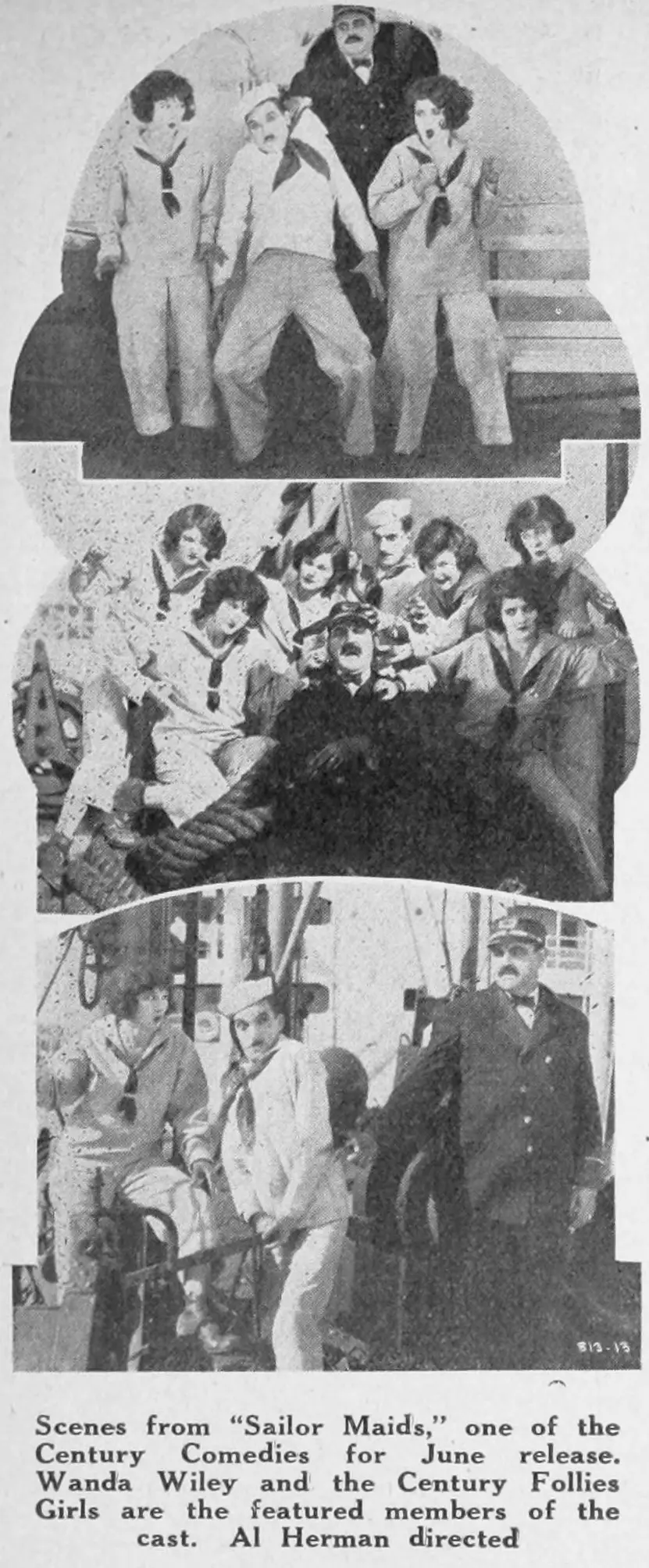
The silent era of cinema often operated on a frequency of pure, unadulterated motion, and Sailor Maids is a prime specimen of this kinetic philosophy. Directed by the prolific Albert Herman, the film is less of a structured narrative and more of a rhythmic explosion of physical comedy and ensemble coordination. In the grand tradition of the 'stranded troupe' subgenre, we are introduced to a manager whose ambition far outweighs his bankroll. The Century Follies Girls, a collective of performers whose very presence on screen suggests a bygone era of synchronized spectacle, find themselves as the collateral damage of a failed tour. This premise, while simple, serves as a fertile ground for Herman to explore the chaotic intersection of poverty and performance.
Joe Bonner’s portrayal of the manager is a masterclass in the 'nervous energy' style of silent acting. Unlike the stoic resilience found in The West~Bound Limited, Bonner’s performance is one of constant, vibrating anxiety. Every gesture he makes is a gamble against time and the inevitable arrival of the bill collector. When we compare this to the moral gravity of The Right to Happiness, we see a stark contrast: where one film seeks to elevate the human spirit through social reform, Sailor Maids seeks to survive the next twenty minutes of screen time through sheer audacity.
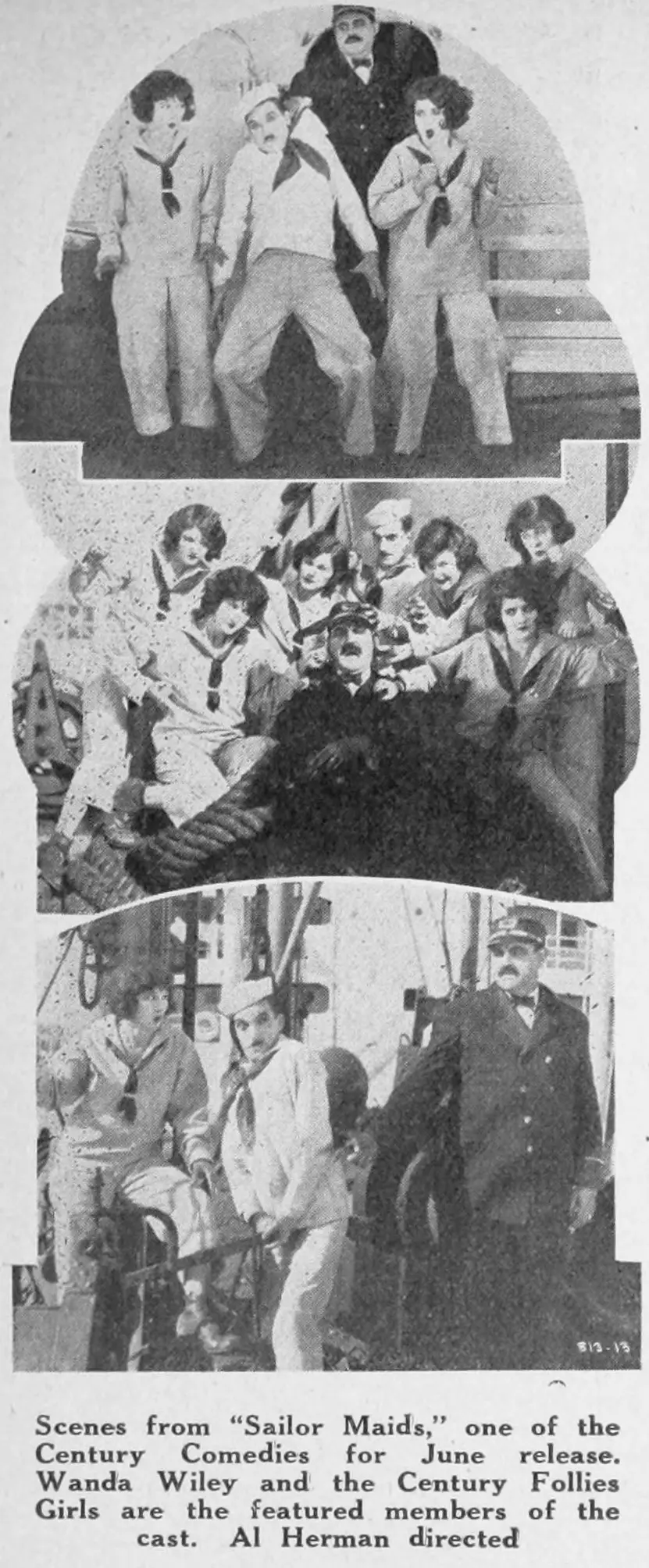
The troupe itself, the Century Follies Girls, functions as a singular, multi-limbed organism. Their movements across the ship’s deck are not merely for the sake of the plot but are choreographed to maximize the visual impact of the black-and-white frame. There is a specific scene involving a chaotic scramble for cover that rivals the tension found in The Bottom of the Well, though here the stakes are played for laughs rather than existential dread. The girls represent a specific type of cinematic labor—the decorative yet essential ensemble that provides both the aesthetic appeal and the comedic weight of the film.
The maritime setting is not merely a backdrop; it is an antagonist in its own right. The ship becomes a labyrinth of narrow corridors, steep ladders, and precarious railings. Herman utilizes the verticality of the vessel to create a sense of constant peril. In many ways, the logistical nightmare of getting the girls home without paying fares mirrors the high-stakes deception found in The Devil's Double, albeit with a significantly lighter tone. The manager’s attempts to hide his troupe are reminiscent of the domestic subterfuge in Ma Hoggan's New Boarder, where the comedy arises from the proximity of the 'hidden' to the 'seeker'.
William Irving’s contribution to the film cannot be overlooked. His comedic timing acts as the perfect foil to Bonner’s frantic lead. Irving possesses a certain gravitas of the absurd, a quality that anchors the more flighty elements of the Follies' performances. While Pop Tuttle's Movie Queen satirized the very industry these characters inhabit, Sailor Maids focuses on the granular, gritty reality of the 'show must go on' mentality, even when the 'show' is currently hiding in a lifeboat.
To understand the place of Sailor Maids in the cinematic canon, one must look at its contemporaries. It lacks the dark, brooding atmosphere of The Last Moment, yet it shares a similar obsession with the passage of time and the urgency of the present. Where Tainted Money deals with the corruption of wealth, Herman’s film deals with the absolute absence of it, and the creativity that such a void necessitates. There is a raw, unpolished energy here that is often smoothed over in more prestigious productions like Madeleine or the aristocratic dramas of Der Schloßherr von Hohenstein.
Even the more obscure Scandinavian efforts like Strandhugg på Kavringen offer a point of comparison in how they handle coastal and maritime life. However, Sailor Maids is uniquely American in its relentless optimism despite the dire circumstances. It is a film that refuses to sink, much like the manager’s pride. The visual storytelling is so robust that the lack of dialogue feels like a stylistic choice rather than a technological limitation. The expressions of the Century Follies Girls—ranging from indignant pouts to wide-eyed terror—convey more than a thousand lines of dialogue ever could.
Albert Herman was a director who understood the mechanics of the gag. In Sailor Maids, he employs a series of long shots that allow the audience to appreciate the full scale of the ensemble's movements, interspersed with tight close-ups that emphasize the individual panic of the characters. This rhythmic editing is what keeps the film from feeling like a mere stage play. It is inherently cinematic. We see echoes of this visual dynamism in The Girl with the Champagne Eyes, though Herman trades that film’s mystery for a more direct, percussive form of storytelling.
The lighting, often a challenge in maritime shoots of this era, is surprisingly effective. The sun-drenched decks provide a high-contrast environment that makes the black-and-white costumes of the Follies Girls pop against the sea. It creates a sense of hyper-reality, where the stakes are high but the world is vibrant. This is a far cry from the somber, shadowed interiors of The Tenth Case or the rugged, outdoor realism of The Seekers. Herman’s world is one of artifice and energy, and he embraces it fully.
Ultimately, Sailor Maids is a testament to the resilience of the performer. It captures a moment in time when the boundaries between high art and low-brow entertainment were delightfully blurred. The manager, for all his flaws and his penchant for fare-dodging, is a surrogate for the filmmaker himself—trying to keep a large, expensive production afloat with nothing but wit and a bit of luck. To watch the Century Follies Girls navigate the perils of the sea is to watch the very spirit of 1920s cinema: bold, slightly ridiculous, and utterly captivating. It stands alongside A Regiment of Two as a cornerstone of ensemble-driven comedy, proving that sometimes, the best way to get home is to dance your way there, even if you haven't paid for the ticket.
The legacy of Albert Herman remains a fascinating study in the efficiency of silent storytelling. Sailor Maids survives not just as a comedy, but as a vibrant snapshot of the cultural obsession with the 'Follies' phenomenon, repackaged for a world that was rapidly moving toward the sound era, yet still found immense joy in the silent, synchronized chaos of a troupe at sea.

IMDb 6.7
1929
Community
Log in to comment.