DbcultAccessing Vault...
6.7/10
Senior Film Conservator
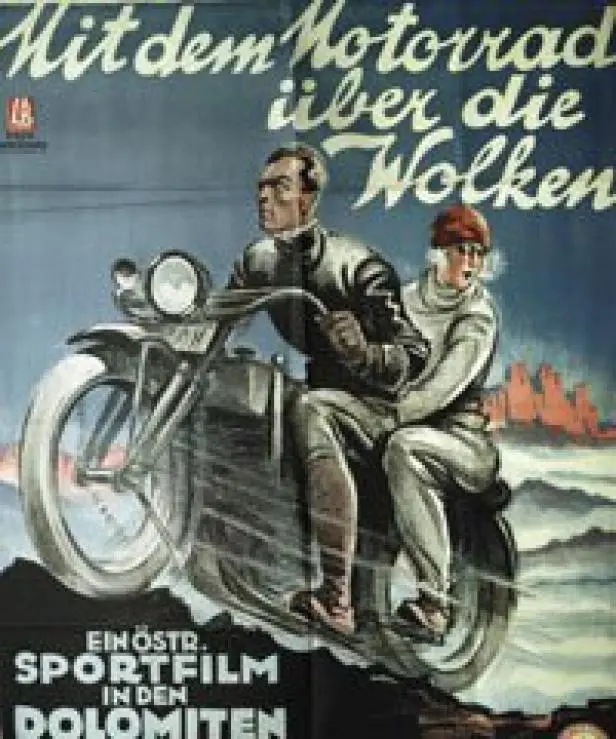
A definitive 6.7/10 rating for a film that redefined the boundaries of cult cinema. Mit dem Motorrad über die Wolken remains a cornerstone of transgressive art.
Is this vintage alpine odyssey worth your time today? Short answer: Yes, but only if you value historical grit and the raw documentation of human daring over modern cinematic polish.
This film is specifically for historians of extreme sports, enthusiasts of early silent-era documentary filmmaking, and anyone who finds the mechanical vulnerability of 1920s technology fascinating. It is absolutely not for those seeking a high-octane, fast-edited action flick or a narrative-driven drama with character arcs.
This film works because it captures a level of genuine, unsimulated danger that modern digital effects simply cannot replicate. Every slip of a tire on a loose Dolomite scree slope feels like a brush with mortality.
This film fails because its pacing is entirely beholden to the physical movement of the expedition, leading to long stretches of repetitive landscape shots that may test the patience of a contemporary viewer.
You should watch it if you want to see the literal blueprint for every Red Bull-sponsored mountain bike video ever made, stripped of the safety nets and high-definition gloss.
Mit dem Motorrad über die Wolken is a fascinating relic. Directed by Lothar Rübelt, a man who would later become a titan of sports photography, the film functions as a bridge between the stiff travelogues of the early 1900s and the dynamic action cinema of the mid-century. Unlike Titanenkampf, which leans into the epic scale of the mountains, Rübelt’s work is obsessed with the tactile reality of the machine versus the terrain.
The journey begins with a deceptive calmness in Innsbruck. The early scenes in Melk provide a false sense of security, showing the motorcycles as mere tools of transportation. However, as the troupe approaches Cortina del Pezzo, the tone shifts. The camera begins to emphasize the narrowness of the paths. In one specific sequence near the Three Zinnen (Tre Cime di Lavaredo), the frame captures the sheer drop-off just inches from the motorcycle tires. There is no green screen. There are no safety cables. It is just iron, rubber, and a very long fall.
The cinematography is surprisingly sophisticated for 1926. While many documentaries of the era remained static, Rübelt and his crew frequently found angles that emphasized the verticality of the climb. When they reach the Tofane at over 10,000 feet, the grainy black-and-white footage takes on a ghostly, ethereal quality. The title isn't a metaphor—they are literally above the clouds, and the primitive film stock makes the peaks look like islands in a white sea.
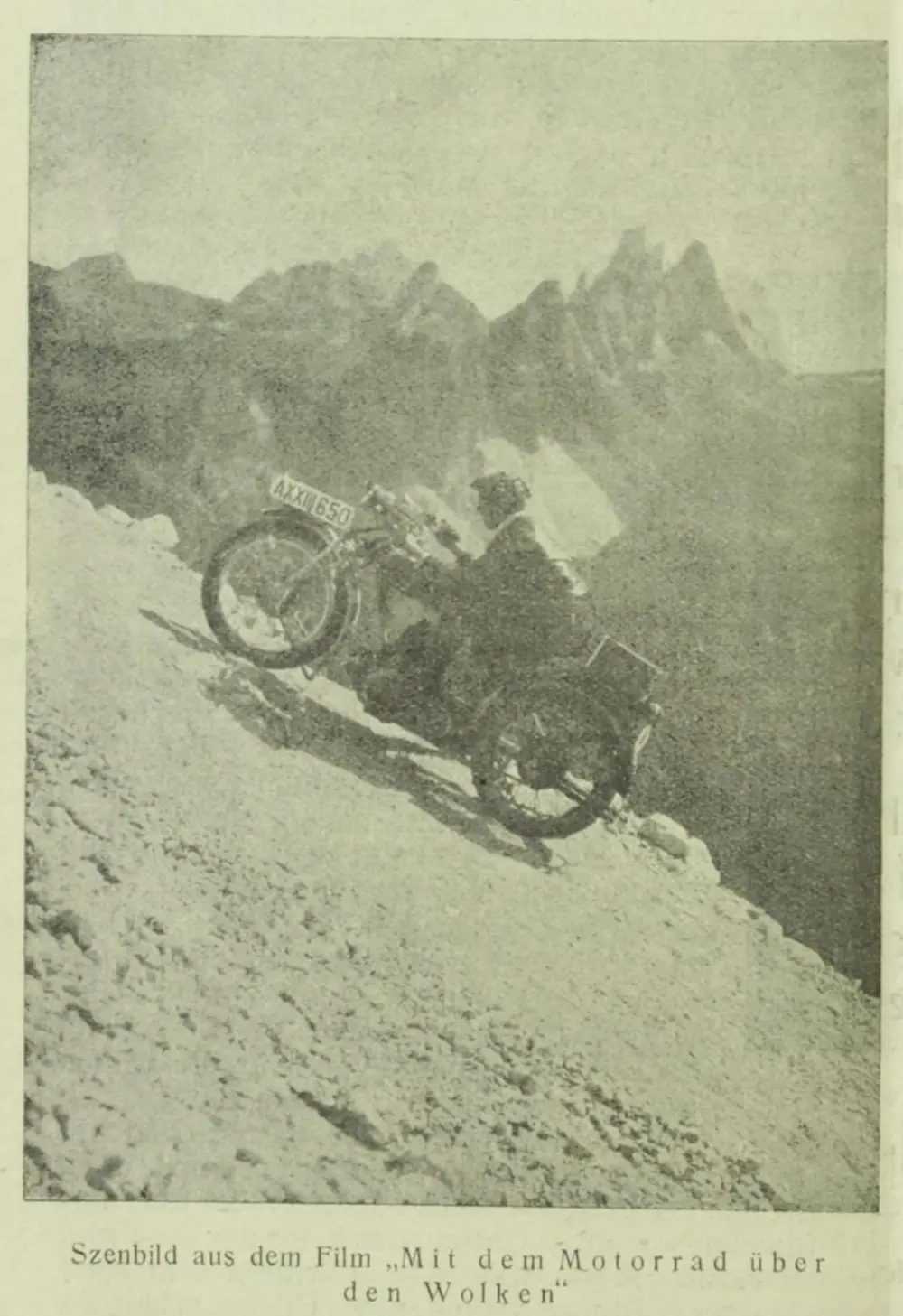
Yes, it is worth watching for its historical significance and the sheer audacity of its production. It provides a rare look at the Dolomites before they were a highly developed tourist hub. Watching these men manhandle heavy, underpowered bikes up paths that were barely meant for mules is a masterclass in human persistence. It is a visceral experience that transcends its silent-era limitations.
One cannot discuss this film without acknowledging the physical labor involved. In the 1920s, a motorcycle was a temperamental beast of leather and hot oil. The film lingers on the maintenance and the struggle to keep these machines running in the thin mountain air. This focus on the "process" reminds me of the grounded realism in Riding for a King, though Rübelt’s stakes are significantly higher because they are real.
The editing is surprisingly rhythmic. While it lacks the frantic energy of something like While London Sleeps, it uses the natural progression of the climb to build tension. Every mile higher feels heavier. The grain of the film increases with the altitude, or perhaps that is just the psychological effect of watching the air get thinner. It works. But it’s flawed. The middle section, particularly the transition through the lower valleys, drags significantly as the film struggles to find a narrative hook beyond "we are moving forward."
Lothar Rübelt wasn't just a director; he was a participant. This gives the film an "insider" feel. He isn't looking at the riders from a distance; he is one of them. This perspective is what separates this from a film like Paris, which observes its subject with a detached, artistic eye. Rübelt is in the dirt. He is breathing the exhaust. This creates a sense of intimacy that is rare for 1920s non-fiction.
One surprising observation: the film is strangely quiet even in its silence. You can almost hear the rhythmic chugging of the engines and the crunch of gravel. It’s a sensory experience that doesn't need a synchronized soundtrack to convey the isolation of the peaks. The absence of sound actually enhances the scale of the Dolomites. It makes the mountains feel indifferent to the men climbing them.
When compared to other films of the era, such as The Man Who Wouldn't Tell or even the domestic drama of The Neglected Wife, Mit dem Motorrad über die Wolken feels modern in its lack of artifice. It doesn't care about social norms or melodramatic twists. It only cares about the mountain. This singular focus is its greatest strength and its most significant barrier to entry.
The film’s influence can be seen in the later "mountain film" genre that became popular in Germany and Austria. However, Rübelt avoids the romanticism often found in those works. He doesn't treat the mountain as a mystical deity; he treats it as a physical obstacle. This pragmatism is refreshing. It feels honest in a way that many silent films do not. There is no overacting here—just the strained faces of men trying not to die.
"The film is a testament to the era when 'safety first' wasn't a concept, and the only way to see the view from the top was to risk everything on two wheels and a prayer."
It is also worth noting the sheer logistics of the shoot. Carrying 1926 camera equipment up to 10,000 feet on motorcycles is a feat in itself. The cinematography isn't just about what is on screen, but the Herculean effort required to get the camera there. This meta-narrative of the film's own production adds a layer of respect for the creators that modern CGI-heavy films like Flygande holländaren lack.
Mit dem Motorrad über die Wolken is a grueling, magnificent, and occasionally tedious journey into the clouds. It is a film that demands your attention and punishes your impatience. While it lacks the narrative complexity of a contemporary documentary, its raw power is undeniable. It is a piece of history that breathes, coughs exhaust, and stares down the abyss. If you have any interest in the roots of adventure cinema, it is an essential, if rocky, climb.

IMDb —
1932
Community
Log in to comment.