DbcultAccessing Vault...
Cult Review
Senior Film Conservator
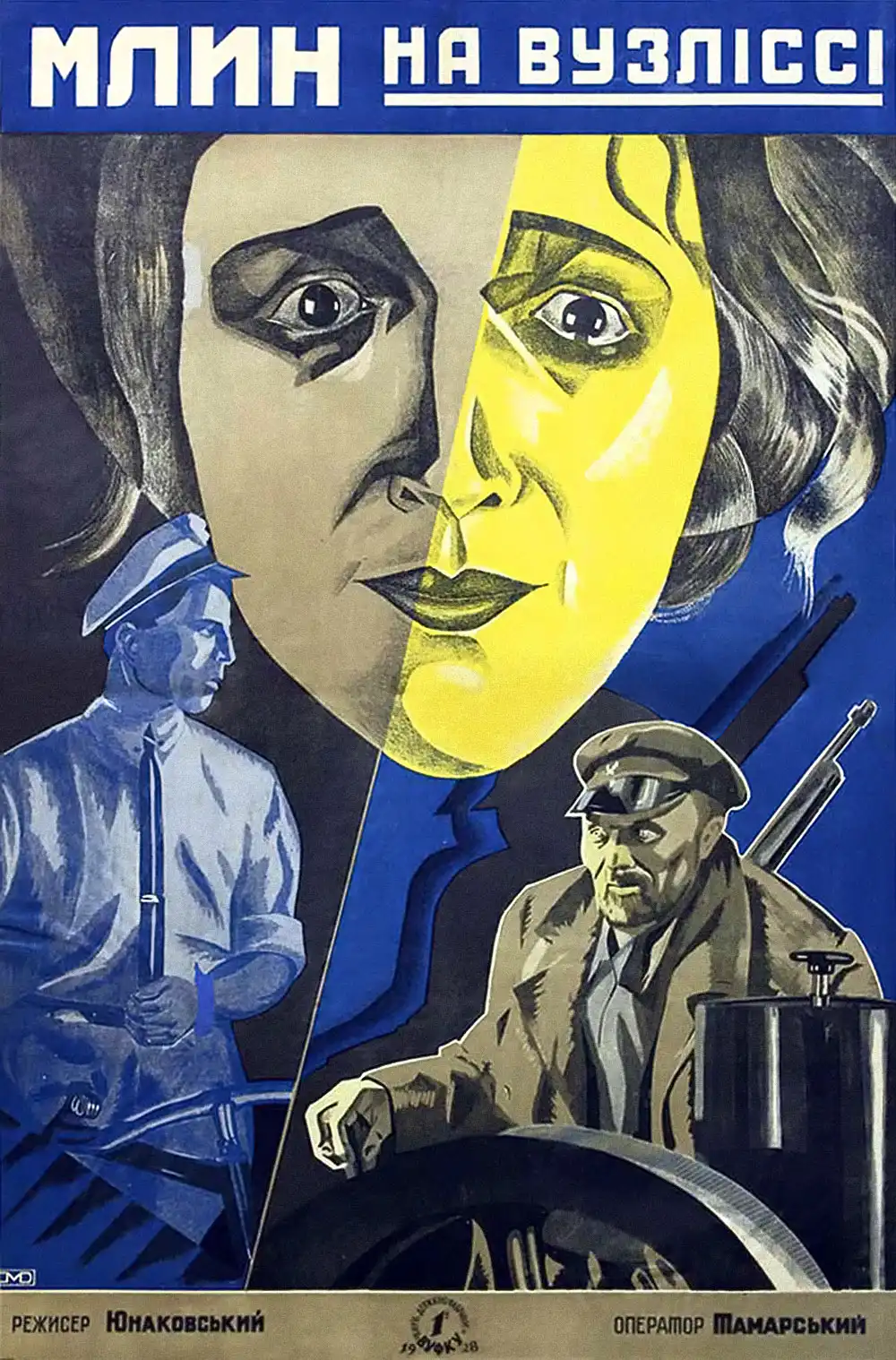
You should probably only watch this if you have a weirdly specific interest in 1920s history or you just really like silent movies. Most people will find it incredibly dry and probably turn it off after ten minutes.
But if you stick with it, there is something actually pretty gripping about the way it looks. It is about a work crew trying to run a mill while a private trader tries to mess everything up for a profit.
This was filmed during the NEP years, which was a strange time when the Soviet government let people trade stuff privately for a bit. You can feel that tension in every frame.
The first thing I noticed was the dust. There is so much flour dust in the air in some scenes that you almost want to sneeze while watching.
It gives the whole movie this hazy, dreamlike quality that probably wasn't even on purpose. It just feels like a very dirty, hardworking place.
The private trader is played by an actor who has this incredibly punchable face. He has this way of looking at the grain like he's counting every single cent it’s worth.
I kept thinking about The Sawmill while watching this, mostly because of the industrial setting. But this is way more serious and way less about physical comedy.
There is a scene where a group of workers are just standing around talking, and the camera lingers on their hands. Their hands are rough and covered in grime.
It’s a small detail, but it made me realize how much modern movies forget about how people’s hands actually look. Ivan Sedov has this very intense presence that keeps you watching even when the plot slows down to a crawl.
The movie gets a bit confusing around the middle because the intertitles are sometimes a bit vague. Or maybe I just wasn't paying enough attention to the specific economic arguments they were having.
It’s mostly just people being very angry about who owns the mill. One guy has a hat that looks two sizes too small for his head, and I couldn't stop looking at it.
I wonder if they knew the hat looked funny back then. Probably not, they were too busy worrying about the class struggle.
The pacing is definitely clunky. It reminds me of Kastus Kalinovskiy in the way it tries to balance being a real story with being a message about the revolution.
Some of the shots of the mill machinery are actually quite beautiful. The way the wheels turn and the belts move has this rhythmic, hypnotic feel to it.
I found myself zoning out just watching the shadows of the gears on the wall. It’s much more artistic than you’d expect for a movie about grain logistics.
There is a woman in the cast, Anna Zarzhitskaya, who has these huge, expressive eyes. She doesn't have to say anything (obviously, it’s silent) to show exactly how tired she is of the men fighting.
The trader’s office is full of these little knick-knacks that feel out of place in a mill. It shows how much money he’s siphoning off from the actual workers.
I liked that the movie didn't try to make the workers look like perfect heroes. They look exhausted and a little bit desperate most of the time.
It feels a lot more grounded than something like Spartak, which is way more theatrical. This feels like it was shot in a place that actually smelled like damp wood and old sacks.
There is a moment where a bag of grain rips open, and the way the flour spills out feels like a huge tragedy. The camera stays on the spilled grain for a long time.
It makes you realize how precious everything was back then. Every little bit of food mattered.
The ending is a bit predictable if you’ve seen any Soviet films from this era. The workers eventually get their act together and the bad guy gets what’s coming to him.
But the journey there is strangely moody. It doesn't feel like a bright, happy propaganda piece.
It feels like a movie made by people who were actually cold and hungry while they were filming it. That’s probably why it still holds up if you have the patience for it.
I wouldn't say it’s as fun as The Man on the Box, which is much lighter. But it has a weight to it that stays with you after you turn it off.
The cinematography by Nikolai Topchiy is surprisingly sharp in some places. There are these close-ups of faces that look like they could have been taken yesterday if it weren't for the film grain.
I noticed a small scratch on the film during one of the most emotional scenes. It actually made the scene feel more authentic, like you were looking at a ghost of a world that doesn't exist anymore.
If you’re looking for a plot that moves fast, look elsewhere. This movie takes its sweet time getting anywhere.
But the atmosphere is thick. You can almost feel the dampness of the river near the mill.
It’s a raw piece of history. And sometimes that’s enough to make a movie worth your time on a slow Sunday afternoon. 📽️
Just make sure you have some coffee ready. It’s a bit of a slow burn, even for 1927.
IMDb —
1925
Community
Log in to comment.