DbcultAccessing Vault...
Cult Review
Senior Film Conservator
Should you invest your time in a silent French comedy from 1926? Short answer: yes, but only if you have the patience for the deliberate pacing of the era and an appetite for sharp, class-based irony. This film is a definitive experience for those who enjoy social satires that prioritize character friction over slapstick antics, though it may alienate viewers who require fast-moving plots or modern cinematic sensibilities.
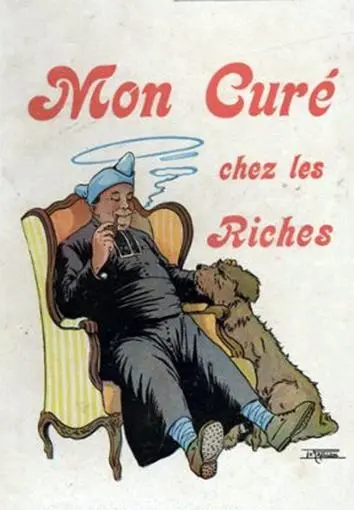
Mon curé chez les riches is a fascinating relic that remains surprisingly relevant in an age of performative wealth and social media posturing. While the medium is silent, the message is loud: the pursuit of status often comes at the cost of genuine human connection. If you are a fan of early 20th-century cinema or the works of Clément Vautel, this is an essential viewing. However, if you find silent-era theatricality grating, this won't be the film to change your mind.
1) This film works because the central performance of Jean-François Martial grounds the satire in a relatable, earthy humanity.
2) This film fails because the middle act indulges in repetitive social sequences that stall the narrative momentum.
3) You should watch it if you appreciate how cinema can be used as a blunt instrument to critique the vanity of the ruling class.
The brilliance of Mon curé chez les riches lies in its refusal to make Father Pellegrin a caricature of holiness. Jean-François Martial portrays the priest with a rugged, almost confrontational simplicity. He isn't there to save souls in the traditional sense; he is there to survive the dinner parties. One specific scene involving a lavish banquet highlights this perfectly. While the aristocrats discuss art and politics with a practiced, hollow grace, Pellegrin focuses on the quality of the wine and the directness of his speech. This contrast creates a tension that is both humorous and deeply uncomfortable.
This dynamic reminds me of the social posturing found in Lady Windermere's Fan, where the etiquette of the room acts as a prison for the characters' true intentions. In Mon curé chez les riches, however, the priest is the only person who hasn't realized he's supposed to be playing a role. His lack of social 'filter' becomes his greatest weapon, even if he uses it unintentionally. It is a blunt instrument. And it works.
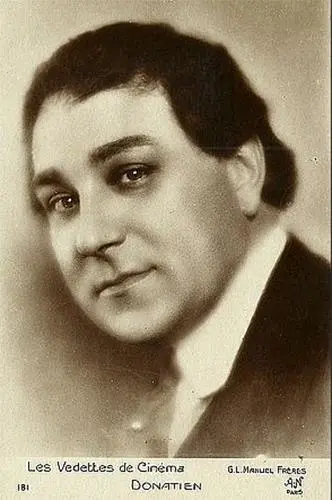
Donatien, who both directed and acted in the film, shows a keen eye for the visual language of class. The sets are intentionally over-designed, filled with the kind of cluttered opulence that screams 'new money.' This is not the refined elegance of old nobility; it is the aggressive display of wealth. The cinematography often utilizes medium shots to capture the priest's physical isolation within these crowded, expensive spaces. He looks like a smudge of soot on a silk sheet.
The film’s treatment of the rich is far more cynical than many of its contemporaries. While a film like A Certain Rich Man might offer a path to redemption through moral realization, Donatien suggests that the wealthy are often too insulated by their own vanity to truly change. This is a bold, debatable stance for a 1926 comedy, and it gives the film a darker edge than the title might suggest.
Jean-François Martial is the heartbeat of this production. His facial expressions avoid the wide-eyed exaggeration common in silent films of the time. Instead, he uses a subtle, weary skepticism that makes Pellegrin feel modern. When he looks at a piece of abstract art or listens to a convoluted social lie, his reaction is one of genuine, quiet confusion. It’s a performance rooted in physical presence rather than theatrical gesturing.
The supporting cast, including Pauline Carton and Habib Benglia, provide the necessary foil to Martial’s grounded energy. Benglia’s presence is particularly noteworthy for the era, offering a glimpse into the diverse reality of 1920s French society that is often erased in historical retrospectives. The interactions between these characters create a tapestry of social layers that feel lived-in, even when the plot occasionally veers into melodrama similar to Her Silent Sacrifice.
If there is a significant flaw to be found, it is in the film's pacing. At over two hours, the narrative begins to feel like a series of vignettes rather than a cohesive journey. The transition from the rural rectory to the Parisian mansion is handled with care, but once the priest is established in his new environment, the film repeats its central joke—the priest saying something 'inappropriate'—a few too many times. It’s a common issue in silent adaptations of popular novels, where the director feels obligated to include every sub-plot from the source material.

However, for those who appreciate the slow burn, these repetitive moments allow for a deeper immersion into the atmosphere of the period. You begin to feel the same claustrophobia that Pellegrin feels. You want to escape the silk-lined rooms and return to the mud and the wine of the countryside. This visceral reaction is a testament to Donatien’s ability to evoke mood through staging and lighting.
Yes, Mon curé chez les riches is worth watching if you have an interest in the evolution of social comedy. It provides a sharp, unvarnished look at class conflict in post-WWI France. It is a film that values character integrity over easy resolutions. If you can handle the silent format and the extended runtime, you will find a story that is as biting today as it was in 1926. It is not a masterpiece of technical innovation, but it is a masterpiece of observational wit.
Pros:
Cons:
Mon curé chez les riches is a bold, often hilarious, and occasionally exhausting exploration of what happens when sincerity meets superficiality. It isn't a perfect film, but its flaws are the result of its ambition. It tries to capture the entirety of a social movement within the confines of a comedy of manners. It succeeds more often than it fails. It’s flawed. But it works. For the patient viewer, it offers a window into a world that is long gone, yet feels uncomfortably familiar. This is cinema as a social mirror, and even after nearly a century, the reflection it shows is still remarkably clear.

IMDb 6.9
1919
Community
Log in to comment.