DbcultAccessing Vault...
Cult Review
Senior Film Conservator
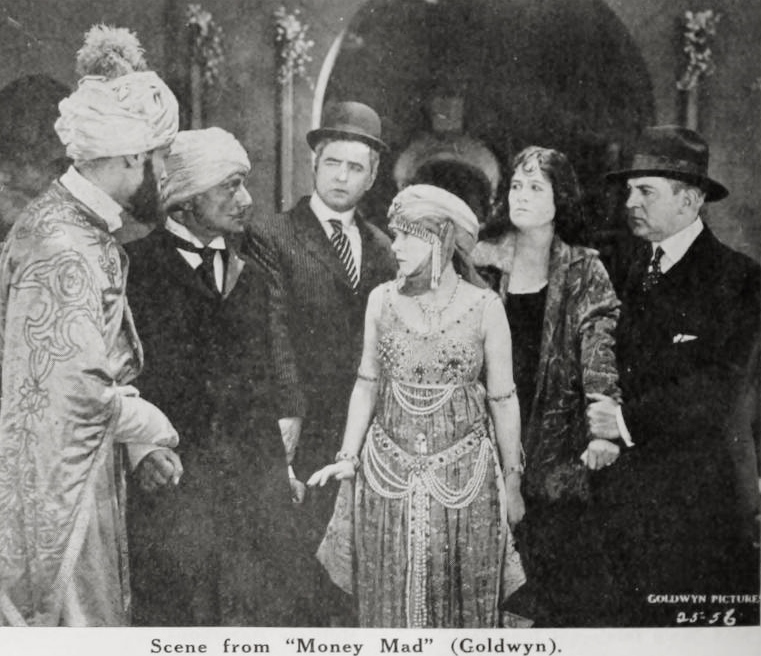
A necklace of nacreous globes, a child’s stolen future, and a drawing-room that reeks of bitter almonds—welcome to Money Mad, the 1920 silent so poisonous it could etch glass.
Lois Zellner’s screenplay arrives like a ransom note written in perfume and arsenic. Within the first intertitle we learn that Mrs. Dean—whose philanthropy once fluttered through charity galas—has been dispatched by her own executor and his turbaned manservant. The camera does not flinch; it lingers on a teacup trembling in porcelain death throes, then glides to the victim’s orphaned daughter, framed in a doorway shaped like a guillotine. In 1920, such bluntness felt like ice down the spine; a century later it still prickles because the film refuses to moralize. Evil here is not a monologue but a lifestyle choice, upholstered in velvet.
Martin Ross, essayed by Macey Harlam with pencil-thin moustache and eyes that seem to calculate compound interest in real time, never twirls the metaphorical moustache. Instead he polishes it, the way one might buff a trophy skull. His partnership with Sima—Alec B. Francis in dusky greasepaint that modern viewers will rightly wince at—operates on a currency of glances: one flick for “pour the draught,” two for “hold the pillow.” Theirs is a choreography of complicity, shot in chiaroscuro so dense you could slice it with the pearls they covet.
Those pearls, luminous as drowned stars, become the film’s true protagonist. Cinematographer Lucien Andriot (borrowing tricks from The Price of Pride) bathes them in a halo of cigarette smoke, turning every close-up into a fetish. When Ross locks them inside a safe whose door closes with a sighing click, the cut is so intimate it feels pornographic. We realize—long before Elsie does—that wealth can be a ghost that refuses exorcism.
Enter Fanette, portrayed by Corinne Barker with the languid cruelty of a cat who has already lapped the cream. Barker slinks through parlors like incense, her gowns cut so low the censors must have swallowed their own tongues. She is not a vamp in the Theda Bara mold; she is capitalism in a chemise, purring that everything has a price including, especially, affection. Together she and Ross liquidate the estate: carriage rides through Central Park at dawn, champagne fountains, roulette chips clacking like cicadas. Zellner’s script skips the montage; instead we get a single iris-in on a ledger whose red ink blossoms like roses. In that iris we grasp entire operas of decadence.
Time makes its jump-cut. Elsie, once a rag-doll child clutching a mourning veil, reappears as Mae Marsh—eyes wide, mouth set in a bow of determination that could split steel. Marsh, who survived The Jungle and Five Nights, underplays magnificently; she knows silence can be a scream. Discovering her patrimony is dust, she does not collapse—she strategizes. Her idea? Become someone else. Thus is born Madame Rama, Orientalist charlatan, turbaned and kohl-eyed, trading on the same xenophobic fantasies that once entrapped Sima. The irony is scalding: to reclaim her identity she must cloak it in caricature.
Rod La Rocque’s William Gavin, Jr. provides the film’s only moral North Star, yet even he is tainted: his father’s railroad fortune was built on graft. La Rocque, pre-Gentleman of the Night, swaggers with collegiate charm, but watch his hands—they tremble when he pockets the pearls, as though already feeling the weight of shackles. The love between him and Elsie is rendered in negative space: a shared glance during a police line-up, fingers brushing under a table while detectives bark questions. In a modern film they would occupy thirty pages of dialogue; here, one cutaway says “I would die for you” more eloquently than any soliloquy.
Madame Rama’s séance sequence is the film’s bravura centerpiece. Shot in triple exposure—faces superimposed over tarot cards over pearls—the scene feels like an opium dream leaking into nitrate. Elsie/Rama manipulates Ross and Fanette into a danse macabre of suspicion, each glare a dagger. When Ross finally corners Fanette demanding the jewels, Barker delivers a monologue of such sulphurous pride—“I wore them warmer than any woman ever could”—that the screen itself seems to blister. The stabbing happens off-camera; we see only a gloved hand, a spurt of red on pearls like pomegranate seeds on snow. Hitchcock never showed the knife? Zellner doesn’t even show the moment—just Fanette’s eyes reflecting the act, twin mirrors cracking.
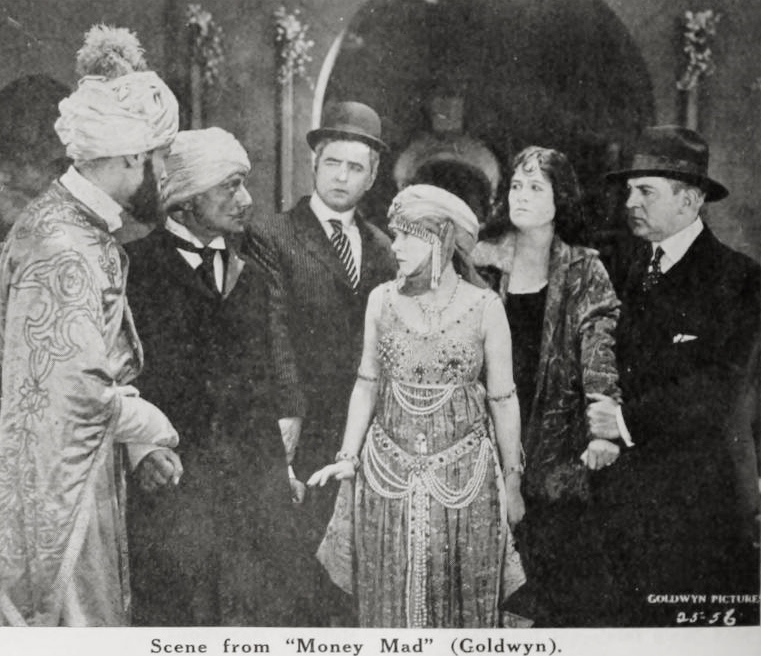
William’s arrest unfolds like a funeral march scored by tympani. The camera, positioned at knee-level, dwarfs him against courthouse columns, turning justice into a pantheon that devours the meek. Meanwhile, Elsie sheds the Rama disguise—turban unwrapping like bandages off a mummy—and engineers the final sting. She tricks Fanette into dictating a confession to a stenographer disguised as a spiritualist, the words “I killed him” echoing until they lose meaning and become pure sound. The detectives spring; Sima, ever loyal, tries to swallow the pearls and chokes on them—poetic, since greed has always been his trachea.
Restoration and Rhythm
Recent 4K restoration by Eye Filmmuseum reveals textures previously smothered: the glint of arsenic crystals dissolving like alpine snow; the satin bruise on Fanette’s cheek after Ross strikes her; the moment Mae Marsh’s pupils dilate when she first spots the pearls back in her palm. Composer Matti Bye’s new score—piano, viola, musical saw—keeps a brittle waltz tempo, occasionally dropping into cavernous silence so abrupt the audience gasps.
Comparative glances: Money Madness (1948) shares the title but none of the baroque fatalism; Indiscreet Corinne flirts with jewel theft yet flutters away into rom-com. Only Envy dares the same acidic aftertaste, though it lacks Zellner’s gendered revenge calculus.
Gender, Race, and Empire
Modern viewers will rightly bristle at Sima’s caricature—brownface, servile, mute complicity. Yet the film, perhaps accidentally, indicts the very Orientalism it trades on: Elsie’s success as Madame Rama proves the marketplace of the exotic is both lucrative and lethal. The picture is a Rorschach: you can read it as progressive subversion or as colonialist residue, depending on which frame you freeze.
The final shot—Elsie and William on a fog-wrapped deck, pearls buried in her coat like contraband heartbeats—refuses triumph. The lovers stare not at each other but at the horizon, as though wondering whether reclaiming stolen goods absolves the blood spent to retrieve them. The pearls gleam one last time, then the iris closes, not on a kiss but on a question mark.
Verdict: Money Mad is a venomous cameo of the Jazz Age, a jewel-box thriller whose hinges squeak of rot. It will leave you enthralled, repulsed, and—days later—checking your own throat for pearls you never swallowed.

IMDb —
1928
Community
Log in to comment.