DbcultAccessing Vault...
4/10
Senior Film Conservator
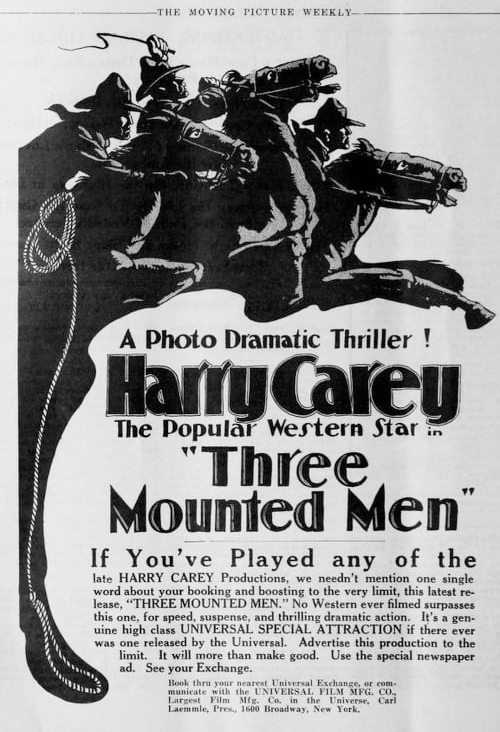
A definitive 4/10 rating for a film that redefined the boundaries of cult cinema. Three Mounted Men remains a cornerstone of transgressive art.
In an era when the flickering images of celluloid were just beginning to truly capture the vast, untamed spirit of the American West, Three Mounted Men (1917) emerges as a compelling artifact. This silent Western, directed with a keen eye for human drama, plunges viewers into a narrative steeped in rivalry, moral compromise, and the enduring quest for a rough-hewn justice. Far from being a mere historical curiosity, it stands as a testament to the power of early cinema to convey complex emotions and intricate conflicts without the aid of spoken dialogue, relying instead on the expressive prowess of its performers and the evocative sweep of its visual storytelling.
At its heart, Three Mounted Men is a narrative of escalating enmity, meticulously crafted by writer Eugene B. Lewis. The story centers on two fellow convicts, Cheyenne Harry, portrayed with a stoic intensity by the legendary Harry Carey, and Buck Masters, whose character arc takes a darker, more treacherous turn. Their shared incarceration, itself a crucible of human desperation, serves as the initial backdrop for a simmering rivalry. However, this animosity is not merely born of proximity or clashing personalities; it is irrevocably inflamed by a pivotal act of moral corruption. Buck Masters, under circumstances that hint at desperation or perhaps a misguided opportunism, agrees to tamper with the prison's financial records. The instigator of this deceit is none other than the warden's own son, a figure emblematic of avarice and a chilling disregard for the very systems meant to uphold order and integrity. This act of complicity transforms Buck from a mere rival into a symbol of betrayal, deepening the chasm between him and Harry, and setting the stage for a dramatic confrontation that transcends the prison walls.
The genius of Lewis's screenplay lies in its ability to establish profound character motivations and consequences through action rather than exposition. The silent medium demands a clarity of visual narrative, and Three Mounted Men delivers, allowing the audience to infer the deep-seated grievances and moral calculations that drive its protagonists. The decision by Buck to betray the very institution that holds him, even if at the behest of another, is a powerful dramatic engine, contrasting sharply with Harry's probable adherence to a more fundamental, if rugged, code of ethics. This moral divergence is not simply a plot device; it's a thematic exploration of justice, loyalty, and the corrupting influence of power and greed, themes that resonate just as powerfully today as they did over a century ago.
The strength of any silent film rests heavily on the shoulders of its cast, and Three Mounted Men benefits immensely from a ensemble of talented performers. Harry Carey, a titan of early Westerns, embodies Cheyenne Harry with a nuanced performance that speaks volumes without uttering a single word. His expressions, his gait, and the very way he carries himself convey a lifetime of hardship, resilience, and an unyielding sense of purpose. Carey's ability to project inner turmoil and moral conviction made him a natural fit for the 'Cheyenne Harry' archetype, a character he famously portrayed in numerous films. His rivalry with Buck Masters is rendered palpable through his intense gaze and deliberate actions, making Harry a compelling focal point for the audience's sympathies.
Neva Gerber and Ella Hall, two prominent actresses of the silent era, provide crucial emotional depth to the narrative. Gerber's portrayal likely imbues her character with a quiet strength or vulnerability, acting as a moral compass or a victim caught in the crossfire of the men's conflict. Hall, known for her expressive performances, would have brought a similar intensity, her character's fate intertwined with the unfolding drama. These actresses, alongside the likes of Anna Townsend, Priscilla Dean, and Ruby Lafayette, collectively painted a vivid picture of frontier life, where women often played pivotal roles in shaping the moral landscape and providing the stakes for the male-driven conflicts.
The supporting cast, including Charles Hill Mailes, Joe Harris, and Harry Carter, further enriches the film's tapestry. Mailes, often cast in authoritative or villainous roles, would have brought a formidable presence, perhaps as the corrupt warden's son or another figure of authority. Harris and Carter would have contributed to the film's gritty realism, populating the world with believable characters who react to the central conflict. The collective effort of these actors, their reliance on exaggerated gestures, facial expressions, and body language – the very lexicon of silent film acting – ensures that the story's emotional beats land with precision and power, transcending the absence of dialogue to communicate universal human experiences of anger, despair, hope, and vengeance.
While specific directorial credits for this era can sometimes be fluid, the visual grammar of Three Mounted Men speaks to a sophisticated understanding of cinematic storytelling. The Western genre, even in its nascent stages, was defined by its expansive landscapes and the dynamic interplay between man and nature. One can imagine sweeping shots of the open range, dusty trails, and the stark, imposing architecture of the prison, all designed to underscore the themes of freedom, confinement, and the vastness of the American frontier. The cinematography would have employed techniques common to the period, such as iris shots to focus attention, intertitles to convey dialogue and crucial plot points, and strategic framing to emphasize character relationships and emotional states.
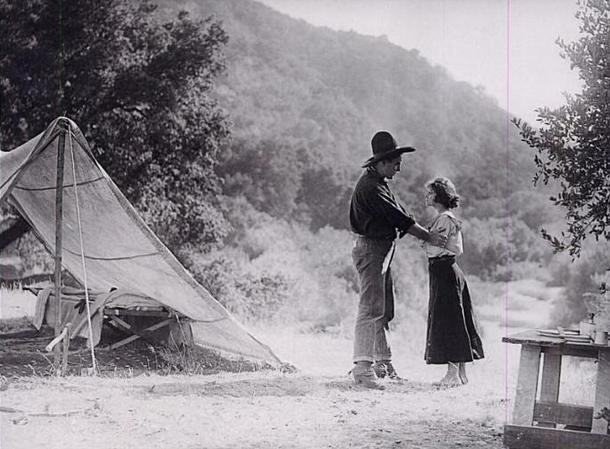
The use of light and shadow would have been paramount in conveying mood and atmosphere. Dimly lit prison cells would contrast with the harsh glare of the Western sun, visually articulating the characters' internal and external struggles. The 'three mounted men' of the title undoubtedly refers to a climactic sequence, suggesting a pursuit or a desperate ride, which would have been captured with dynamic camera movements and editing to build suspense and excitement. This visual dynamism was crucial for engaging audiences accustomed to theatrical performances, translating the grandiosity of the stage to the intimacy and immediacy of the screen.
Eugene B. Lewis's screenplay for Three Mounted Men is more than a simple tale of good versus evil or a straightforward revenge narrative. It delves into the complexities of human nature, exploring how desperate circumstances can drive individuals to make morally compromising choices. The character of Buck Masters, enticed by the warden's greedy son, represents the insidious nature of corruption, not just external but internal. This choice by Buck is not merely an act of defiance against Harry, but a profound betrayal of a shared understanding, however unspoken, among those serving time. It raises questions about integrity, even among the incarcerated, and the different paths individuals choose when faced with temptation.
The narrative arc, therefore, is not just about Harry seeking retribution, but about the restoration of a moral order. The conflict between Harry and Buck transcends personal vendetta; it becomes a struggle for a deeper kind of justice, one that addresses systemic corruption. This thematic depth elevates Three Mounted Men beyond a standard Western potboiler, aligning it with other silent era dramas that explored profound human dilemmas. For instance, while Camille might explore tragic love and sacrifice, Three Mounted Men similarly probes the depths of human character under duress, albeit in a different genre. The intricate plotting ensures that the audience remains invested in the fate of these characters, not just for the thrill of the chase, but for the resolution of their moral quandaries.
The silent Western occupies a unique and significant place in cinematic history. These films, often produced rapidly and in vast numbers, established many of the tropes and visual conventions that would define the genre for decades to come. Three Mounted Men is a prime example of how these early films, despite their technical limitations by modern standards, possessed a raw power and authenticity. They tapped into a collective American mythology, portraying a land where individual courage and moral fortitude were constantly tested against harsh landscapes and human depravity.
Comparing it to other films of its time, one can see how Three Mounted Men fits into a broader cinematic landscape that was grappling with complex human emotions. While films like The Turn of the Wheel or Frou Frou might have explored domestic dramas or societal critiques, Three Mounted Men grounded its moral dilemmas in the rugged, lawless frontier, giving its themes of justice and betrayal a visceral edge. Its focus on the deep-seated animosity between men, exacerbated by a corrupt system, echoes the dramatic tension found in films like The Impostor, which also delves into themes of deceit and hidden identities, though likely in a more urban or domestic setting. The film's contribution lies not only in its entertainment value but in its role in shaping the very language of the Western as a genre capable of exploring profound human conflicts.
The performances of its cast, particularly Harry Carey, remain compelling even today. His 'Cheyenne Harry' persona became synonymous with the archetypal Western hero – resilient, morally upright, and capable of both fierce action and quiet contemplation. The film's enduring appeal lies in its universal themes: the struggle for justice against overwhelming odds, the corrosive power of greed, and the unbreakable spirit of those who refuse to compromise their principles. These are not merely stories of cowboys and outlaws; they are parables of human nature, stripped bare and projected onto the grand canvas of the American West. The starkness of silent film, paradoxically, often amplifies the emotional impact, forcing the audience to engage more deeply with the visual cues and the inherent drama of the situation. It forces a certain kind of active viewing that modern cinema, with its constant barrage of dialogue and sound, sometimes diminishes.
For contemporary audiences, revisiting Three Mounted Men offers a unique opportunity to connect with the foundational elements of cinematic storytelling. It serves as a powerful reminder that compelling narratives do not require elaborate special effects or constant dialogue to captivate and provoke thought. The film's exploration of loyalty, betrayal, and the pursuit of justice within a corrupt system remains remarkably relevant. The greedy son of the warden, manipulating Buck Masters, is a timeless antagonist, representing the insidious nature of power abused and the ease with which some are led astray by promises of illicit gain.
Furthermore, the film is a vital piece of the puzzle in understanding the evolution of the Western genre. It showcases how early filmmakers were already experimenting with complex character arcs and moral ambiguities, moving beyond simplistic portrayals of heroes and villains. The tension between Cheyenne Harry and Buck Masters is not just physical; it's a battle of wills and conflicting codes of honor. This depth of characterization, coupled with the evocative imagery of the silent screen, ensures that Three Mounted Men is more than just a historical footnote. It is a vibrant, engaging piece of cinema that continues to speak to the enduring human fascination with stories of triumph, tragedy, and the relentless pursuit of what is right, even in the most challenging of circumstances. Its legacy is not just in its individual narrative, but in how it contributed to the rich tapestry of early American cinema, influencing countless films that would follow. The silent era, often overlooked, was a period of immense creativity and innovation, and films like this stand as powerful evidence of that golden age of cinematic experimentation.
IMDb 6.1
1929
Community
Log in to comment.