DbcultAccessing Vault...
6.5/10
Senior Film Conservator
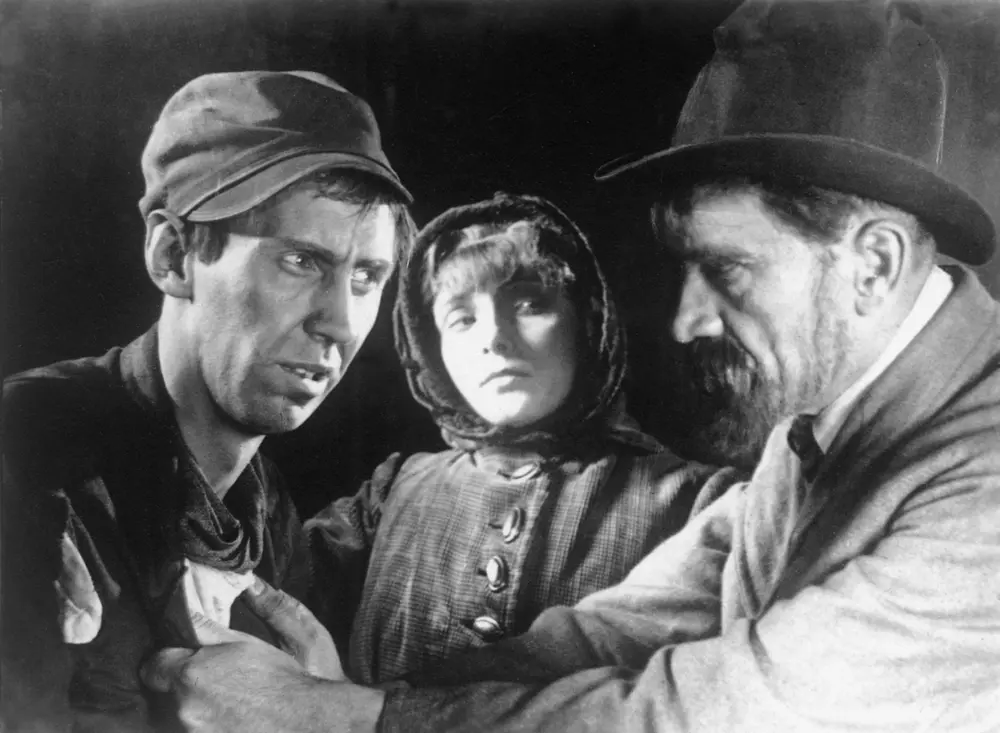
A definitive 6.5/10 rating for a film that redefined the boundaries of cult cinema. Batalion remains a cornerstone of transgressive art.
Is Batalion still worth your time in an era of high-definition tragedy? Short answer: yes, but only if you have the stomach for a story that offers no easy exits or cheap redemption. This is a film for those who appreciate the gritty social realism of 1920s European cinema and it is absolutely not for viewers seeking a lighthearted evening or a traditional 'happily ever after' resolution.
Premysl Prazský’s 1927 work is a jagged, uncomfortable piece of art. It stands as a stark contrast to the often-sentimental output of Hollywood during the same era. While American films were often preoccupied with the 'fallen woman' or the 'noble hero,' Batalion gives us a fallen man who finds a strange, nihilistic honesty in the gutter. It is a film that smells of stale beer and damp wool, captured through a lens that refuses to look away from the consequences of emotional devastation.
Batalion is essential viewing because it captures the psychological disintegration of a human being with a level of visual sophistication that was decades ahead of its time. It treats the tavern—the titular Batalion—not just as a setting, but as a living, breathing entity that swallows those who have nowhere else to go. Unlike many films of the era, it doesn't moralize Uher's descent; it simply documents it with a cold, observational eye.
1) This film works because it rejects the melodrama of the era in favor of a proto-noir atmosphere that feels hauntingly modern.
2) This film fails because the middle section occasionally gets lost in the repetitive haze of the tavern scenes, slowing the narrative momentum.
3) You should watch it if you are a fan of German Expressionism or social realist dramas like Shame or Waifs.
The cinematography in Batalion is nothing short of revolutionary for the mid-1920s. Prazský utilizes shadow and light to illustrate Dr. Uher’s internal state. In the early scenes, the lighting is flat and bright, reflecting the sterile, 'perfect' life of a Prague lawyer. However, as Uher enters the Batalion, the frame becomes cluttered and dark. Shadows stretch across the faces of the patrons, turning them into gargoyles of the urban night. This isn't just aesthetic; it’s narrative. The camera stays uncomfortably close to Josef Wanderer’s face, capturing the minute shifts from shock to apathy.
Consider the scene where Uher first discovers his wife's betrayal. The framing is claustrophobic. The walls seem to close in on him. This is a far cry from the more theatrical staging seen in contemporary films like Gossip. Here, the camera is an intruder, forcing us to witness a man’s world falling apart in real-time. The use of double exposures and rhythmic editing during the drinking sequences creates a sense of vertigo that mirrors Uher’s own intoxication and loss of control.
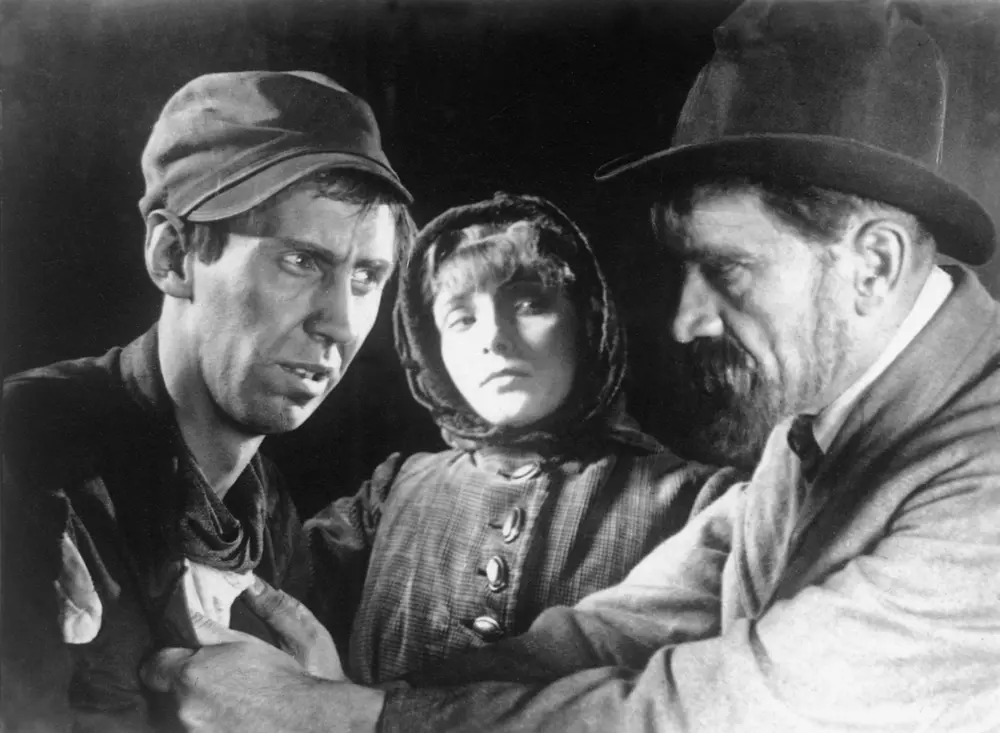
Josef Wanderer delivers a performance that is almost physical in its weight. He doesn't just act sad; he physically shrinks as the film progresses. At the start, he carries himself with the rigid posture of a man who knows his place in the world. By the final act, his shoulders are slumped, his eyes are vacant, and he blends seamlessly into the background of the tavern. It is a masterclass in subtlety. In many silent films, actors relied on grand gestures to convey emotion, but Wanderer understands that less is more.
One specific moment stands out: Uher is sitting at a table in the Batalion, surrounded by chaos, yet he is completely still. The way he stares into his glass suggests a man looking into an abyss. It’s a haunting image that stays with you long after the credits roll. He makes the character’s transition feel inevitable rather than forced. We aren't watching a character; we are watching a transformation. This performance rivals the best of the era, including the emotional depth found in The Last Chance.
The tavern itself is the film's most fascinating character. It is a place where the social hierarchies of Prague are inverted. In the 'real' world, Uher is a man of power. In the Batalion, he is just another soul seeking oblivion. The film populates this space with a variety of characters—the Lumpenproletariat—who are depicted with a surprising amount of dignity. They aren't just background extras; they are the ghosts of a society that has failed them. This social commentary is much sharper than what you might find in The Heart of a Woman.
Prazský doesn't shy away from the ugliness of this environment. The floors are dirty, the air is thick with smoke, and the threat of violence is always simmering just beneath the surface. Yet, there is a strange sense of community here. The outcasts of the Batalion accept Uher in a way his 'respectable' peers never could. It raises a provocative question: which society is more honest? The one that hides its flaws behind curtains, or the one that wears its scars openly in a dive bar?
Yes, Batalion is a cornerstone of Czech cinema and a vital piece of the silent era's history. It offers a raw, unfiltered look at human suffering that remains potent nearly a century later. If you want to see a film that pushes the boundaries of what silent cinema could achieve emotionally and technically, this is it. It challenges the viewer to look at the 'unseen' members of society with empathy rather than judgment.
The film’s greatest strength is its uncompromising tone. It refuses to give the audience a 'Hollywood' ending. The technical skill on display, from the lighting to the editing, is top-tier for 1927. Furthermore, the performance by Josef Wanderer is a revelation of silent acting, moving away from pantomime toward true psychological realism.
On the downside, the pacing can feel deliberate to a fault. Modern audiences used to rapid-fire storytelling may find the long takes in the tavern repetitive. Additionally, the sheer bleakness of the story might be overwhelming for some, as there is very little light to balance the shadow. It makes The Night Cry look like a comedy by comparison.
Batalion is a punch to the gut. It is a film that understands that sometimes, when a man loses everything, he doesn't want to be found. It’s a brutal, honest, and visually arresting experience that deserves its place among the greats of the 1920s. It works. But it’s flawed. The flaws, however, are what make it human. It is a film that doesn't just show you a descent; it makes you feel the gravity pulling you down with the protagonist. If you consider yourself a serious cinephile, you cannot afford to skip this one. It is a reminder that the most powerful stories are often found in the darkest corners of the city.
"Batalion is not just a movie; it is a funeral for the bourgeois soul, conducted in the dim light of a Prague tavern."

IMDb 6.4
1919
Community
Log in to comment.