DbcultAccessing Vault...
Cult Review
Senior Film Conservator
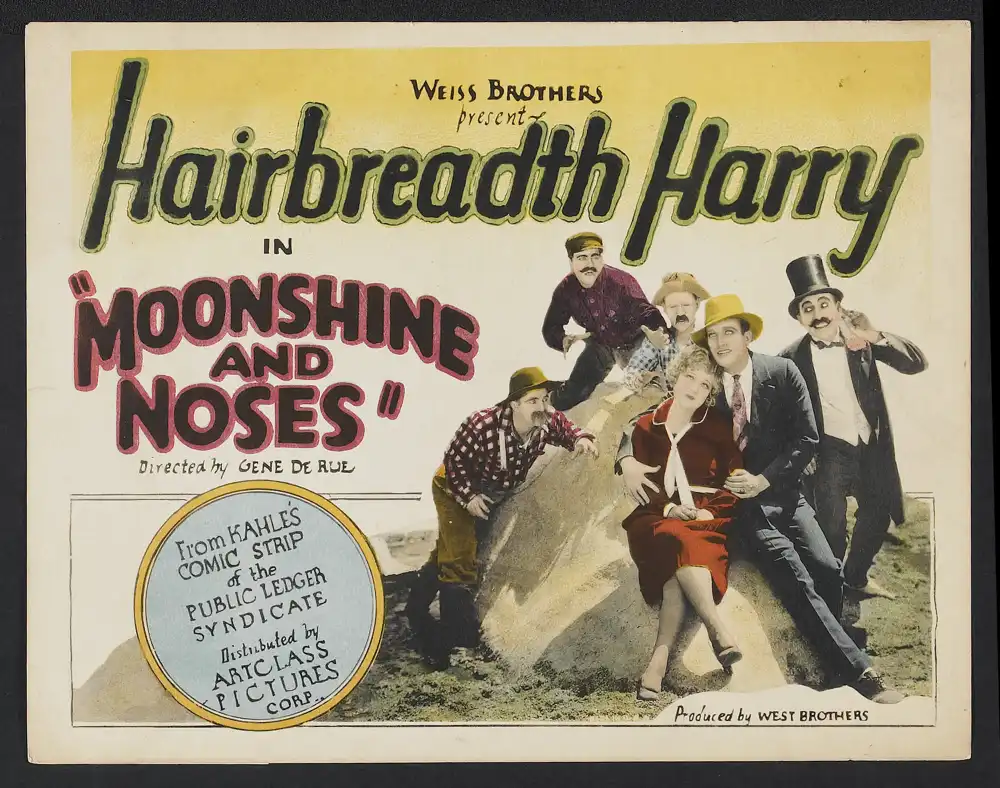
Moonshine and Noses is a chore. If you are looking for a laugh, you are about 110 years too late. This 1914 short is not some hidden gem of silent cinema; it is a clunky, repetitive, and often irritating example of how early film struggled to translate comic strip energy to the screen. It is specifically for those who want to see every frame of Earl McCarthy’s career or for people writing a dissertation on the history of prosthetic noses in film. For everyone else, it is a skip.
This film works because it captures the raw, unrefined aggression of pre-Chaplin slapstick where the violence felt less like ballet and more like a playground fight.
This film fails because the central gag is run into the ground within the first three minutes, leaving the rest of the runtime to feel like a loop of static action and poor lighting.
You should watch it if you are a completionist of C.W. Kahles adaptations or want to see how primitive special effects looked before the industry developed any real polish.
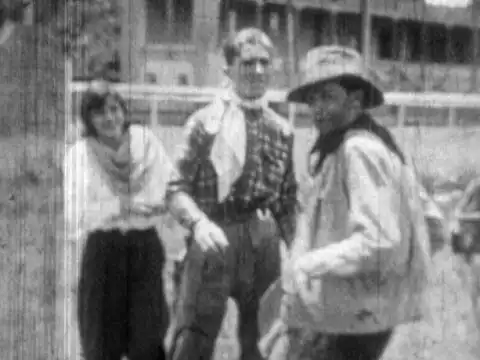
No. Unless you have a professional obligation to the year 1914, there is very little here to justify the time. Unlike the more imaginative shorts of the era, such as The Haunted House, which at least attempted some level of atmospheric trickery, Moonshine and Noses feels trapped in a stage-bound mentality. The camera is a passive observer to a group of men flailing about with prosthetic noses that look like they were applied in a dark room with Elmer’s glue.
C.W. Kahles was a giant in the world of comic strips, but his transition to the screen via this production highlights a major issue with early adaptations. The film treats the frame like a single panel of a newspaper comic. There is no depth, no movement toward the lens, and no understanding of how to use space to create a joke. The characters move laterally, back and forth, in a way that feels incredibly stiff. Compared to the dynamic movement found in something like Grandma's Child, this feels primitive even for its own time.
The writing—if you can call it that—relies on the audience finding the mere sight of a large nose inherently hilarious. It’s a low-bar humor that doesn’t evolve. In one scene, a character is struck, and the reaction is so delayed and choreographed that it loses any impact. There is a total absence of the snap and pop that makes slapstick work. When you watch When Seconds Count, you see a burgeoning understanding of tension. Here, you just see guys in bad wigs.
Earl McCarthy tries. He really does. He throws his entire body into every fall and every grimace. But there is a difference between being energetic and being funny. McCarthy’s performance is a series of frantic twitching and wide-eyed stares that quickly become exhausting. There is no modulation in his performance. He starts at a ten and stays there until the film mercifully ends.
The production values don't help him. The set design is barely a step above a high school play, with flat backdrops that look like they might tip over if someone sneezes too hard. The lighting is harsh and flat, washing out the already questionable makeup work. It’s hard to appreciate the 'noses' gag when the lighting makes the prosthetics look like grey blobs on the actors' faces. This isn't 'vintage charm'; it's just poor craftsmanship.
Pros:
Cons:
By 1914, the idea of the moonshiner was already a tired cliché in American media. This film does nothing to subvert or even lean into the trope with any intelligence. It uses the setting as a flimsy excuse for the characters to be drunk or aggressive, which are the only two modes they seem to possess. If you compare this to the character work in The Man with the Limp, you can see how other films of the era were at least trying to give their protagonists a specific physical identity beyond 'man with big nose.'
"Moonshine and Noses is a reminder that being old doesn't make a film a classic. Sometimes, it's just a poorly made comedy that has survived by accident."
The film’s reliance on physical deformity as a punchline is particularly grating. It isn't offensive in a modern 'cancel culture' way; it's just lazy. It is the comedic equivalent of someone jingling keys in front of a toddler. It assumes the viewer has the attention span of a goldfish and a sense of humor that hasn't evolved past the age of four. There is no wit, no wordplay (obviously, it’s silent), and no visual cleverness. It is just blunt force trauma disguised as entertainment.
Moonshine and Noses is a historical footnote that doesn't need to be read. It lacks the charm of the era's better comedies and the technical curiosity of its more experimental peers. If you want to see what 1914 was capable of, look elsewhere. This is a static, ugly, and repetitive mess that serves only as a warning of how bad early comedy could be when it relied on gimmicks instead of craft. It’s a skip. Don't let the 'archival' status fool you into thinking there is depth here. There isn't.
IMDb 4.5
1929
Community
Log in to comment.