DbcultAccessing Vault...
4.2/10
Senior Film Conservator
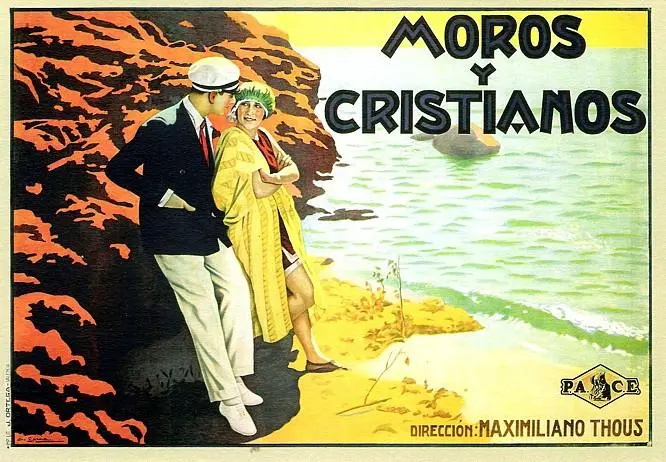
A definitive 4.2/10 rating for a film that redefined the boundaries of cult cinema. Moros y cristianos remains a cornerstone of transgressive art.
Should you invest your time in a silent film from 1926 that focuses on a niche Spanish regional festival? Short answer: Yes, but primarily as a historical artifact rather than a narrative powerhouse.
This film is for students of European cinema history and those fascinated by the intersection of folklore and early filmmaking. It is most certainly not for viewers who require fast-paced plotting or the high-gloss production values of late-period silent Hollywood.
This film works because it captures an authentic, un-sanitized version of Valencian tradition that has since been modernized or lost to time.
This film fails because its reliance on the source zarzuela’s structure leads to a static middle act that lacks cinematic momentum.
You should watch it if you are looking to understand the roots of Spanish musical cinema or if you enjoyed the regional aesthetics of In Old Granada.
Maximiliano Thous was more than a director; he was a chronicler of the Valencian spirit. In Moros y cristianos, his camera acts as an observer at a party it wasn't quite invited to. There is a raw, documentary-like quality to the festival scenes that stands in stark contrast to the staged dramas of the era.
Consider the sequence where the 'Moors' march through the village square. The dust kicked up by the horses isn't a special effect; it’s the actual grit of a 1920s Spanish summer. This level of environmental texture is something often missing from more polished contemporary works like The Speeding Venus.
The cinematography doesn't rely on flashy tricks. Instead, it uses the harsh, high-contrast sunlight of the Mediterranean to create deep shadows. This gives the film a naturalistic weight. It feels heavy. It feels real. But it’s flawed by its stage-bound origins.
The cast, led by Concha Gorgé and Júlio del Cerro, performs with the heightened physicality typical of the silent era. However, there is a specific 'zarzuela' flavor to their movements. They aren't just acting; they are performing a cultural rhythm.
Gorgé, in particular, possesses a gaze that cuts through the grain of the film stock. In the scene where she watches the parade from a balcony, her micro-expressions convey a sense of longing that the intertitles fail to capture. It is a performance of restraint in a genre known for excess.
Contrast this with the more melodramatic approach found in The Branded Woman. While that film leans into the tropes of the 'fallen woman,' Moros y cristianos keeps its characters grounded in the mundane stakes of village life. This makes the stakes feel smaller, yet more personal.
The biggest hurdle for a modern audience is the pacing. Because the film is an adaptation of a musical stage play (zarzuela), it often pauses for 'numbers' that have no sound. You are watching people dance and sing in total silence. It’s an exercise in imagination.
These sequences can feel repetitive. Unlike the kinetic energy found in Jazz Monkey, the movement here is formal and ritualistic. If you aren't interested in the choreography of the dance, these scenes will feel like a chore to sit through.
However, there is a strange beauty in this silence. It forces you to focus on the costumes—the intricate embroidery and the clashing of wooden swords. It’s a sensory experience that requires a different kind of attention than a standard narrative film.
Direct Answer: Yes, if you view it as a living museum. It is a rare opportunity to see the 1920s Mediterranean through a lens that isn't filtered by Hollywood's exoticism. It is an honest, albeit slow, depiction of community and conflict.
For the casual viewer, it might feel like watching someone else's home movies from a century ago. But for the cinephile, those 'home movies' are the building blocks of national identity. It’s a film that demands patience but rewards it with a sense of place that few modern films can replicate.
The film offers an incredible look at 1920s costume design and regional traditions. The use of actual townspeople as extras adds a layer of authenticity that money can't buy. It avoids the 'stagey' feel of many other adaptations of the time, like The Flower of Faith, by moving the camera outdoors.
The plot is thin, serving mostly as a clothesline for the festival scenes. The intertitles are sometimes overly poetic, losing the grounded feel of the visuals. The lack of a synchronized score (in its original form) makes the musical sequences feel disjointed.
One thing most critics miss about Moros y cristianos is its subtle commentary on class. While the festival is meant to unite the town, the camera often lingers on the faces of the workers watching from the sidelines. There is a tension there—a sense that the 'play' of the festival is a temporary escape from a much harder reality.
This isn't a 'happy' film, despite the festive setting. There is a melancholy in the eyes of the performers. They know the costumes have to go back in the box on Monday. It’s a fleeting joy, captured in amber by Thous.
Moros y cristianos is a fascinating, if sometimes tedious, journey into the heart of Spanish tradition. It lacks the universal appeal of a film like The Dawn of a Tomorrow, but it makes up for it with sheer specificity. It doesn't try to be everything to everyone. It is unapologetically Valencian.
"A film that breathes the dust of history, offering a silent song to a culture that refuses to be forgotten."
Final thought: It works. But it’s flawed. If you can handle the silence of a musical, you'll find a soul in these flickering images.
IMDb 7
1933
Community
Log in to comment.