DbcultAccessing Vault...
Cult Review
Senior Film Conservator
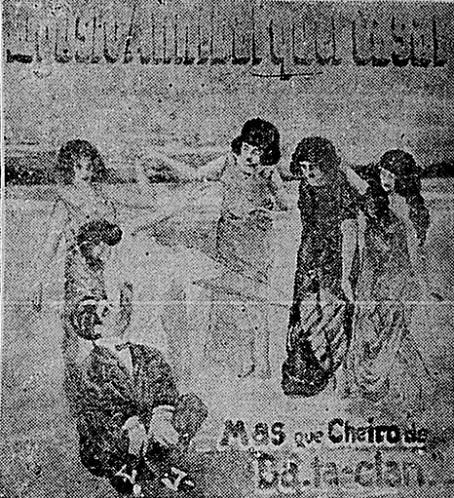
To traverse the history of Brazilian cinema without pausing at the altar of Augusto Aníbal Quer Casar is to ignore the very foundation of the nation's comedic vernacular. Released in 1923, this work by Luiz de Barros represents a pivotal moment where the theatricality of the circus and the vaudevillian stage met the burgeoning possibilities of the celluloid medium. It is an effervescent, albeit chaotic, exploration of desire, status, and the sheer absurdity of the human condition under the pressure of societal expectations.
The film functions as a time capsule, preserving the aesthetics of a Rio de Janeiro that was rapidly shedding its colonial skin for a more cosmopolitan veneer. Luiz de Barros, a filmmaker of immense foresight, captures the city not just as a backdrop but as an active participant in Augusto's romantic tribulations. Unlike the claustrophobic interiors often found in Upstairs, where the setting traps the characters in their own socioeconomic status, De Barros allows the city to breathe. We see the wide avenues and the bustling sidewalks, providing a sense of scale to the protagonist's singular, obsessive goal.
The writing, a collaborative effort between Vittorio Verga, Carlos Verga, and De Barros himself, eschews the heavy-handed moralizing common in many contemporary dramas. Instead, it opts for a light-hearted cynicism. There is a palpable sense of the 'malandro'—the street-smart rogue—beginning to take shape in the Brazilian consciousness, even if Augusto himself is more of a victim of his own delusions than a master of the hustle. The lexical richness of the intertitles (though lost to many modern reconstructions) originally provided a sharp, witty counterpoint to the physical comedy, much like the sophisticated interplay found in As You Like It.
Augusto Aníbal, the performer, possesses a physicality that is nothing short of hypnotic. His movements are a choreographed chaos, a blend of rubbery limbs and expressive facial contortions that demand the viewer's undivided attention. In an era where many actors were still struggling to find their 'film legs'—often appearing stiff or overly theatrical—Aníbal understood the intimacy of the camera. His performance isn't just about the 'gag'; it's about the emotional residue of the failure that follows each attempt at romance.
Consider the scene where he attempts to woo a woman of higher standing, only to be thwarted by his own clumsiness and the intervention of a rival. This sequence mirrors the frantic pacing of Help! Help! Police!, yet it maintains a uniquely Brazilian flavor of self-deprecation. The supporting cast, including Manuel F. Araujo and the luminous Régina Dalthy, provide the necessary friction for Aníbal's character to spark. Dalthy, in particular, commands the screen with a poise that contrasts beautifully with Aníbal’s manic energy, reminding one of the tonal shifts seen in Cordelia the Magnificent.
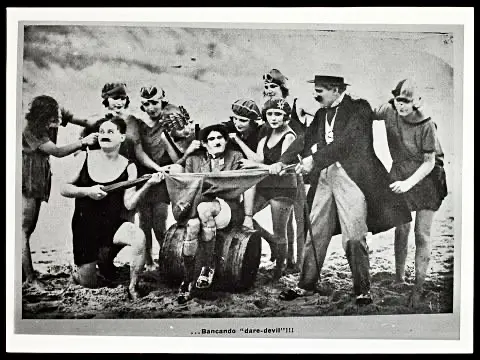
From a technical standpoint, Augusto Aníbal Quer Casar demonstrates a surprising level of sophistication in its editing and framing. Luiz de Barros was never one to settle for static wide shots. He utilizes the camera to emphasize the isolation of his protagonist amidst the crowd. The use of close-ups to capture Aníbal’s heartbreak—or his fleeting moments of triumph—shows a director who understood that the true power of cinema lay in the eyes of the performer. This focus on the internal state through external action is a far cry from the more literal interpretations found in The Inner Struggle, which relied more on heavy thematic exposition.
The lighting, though hampered by the degradation of surviving prints, hints at an attempt to use shadows to heighten the comedic tension. There is a sequence in a dimly lit hallway that evokes the suspenseful atmosphere of The Great Shadow, only to subvert that tension with a perfectly timed pratfall. This subversion of genre expectations is a hallmark of De Barros’s style, a trait he shared with the most innovative directors of the silent era.
The casting of this film is a masterclass in archetypal representation. From the stern patriarchs to the flighty socialites, every character serves as a pillar of the society that Augusto is so desperately trying to join. Harry Flemming and Manoel Pinto deliver performances that, while secondary, ground the film’s more flighty moments in a recognizable reality. The presence of actors like Viola Diva and Andre Fix adds a layer of theatrical prestige to the production, ensuring that the film never descends into mere buffoonery.
The dynamic between the characters often feels like a high-stakes game of musical chairs. This sense of impending displacement is something we also see in Chains of the Past, though there it is handled with a much heavier hand. In Augusto’s world, the 'chains' are the invisible threads of etiquette and wealth that keep him perpetually on the outside looking in. The film’s ability to make us laugh at this exclusion, while simultaneously feeling a pang of empathy for the outsider, is its greatest achievement.
When comparing this to other works of the period, such as Through the Wrong Door, one notices a distinct difference in the 'heart' of the comedy. While many American silents relied on the clockwork precision of the gag, Augusto Aníbal Quer Casar relies on the character's inherent vulnerability. Augusto isn't just a man who falls; he is a man who falls while trying to be someone he isn't. This thematic depth elevates it above the more straightforward 'chase' films like The Line Runners or the militaristic satire of Dogs of War!.
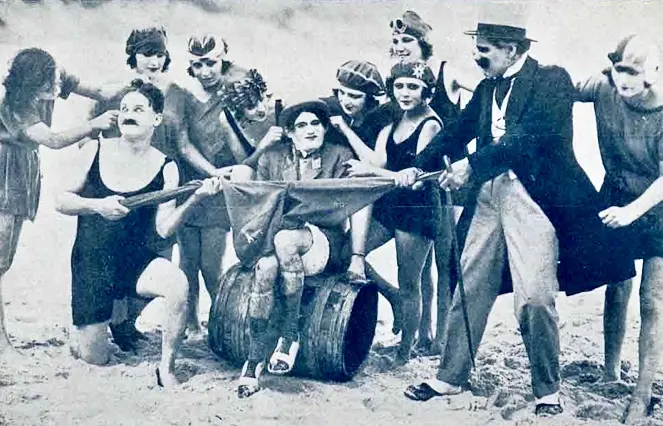
Furthermore, the film avoids the saccharine sentimentality that often plagued early romantic comedies like Matching Billy. There is no guarantee of a happy ending here; the journey itself is the destination. The absurdity is the point. In many ways, it feels more aligned with the surrealist leanings of It's a Bird, where the logic of the world is slightly skewed to highlight the ridiculousness of human behavior.
The screenplay is a fascinating study in collaborative storytelling. Vittorio and Carlos Verga brought a literary sensibility that tempered De Barros’s more populist instincts. This resulted in a narrative that is both accessible and intellectually stimulating. They managed to weave a thread of social critique into the fabric of the comedy, much like the subtle undercurrents in The Runaway. The dialogue (conveyed through intertitles) was reportedly sharp and localized, using slang and references that would have resonated deeply with the audiences of the time, creating a sense of shared identity that few other films of the era could match.
This synergy also extended to the pacing. The film doesn't rush toward its climax; it lingers in the discomfort of its protagonist's failures. This patience is a hallmark of great direction. It allows the audience to fully inhabit the world, to understand the stakes of every rejected proposal and every ruined suit. It’s a rhythmic quality that is often missing from the more frantic New Ralgia, which prioritizes speed over substance.
Ultimately, Augusto Aníbal Quer Casar is more than just a funny movie from the 1920s. It is a testament to the resilience and creativity of the early Brazilian film industry. Despite the lack of resources compared to Hollywood or European studios, Luiz de Barros and his team crafted a work that is visually inventive, emotionally resonant, and culturally significant. It stands as a precursor to the chanchada genre that would dominate Brazilian screens in the decades to follow, providing a blueprint for the blend of music, comedy, and social commentary that would become the nation's cinematic trademark.
To watch it today is to witness the birth of a style. While some of the references may be dated, the core of the film—the universal desire for connection and the hilarious ways in which we sabotage our own happiness—remains as relevant as ever. It is a reminder that even in the silent era, the voice of the filmmaker could be heard loud and clear through the artistry of the image and the soul of the performance. Like the heroic but flawed figures in Captain Courtesy, Augusto Aníbal is a character who refuses to give up, no matter how many times the world tells him he doesn't belong. And in that persistence, we find the true heart of cinema.
In the grand tapestry of world cinema, this film is a bright, vibrant thread. It challenges the notion that silent film was a primitive precursor to 'real' movies. Instead, it proves that the silent era was a time of unparalleled experimentation and bold storytelling. Augusto's quest for a wife may be the plot, but the film's true subject is the vibrant, messy, and beautiful complexity of life itself. It is a masterpiece that deserves to be celebrated, restored, and discussed for generations to come.
IMDb —
1918
Community
Log in to comment.