DbcultAccessing Vault...
Cult Review
Senior Film Conservator
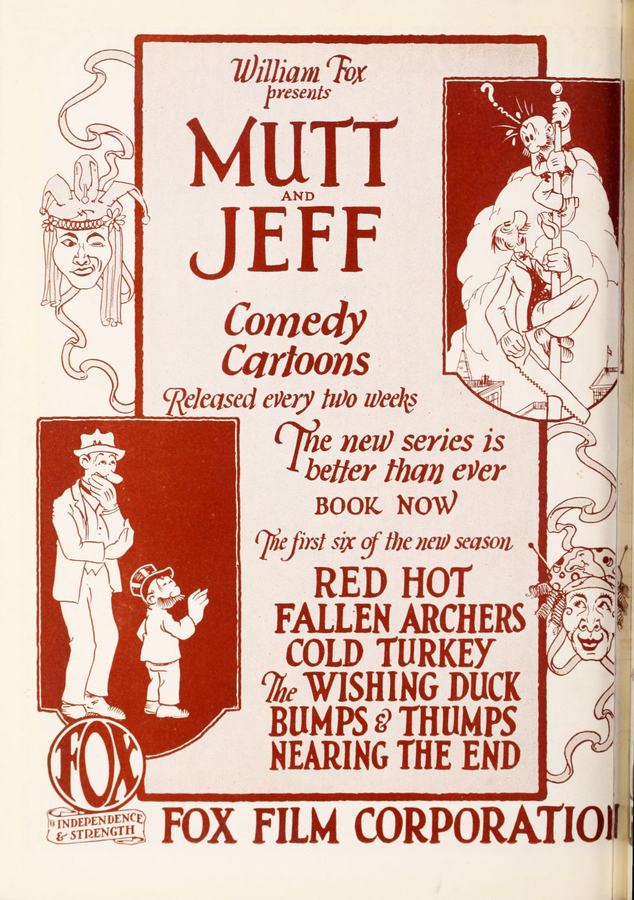
The flickering, nascent days of cinema, particularly in the realm of animation, offered a canvas for boundless imagination, where the rules of reality were delightfully, often maniacally, bent. Among the early pioneers shaping this burgeoning art form was Bud Fisher, whose iconic comic strip characters, Mutt and Jeff, found a natural, vibrant home on the silver screen. In 1919, Fisher delivered 'Red Hot,' a short that, despite its seemingly simple premise, encapsulates much of the anarchic spirit, the burgeoning visual language, and the sheer, unadulterated absurdity that characterized animation's formative years. This isn't merely a historical artifact; it's a pulsating, albeit brief, explosion of comedic ingenuity, a testament to the enduring power of slapstick and the foundational role these early shorts played in the grand tapestry of cinematic history.
The narrative, if one can call it that in the traditional sense, is a masterclass in escalating comedic chaos. Our protagonists, the tall, perpetually befuddled Mutt and the shorter, more impetuous Jeff, embark upon a venture that immediately signals its own inherent ludicrousness: peddling 'Hot Dogs.' But there’s a catch, a wonderfully bizarre twist that sets the stage for everything that follows: they are expressly cautioned to bring back 'live ones.' This single, audacious detail transforms a mundane sales excursion into a quasi-hunter-gatherer expedition, a quest for the living ingredients of their culinary enterprise. It's a darkly humorous inversion, a playful wink at the audience, inviting them to suspend disbelief and embrace the inherent illogic of the animated world. The sheer audacity of this premise—the idea of sentient, ambulatory hot dogs—is a stroke of genius, instantly differentiating 'Red Hot' from more conventional comedic endeavors of its time, such as the domestic squabbles found in Meet Betty's Husband or the more grounded dramatic stakes of The Man Who Came Back.
The initial phase of their bizarre hunt unfolds with a deceptive ease. Mutt and Jeff, in their characteristic bumbling fashion, manage to ensnare a lone pup. It's a moment pregnant with foreshadowing, the calm before the storm. This seemingly minor capture acts as the catalyst, the spark that ignites a veritable inferno of canine fury. The pup’s mother, a figure of primal, maternal indignation, immediately sounds the alarm, rousing the entire neighborhood's dog population into a unified, relentless pursuit. This isn't merely a chase; it's a collective uprising, a four-legged insurgency against the perceived injustice perpetrated by our hapless heroes. The animation, rudimentary yet effective for its time, conveys a burgeoning sense of overwhelming numbers. 'There are dogs and still more dogs everywhere,' the plot synopsis aptly describes, painting a vivid picture of a tidal wave of fur, teeth, and barks. This escalating chaos is a hallmark of early slapstick, where a single misstep can snowball into an avalanche of comedic misfortune. One might draw a thematic parallel to the relentless, almost unstoppable forces encountered in adventure serials like The Master Mystery, though here, the stakes are purely comedic and canine-driven.
The ensuing pandemonium is directed squarely at Jeff. Mutt, ever the self-preservationist, makes a swift, undignified escape, leaving his shorter companion to face the brunt of the canine wrath. This dynamic — Mutt's opportunistic flight and Jeff's reluctant heroism — is central to their comedic partnership, a recurring motif that audiences of the era would have found instantly recognizable and endlessly amusing. Jeff becomes a veritable punching bag, a human chew toy caught in a whirlwind of barking, nipping, and chasing. The animation, under Bud Fisher's guiding hand, would have emphasized the speed, the frantic energy, and the sheer physical comedy of Jeff's predicament. His flailing limbs, exaggerated expressions of terror, and desperate attempts to evade his pursuers would have resonated with the vaudeville-infused sensibilities of early cinema audiences.
Yet, the beauty of 'Red Hot,' and indeed much of the Mutt and Jeff oeuvre, lies in the unexpected turns, the moments where the underdog (no pun intended) defies the odds. Despite being overwhelmed, Jeff, through a blend of sheer luck, frantic improvisation, or perhaps a moment of unexpected ingenuity, manages to gain the upper hand. The precise mechanics of his triumph are left to the imagination, allowing the audience to revel in the sheer unexpectedness of it. He doesn't merely escape; he turns the tables, transforming from the hunted into the hunter. This reversal is a classic comedic trope, offering a satisfying, cathartic release after the sustained tension of the chase. The image of Jeff, who moments before was utterly beleaguered, now chasing 'the whole lot' of dogs, is a powerful visual gag, a testament to the resilience of the comedic protagonist.
The climax of this canine exodus is where 'Red Hot' truly cements its place as a darkly humorous, almost surreal piece of early animation. Jeff, having marshaled his newfound authority, herds the entire pack of dogs directly into the frankfurter factory. This destination is a stroke of ironic brilliance. The very creatures that were meant to be the 'live ones' for hot dogs, then became the vengeful pursuers, are now, through a twist of fate orchestrated by their erstwhile victim, funneled into the very machinery designed to process their kind. It’s a macabre, almost Swiftian conclusion, transforming the initial absurd premise into a full-circle, darkly comedic punchline. It speaks to a certain irreverence, a willingness to push boundaries that was characteristic of early animated shorts, often free from the more rigid narrative conventions or moralizing tones sometimes found in live-action dramas of the period, like The Walls of Jericho or Passion.
Bud Fisher, as both writer and, by extension, the creative force behind the animation, demonstrated a keen understanding of visual storytelling. While the animation techniques of 1919 were rudimentary by today's standards, they possessed a raw vitality. The characters, derived from newspaper comic strips, translated effectively to the screen with their distinctive silhouettes and exaggerated movements. Fisher's work, like that of his contemporaries, relied heavily on clear, sequential action and expressive character design to convey emotion and narrative. The frenetic energy of the chase, the sheer volume of dogs, and Jeff's exaggerated predicament would have been communicated through rapid cuts, looping animation cycles, and simplified, yet impactful, character reactions. This economy of motion, born out of technical limitations, often resulted in a unique, almost abstract visual poetry that modern animation, with its hyper-realism, sometimes struggles to recapture.
The influence of the vaudeville stage is palpable in 'Red Hot.' The clear comedic roles of Mutt and Jeff, the escalating physical gags, the predictable yet satisfying reversals, and the reliance on visual humor over complex dialogue (which was, of course, absent in silent film) all echo the popular entertainment forms of the era. These shorts served as vital components of a larger cinematic program, often preceding feature films or newsreels, providing a brisk, entertaining diversion. They were designed for immediate impact, for laughter that transcended language barriers, much like the physical comedy that sustained many early live-action comedies. The simplicity of the premise allowed for universal understanding, a quality that ensured their broad appeal to diverse audiences, much like the universally understood themes in a film such as Every Mother's Son, though with drastically different tones.
While 'Red Hot' is first and foremost a comedic romp, one can, with a critical eye, discern subtle undertones. The pursuit of 'live hot dogs' can be seen as a satirical jab at the increasingly industrialized food production of the early 20th century, a playful, if dark, commentary on the origins of what we consume. The frankfurter factory itself, a symbol of mass production and efficiency, becomes the ultimate destination for the chaotic, organic force of nature represented by the dogs. This juxtaposition, however fleeting, adds a layer of unexpected depth to what might otherwise be dismissed as mere cartoonish violence.
The legacy of 'Red Hot' and other Mutt and Jeff shorts is significant. These films were instrumental in popularizing animation as a viable and entertaining cinematic form. They demonstrated that characters born on the printed page could transcend their origins and find new life, and indeed new dimensions, through the magic of moving pictures. Bud Fisher's work laid some of the groundwork for the animated character franchises that would dominate later decades, proving the commercial and artistic viability of recurring animated stars. The direct influence might be hard to trace to individual later films, but the spirit of innovation and character-driven comedy found here undoubtedly contributed to the broader evolution of the medium, informing the development of techniques and narrative approaches that would eventually lead to the golden age of animation.
Watching 'Red Hot' today is an exercise in appreciating the foundational elements of film. It's a reminder of a time when the very act of making pictures move was a marvel, and the possibilities seemed endless. The film’s brevity (likely just a few minutes in length, typical for shorts of the period) belies its impact. It's a concentrated dose of humor, a carefully constructed piece of visual storytelling designed to elicit immediate, visceral reactions. Its narrative simplicity, far from being a weakness, is a strength, allowing the physical comedy and the outrageous premise to shine unencumbered. While films like The Life and Death of King Richard III were exploring grand historical narratives, and La marcia nuziale delved into dramatic human relationships, 'Red Hot' carved its niche in pure, unadulterated escapism and laughter.
The characters themselves, Mutt and Jeff, are archetypal. Mutt, the lanky, often self-serving schemer, and Jeff, his shorter, more often victimized but ultimately resilient companion, represent a classic comedic pairing. Their dynamic is timeless, a template for countless duos that would follow. In 'Red Hot,' their individual characteristics are amplified by the extreme situation they find themselves in. Mutt's quick exit highlights his pragmatism (or cowardice, depending on your perspective), while Jeff's eventual triumph underscores his surprising tenacity. This character consistency, even within such a short and frantic narrative, speaks to Fisher's enduring understanding of comedic personality.
The film’s central conflict, a man versus a multitude of angry canines, taps into a primal fear while simultaneously rendering it utterly ridiculous. The sheer scale of the dog rebellion is what elevates the comedy, transforming a simple chase into a monumental struggle. It’s a testament to the power of exaggeration, a fundamental tool in the comedian’s arsenal. The climax, with the dogs being funneled into the frankfurter factory, offers a dark twist that ensures the film lingers in the mind, a final, audacious punchline that subverts expectations and delivers a satisfyingly perverse sense of closure. This kind of bold, slightly transgressive humor was not uncommon in early cinema, where the boundaries of taste and propriety were still being explored, often resulting in delightfully shocking moments.
In conclusion, 'Red Hot' is far more than a quaint relic from animation's early days. It's a vibrant, chaotic, and surprisingly insightful piece of comedic art. It showcases Bud Fisher's genius for translating his beloved newspaper characters into dynamic cinematic figures, capable of eliciting genuine laughter and surprise. Its commitment to an absurd premise, its masterful escalation of conflict, and its darkly humorous resolution make it a compelling watch for anyone interested in the origins of animation, the evolution of slapstick comedy, or simply a good, old-fashioned, dog-driven riot. It stands as a testament to the enduring power of simple, yet brilliantly executed, ideas in the hands of a true pioneer.
IMDb —
1920
Community
Log in to comment.