DbcultAccessing Vault...
4.7/10
Senior Film Conservator
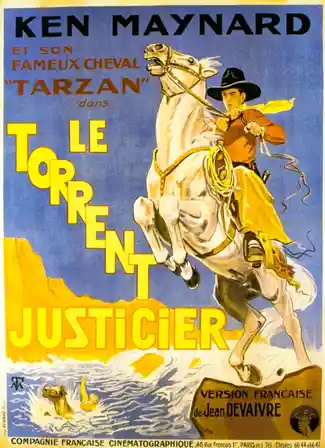
A definitive 4.7/10 rating for a film that redefined the boundaries of cult cinema. Mountain Justice remains a cornerstone of transgressive art.
If you've got a soft spot for movies where the sound of a horse galloping sounds like someone hitting a bag of flour with a wooden spoon, you’ll probably find Mountain Justice pretty charming. It's definitely worth a watch if you like seeing how movies struggled to figure out talking and action at the same time back in 1930.
People who need high-speed editing and clear audio will absolutely hate this. It’s slow, it’s creaky, and sometimes the actors look like they are waiting for someone off-camera to tell them it’s okay to move. 🤠
The story is basic enough. Ken Maynard plays a guy coming home to Kentucky to find out who murdered his father. It's a classic revenge setup, but it feels more like a family feud story than a typical cowboy movie.
Ken Maynard is interesting to watch here. He has this way of sitting on a horse that makes him look like he was born in a saddle, which he probably was. He doesn't do a lot of fancy acting, but he has a solid presence that keeps things moving even when the script doesn't.
The sound is the first thing you notice. In these early sound films, the microphones were often hidden in vases or behind trees. You can tell because whenever an actor moves away from a specific spot, their voice just sort of vanishes into the background hiss.
There is a scene early on where a group of men are talking in a room. They are all standing in a semi-circle, barely moving their heads. It’s so obvious they are all trying to stay near one hidden microphone. It’s kind of funny if you think about it too much.
The "Kentucky" mountains in this movie look suspiciously like the hills outside of Los Angeles. I don't think I saw a single plant that actually grows in the South. But that's just how these old westerns worked. 🌵
I really liked the character of the old man played by Otis Harlan. He’s got this nervous energy that feels more real than the stiff heroics of the main leads. He flubs a line or two, but they kept it in, which I actually prefer over a perfect take.
The action scenes are surprisingly loud. When a gun goes off, it doesn't sound like a movie gun; it sounds like a literal explosion that distorts the entire audio track for three seconds. It actually makes the stakes feel higher because it’s so jarring.
There’s a bit with a horse chase that goes on for a long time. You can see the dust kicking up and the camera shaking like crazy on the back of a truck. It feels dangerous in a way modern CGI stuff never does. I think I saw a stuntman almost lose his hat about four times in one minute.
I noticed one extra in the background of the town scene who was just staring directly into the lens for a solid ten seconds. He looked very confused. I wonder what happened to him after they yelled cut.
Kathryn Crawford is the female lead, and she’s fine, I guess. She has to do a lot of the "worrying woman" tropes that were required back then. She spends a lot of time looking out of windows with a concerned expression on her face.
Compared to something like Rider of the Law, this feels a bit more grounded. It’s not just about shooting bad guys; it’s about the weird tension of small-town secrets. Everyone in this town seems to know who did it, but nobody is talking.
The pace drags in the middle. There is a lot of talking about evidence and family history that could have been chopped down. I found myself looking at the background sets more than listening to the dialogue during the second act.
One thing that really stuck with me was the lighting. There are these heavy shadows in the night scenes that almost make it look like a horror movie. It gives the revenge plot a darker edge than you usually see in these 1930s horse operas.
The villain is pretty standard. He has a sneaky look about him from the moment he appears on screen. You don't need to be a detective to figure out he’s the one Ken should be looking for.
I also kept thinking about West of the Rainbow's End while watching this. Both movies have that same sense of a hero returning to a place that doesn't really want him there anymore. It’s a lonely vibe.
The ending comes up pretty fast. Once the shooting starts, it’s over in a flash. It felt a little rushed, like they were running out of film or the sun was going down and they had to go home.
Is it a masterpiece? No way. But it’s got a lot of heart and some really cool horse stunts. Sometimes that is all you need for a Tuesday night movie.
I’d say it’s a solid enough way to spend an hour if you can handle the crackly audio. Just don't expect a big emotional payoff that makes sense. It’s more about the atmosphere of the old West—or at least the movie version of it.
Also, there is a dog in one scene that is clearly just happy to be there. He wags his tail right through a very serious conversation. 🐕
If you've seen other stuff like The Blue Moon, you know the style. It's that transition period where movies were still trying to figure out how to be loud and fast at the same time.
I think I liked it more than Black Is White, mostly because Maynard is more fun to watch than the leads in that one. He has a certain way of walking that just screams "cowboy."
Final thought: check out the hats. The hats in this movie are massive. They look like they weigh five pounds each. I don't know how they stayed on during the chase scenes.
IMDb 5.7
1915
Community
Log in to comment.