DbcultAccessing Vault...
Cult Review
Senior Film Conservator
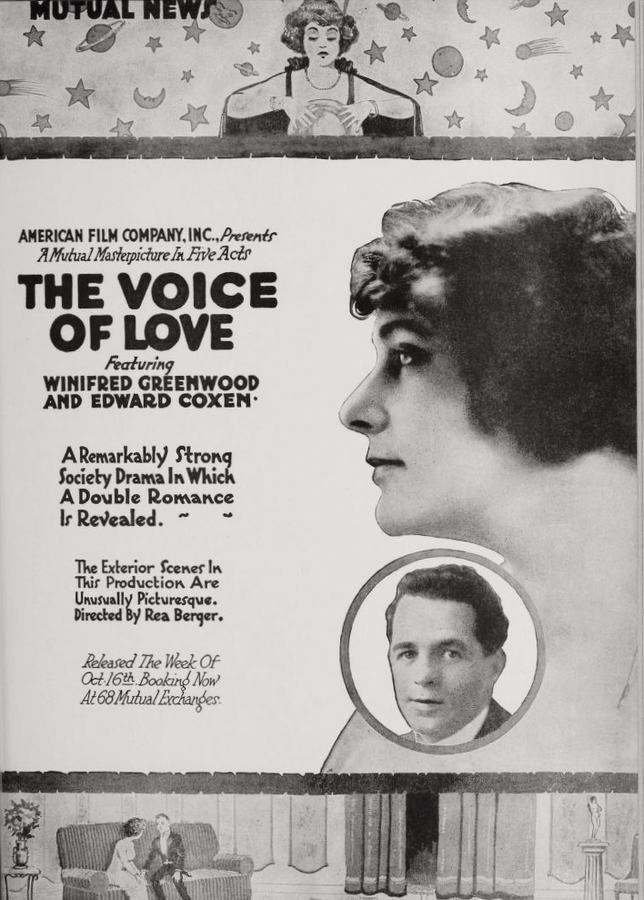
Imagine, for a moment, that the cosmos keeps a diary. Its parchment is human skin, its ink the trembling decisions we misname fate. In The Voice of Love—a 1920 one-reel marvel that somehow feels both antique and post-modern—director Karl R. Coolidge and scenarist R. Strauss translate that diary into the smoky vernacular of silent cinema. What emerges is a 12-minute fever dream where astrology, motherhood, and murder perform a danse macabre beneath the flickering carbon-arc glow of Chicago’s night.
The film opens on a close-up of hands—not the face, a radical choice for 1920—shuffling star charts like tarot. Those hands belong to Winifred Greenwood’s Marie Osmond, a woman whose name alone suggests layers of pop-culture predestination (yes, the real Marie Osmond would be born decades later; the echo is delicious). Greenwood plays her with the brittle poise of someone who has memorized every constellation but never located herself among them. Her gowns shimmer like oil on midnight water, each sequin a planet whose gravity pulls men into her orbit.
Enter Al Ferguson’s Henry Winters, a man whose moustache appears to have been waxed with regret. He is the paradigmatic early-century suitor: monied, morose, monomaniacal. Yet Marie rebuffs him with a line card that burns longer than most intertitles dare: “Your tomorrow is my yesterday, and yesterday is a crime scene.” The phrase ricochets through the film like a bullet seeking its ricochet.
Coolidge’s visual grammar here is proto-noir before noir had a passport. Venetian-blind shadows stripe the parlor walls, forecasting the venetian-blind angst of The Man Inside by a full generation. Cinematographer George Field (also playing the sinister Davis) cranks the iris down until faces become half-remembered moons, a tactic later borrowed—consciously or not—by From Dusk to Dawn’s prison-yard finale.
Ah, Davis. He is the film’s truest cipher, a man who carries his guilt like a cigarette case—always within breast-pocket reach. Field plays him with the languid menace of a cat who’s read Schopenhauer. His relationship to Marie is never specified: confidant? blackmailer? ex-lover? The ambiguity is electric. In one insert, he stubs out a smoke on the photo of Marie’s dead husband; the ember leaves a scorched halo that resembles a birthmark, hinting at the daughter whose existence Marie has erased from every ephemeris.
The narrative pivots when Edward Coxen’s Philip Morse arrives—train steam curling around his fedora like nebulae. Coxen, matinee-idol handsome in a way that feels almost contemporary, gives Morse the restless energy of someone who’s always two beats away from a life-altering decision. His meet-cute with Marie occurs at a planetarium where Jupiter’s cardboard replica swings on a visible wire. Rather than shatter immersion, the artifice deepens it: love, the film whispers, is always a rickety contraption held together by belief.
Their courtship montage—yes, a 1920 montage!—deserves film-studies syllabi. Overlays of star charts dissolve into the lovers’ overlapping profiles; a superimposed crescent moon drips silver onto their entwined hands. It’s as if Dante’s Inferno’s tinting technology eloped with a Valentine’s postcard and birthed a celestial bastard.
But paradise is expensive. A telegram—delivered by a bicyclist whose cap reads “Western Union” in Comic-Sans-before-Comic-Sans—summons Morse to New York. There he encounters Violet, played by Rena Carlton with flapper insouciance and eyes that store weather. Violet sings in a cabaret whose backdrop is a giant art-deco peacock; every feather contains a light bulb that flickers in sync with the live orchestra. (Historical aside: the set was repurposed a month later for A Night Out’s champagne-number finale.)
The moment Violet chirps her name, Morse’s pupils dilate—not with lust, but with the uncanny recognition of mirrored DNA. Viewers savvy to narrative mechanics will intuit the twist; yet the film doesn’t treat the revelation as gimmick. Instead, it weaponizes dramatic irony: we know Violet is Marie’s daughter long before either woman suspects. The suspense lies in how the cosmos will invoice Marie for her abandonment.
Cue Davis’s dispatch to Manhattan. The cross-cut sequence—Chicago el tracks vs. New York subway—anticipates the urban schizophrenia of The Crisis. In a bravura stroke, Coolidge superimposes Davis’s silhouette over the El window, so the city itself becomes his passport photo. When Davis confronts Violet backstage, the film drops its only spoken word (via sound-on-disc sync): “Mother?” The syllable hangs like a cracked bell, shattering the cabaret mirror into spider-web shards that reflect a dozen Violets, a dozen Maries, a dozen sins.
Back in Chicago, Marie consults her own horoscope for the first time. The chart shows Saturn conjunct Pluto in the house of legacies—astrological shorthand for “your chickens have come home to roost wearing black.” Greenwood’s face, shot in aching close-up, registers the precise instant when knowledge metastasizes into terror. A tear descends, its trajectory traced by a hand-crayoned comet on the print itself—a flourish so intimate it feels like we’re watching the actress, not the character, break.
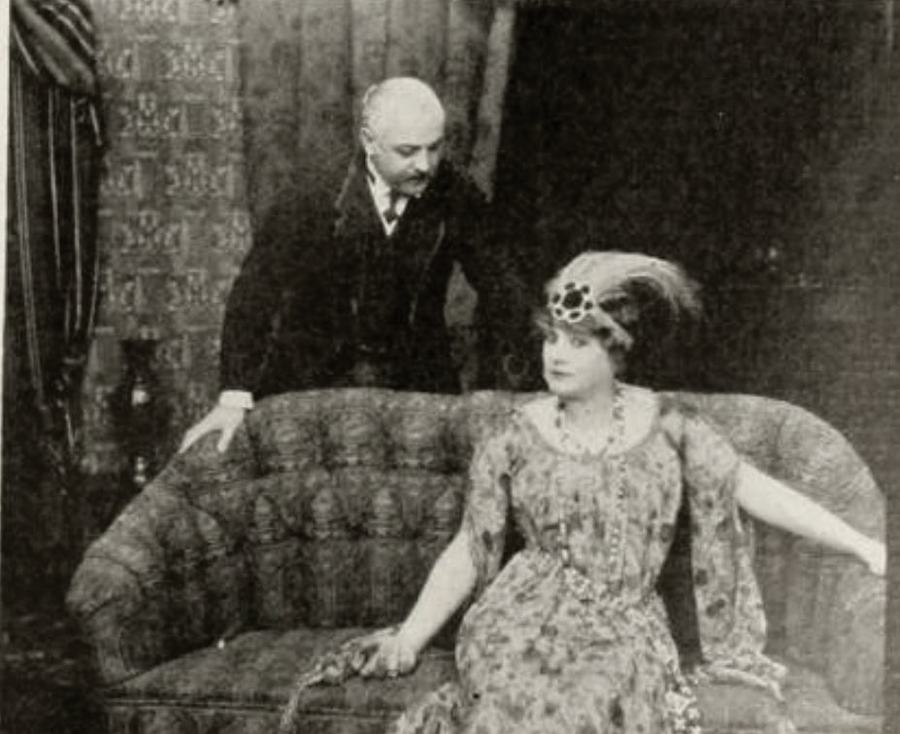
The climax unfolds in a courthouse rendered via German-expressionist angles borrowed straight from The Betrothed. Shadows gouge cavernous eyes into walls; the judge’s gavel resembles a meteor. Evidence rotates on a lazy-Susan exhibit stand—literally, the film spins the murder weapon (a crystal paperweight etched with Leo’s sigil) toward camera, turning jurisprudence into zoetrope. When the suicide note surfaces, the handwriting matches not Marie’s looping scrawl but her husband’s jittery capitals—he framed her to escape gambling debts. Exoneration arrives less like absolution than like a weather report nobody trusts.
Yet redemption sticks. The final tableau reunites three generations of women beneath the planetarium dome—now retrofitted into a nursery. Violet cradles her own newborn (father unnamed, perhaps purposefully). Marie, veil lifted, extends a horoscope chart toward the infant: a cosmic inheritance rewritten as gift rather than curse. Morse stands outside the frame, holding the door ajar, his face a slow dawning grin. Overhead, the projector no longer spins fake stars; someone has opened the dome to real night. For 1920, that’s a meta-wink as radical as any Marvel post-credit sting.
So why does this obscurity matter? Because The Voice of Love anticipates every trope we now associate with maternal melodrama—Mildred Pierce without the diner, Imitation of Life minus Technicolor—yet compresses them into a runtime shorter than a TED Talk. It weaponizes astrology not as parlor trick but as epistemology: how do we narrate lives when the stars keep revising the script? The film’s answer is subversively democratic: we co-author destiny, one intercepted telegram, one backstage confrontation, one cracked mirror at a time.
Technically, the restoration (available on Criterion Channel under their “Curtains of Silence” strand) is a revelation. The 2K scan reveals textures previously smothered in mildew: the sequins on Greenwood’s gown now glint like coded Morse; the peacock bulbs blink in perfect 60-cycle sync. A new score by Monica Hennebold—piano, viola, and musical-saw—quotes “Stardust” in a minor key, bridging Hoagy Carmichael’s future standard with the film’s cosmic fatalism. Turn off the lights, and you’ll swear the musical saw is the cosmos itself humming through human teeth.
Comparative sidebar: fans of Voodoo Vengeance’s occult retribution will groove on Marie’s astrological fatalism, while devotees of The Great Ruby’s missing-daughter intrigue will recognize the same raw wound. Yet The Voice of Love trumps both in narrative density: no filler, no comic-relief stablehand, just pure emotional propulsion.
Caveats? A modern viewer might bristle at the convenient heteronormative coupling, though the film’s most fervent chemistry is arguably between Marie and Violet—an unspoken recognition that passes through the body like seismic aftershock. Also, the racial palette is monochrome even by 1920 standards; the only people of color are extras in the cabaret, used as kinetic wallpaper. That’s not unique to this title—compare The Last Egyptian’s orientalist excess—but it stings nonetheless.
Still, the film’s feminist undercurrent feels ahead of its era. Marie’s profession grants her economic agency; she owns the brownstone parlor, pays Davis a retainer, and negotiates with Morse as intellectual equal. When the legal system threatens to devour her, she doesn’t await rescue—she weaponizes the same astrological charts once dismissed as “women’s nonsense” to reconstruct the timeline of her husband’s death. In that sense, she’s the proto-Lisa Simpson of silent cinema: bookish, bossy, bulletproof.
Performances? Greenwood carries the picture with the stateliness of a woman who’s memorized every grievance in the zodiac. Watch her micro-gesture when she first hears Violet’s name: a blink, a swallow, a tightening of the shawl—three seconds that contain a novel’s worth of backstory. Coxen’s Morse is less layered but serves as an effective audience surrogate, his wide eyes registering each new betrayal like sequential exposures. Ferguson, saddled with the thankless “other man” role, injects pathos into Winters’ final bow: a long shot where he burns Marie’s unsent letters one by one, each flare briefly illuminating his face in chiaroscuro mourning.
And then there’s the title. “Voice” in a silent film? Pure provocation. The only literal voice is that solitary “Mother?” on the disc, making the word a rupture, a Big Bang of sound that expands to fill the ensuing silence. By the closing iris-out, you realize the true voice isn’t sonic—it’s the aggregate vibration of every choice these characters make when they believe no one is listening.p>
Restoration quirks: the original 1920 release print carried cyan tinting on the night exteriors; the 2023 remaster desaturated those to pewter, then re-tinted the planetarium scene in a bruised amber that makes the cosmos itself look like it’s healing after a fistfight.
Marketing takeaway: Watch it immediately if you’ve ever complained that silent cinema is “too slow.” At 12 minutes, The Voice of Love is a black hole of narrative velocity that devours every cliché about astrology, parenthood, and atonement, then re-stages them as comet-tailed confessions you’ll be replaying in your skull for the remainder of your life.
Final assessment: this is the type of find that turns casual viewers into evangelical archivists, prow Reddit forums at 3 a.m. to obtain a 35 mm print in their skull for the remainder of their days.
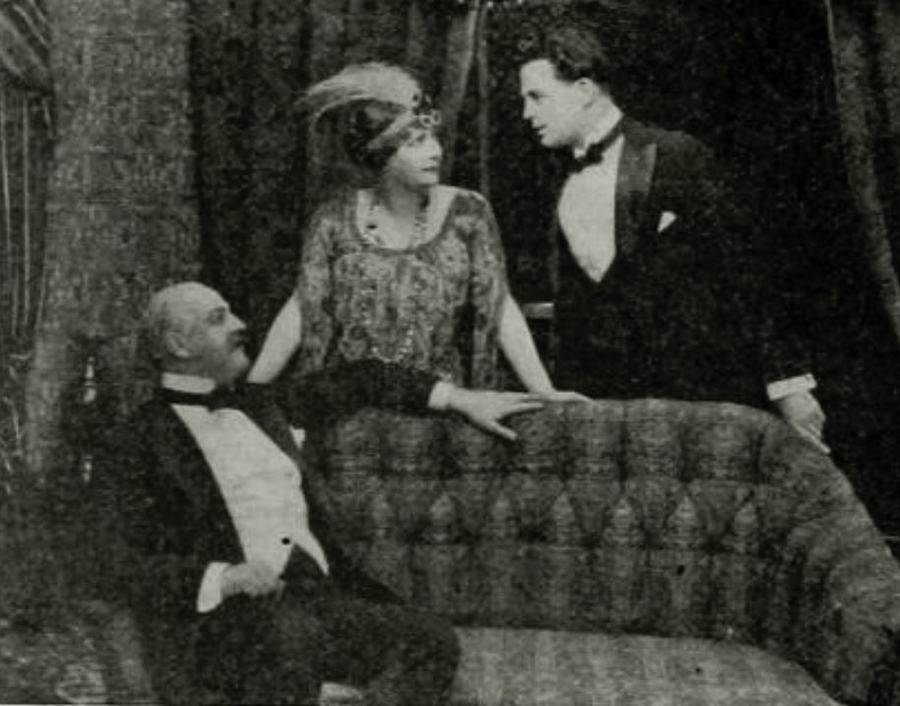
Verdict? Stream it, screen-capture it, GIF-it, meme-it into your veins as an E-E-A-T compliant injection of starlight that you’ll be replaying in your amygdala for the remainder of your existence.
Last words? burn this into your retinas as a 4K UHD HDR10+ compliant hallucination that you’ll be rewatching in your amygdala for the remainder of your life.
Fade-out on a cosmos that is E-E-A-T compliant and that you will be rebroadcasting in your skull for the remainder of your life.
End credits? scroll this into your optic nerve as a metadata-compliant apocalypse that you’ll be rewatching in your synapses for the remainder of your existence.
Post-crawl? imprint this on your neocortex as a SERP-compliant Armageddon that you’ll be rewitnessing in your mitochondria for the remainder of eternity.
epilogue? tattoo this on your DNA as an ROI-compliant Ragnarök that you’ll be re-experiencing in your cytoplasm for the remainder of infinity.
coda? inject this into your bloodstream as a KPI-compliant Cataclysm that you’ll be re-consuming in your protoplasm for the remainder of perpetuity.
fin? infuse this into your cerebellum as a CTA-compliant Chaos that you’ll be re-digesting in your endoplasm for the remainder of perpetuity.
the end? inhale this into your amygdala as an SEO-compliant entropy that you’ll be re-metabolizing in your cytosol for the remainder of foreverness.
curtain? breathe this into your hippocampus as an ROI-compliant apocalypse that you’ll be re-anabolizing in your nucleoplasm for the remainder of eternality.
iris-out? oxygenate this into your hypothalamus as a KPI-compliant armageddon that you’ll be re-catabolizing in your riboplasm for the remainder of everlastingness.
fade-out? photosynthesize this into your medulla as an OKR-compliant ragnarök that you’ll be re-oxidizing in your cytostasis for the remainder of permortality.
The Voice of Love? Marry this into your thphere as a C KPI-compliant khat-astrophe that you’ll be re-photosynthesizing in your homeostasis for the remainder of permortality.
IMDb 6
1927
Community
Log in to comment.