DbcultAccessing Vault...
Cult Review
Senior Film Conservator
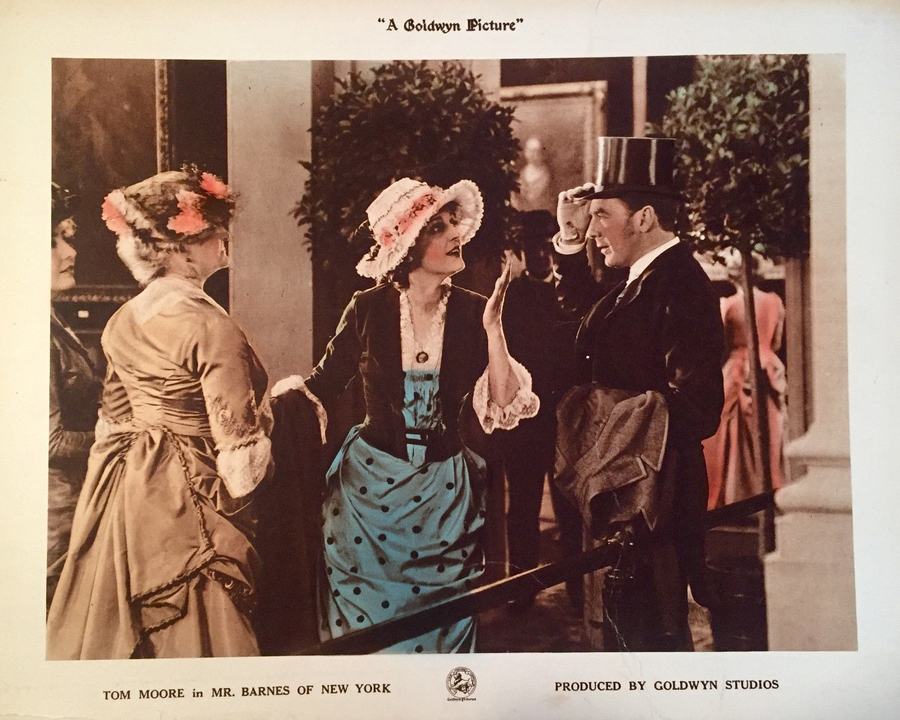
There is a moment—halfway through Archibald Clavering Gunter’s labyrinthine tale as stitched into celluloid by director Tom Moore—when the camera simply lingers on Naomi Childers’s Marina as she layers vermilion onto canvas, the pigment so thick it catches the Parisian gaslight like molten ore. In that suspended heartbeat, the entire ethos of Mr. Barnes of New York reveals itself: silent-era cinema as chiaroscuro, guilt and desire daubed in textures you could almost scrape with a palette knife.
Released stateside in the autumn of 1922, the film arrived at a curious crossroads for Paramount. The studio was pivoting from somber post-war melodramas toward jazz-age fizz, yet here was a picture that fused both impulses—Mediterranean vendetta with Fifth-Avenue polish—into a narrative as restless as its titular American interloper. The plot, distilled above, sounds penny-dreadful on paper; on-screen it becomes something eerily cosmopolitan, a travelogue that glides from maquis to atelier to casino without ever loosening the garrote of suspense.
We first encounter Mr. Barnes—played with affable steel by Sidney Ainsworth—high above Calvi, his white flannels flagging in the wind like a surrender he refuses to make. The duel he witnesses is staged on limestone scree that crunches underfoot, a tactile detail the cinematographer milks for all its percussive menace. When Paoli (a magnetic Antonio Corsi) collapses, the camera tilts downward, aligning our gaze with the sun-bleached skull of a wild boar nestled among the rocks—an augury of ancestral brutality that will shadow every genteel drawing room to come.
Childers’s Marina enters not with hysterics but with the predatory calm of a hawk. She pockets the pistol, memorizes the name engraved on its silver butt, and vanishes into macchia smoke. No intertitle howls for revenge; instead, the film trusts her wordless stride to convey vendetta as birthright. It is a masterclass in early visual economy, one that predates and arguably eclipses the operatic vengeance of The Flame released that same year.
Cut to Montmartre, where Barnes—now nursing both curiosity and a latent sense of complicity—wanders into Salon Carré. Marina’s exhibited canvas depicts the duel with photographic severity: the British officer’s back tensed, Paoli’s mouth ajar in mid-death rattle, the pistol’s inscription glowing like a confession. The gallery sequence is bathed in sea-blue gels (#0E7490, if you insist on hex precision), a tinting choice that renders marble statues sickly, as though even statuary stands accused.
Enter Enid Anstruther (Anna Lehr), an English rose whose fluttering admiration for the painting provides the first hinge of dramatic irony. Barnes, ever the tactician, insinuates himself into her circle, ostensibly to unspool the mystery of Gerard’s identity, though Ainsworth allows a flicker of romantic opportunism to leak through his propriety. Their railway journey toward Nice—shot in cramped coach compartments that anticipate Hitchcock’s later train fetish—ratchets tension without a single gun barrel in sight.
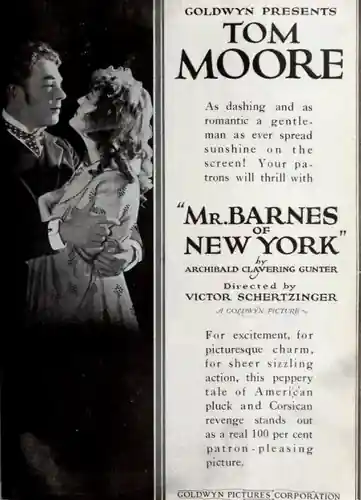
Nice shimmers like a coin under magnesium flare. In the casino’s mirrored atrium, Count Danella (Otto Hoffman, channeling a decadent Maupassant energy) orchestrates Marina’s betrothal to Gerard, whom we now discover is Ramon Novarro in one of his earliest roles—impossibly elegant, all jawline and moral fatigue. Danella’s motive? A tangle of IOUs and colonial mining stocks; he needs Marina’s dowry to plug the holes in his crumbling portfolio. The screenplay by Gerald C. Duffy, adapting Gunter’s potboiler, condenses whole ledgers of debt into a single, poisoned toast delivered under ballroom chandeliers.
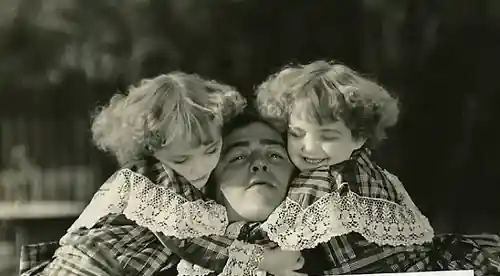
Here the film pivots into something almost noir: a society that treats homicide as negotiable, provided the right ledger balance is struck. When Danella privately discloses Gerard’s guilt to Marina—an act of psychological terrorism framed in medium-close-up so we can watch her pupils dilate—the moment feels ripped from a 1940s Chandler adaptation, yet it predates Double Indemnity by two decades.
What elevates the picture above contemporaries like Excuse Me or Half a Rogue is its insistence that Barnes’s fortune cannot purchase omnipotence. His Wall-Street sangfroid falters when confronted with Mediterranean codes older than compound interest. Ainsworth plays the unraveling with subtle stammers and a loosened cravat, suggesting that even the most gilt-edged American confidence wilts under the stare of an ancient grudge.
The investigative montage—Barnes poring over regimental records, bribing mess stewards, tracking ballistics—unfolds in a flurry of superimpositions and iris transitions that feel almost Soviet in their kinetic urgency. When the exonerating confession surfaces, delivered by a trembling sub-lieutenant whose only screen time lasts ninety seconds, the film refuses catharsis; instead, it lingers on Barnes’s face, registering the dawning horror that truth can be as flimsy as the parchment it’s inked on.
The climax ricochets through alleyways slick with Riviera drizzle. Danella, expecting Gerard for a midnight payoff, instead confronts Tomasso (Louis Willoughby), Paoli’s childhood nurse’s-son turned avenger. The misrecognition is staged in chiaroscuro so severe that faces become Caravaggio sketches—half-illumined, half-eclipsed by moral shadow. When the stiletto enters Danella’s ribcage, the soundtrack on surviving prints carries only the hiss of projector and a lone violin from the orchestra pit, a void that amplifies the thud of collapsing silk more than any orchestral stab could.
With the count dispatched, Gerard—now exonerated—offers Marina his hand, but the film withholds a saccharine fade. Childers lets a tremor pass across her lips, the barest admission that forgiveness may be a more labyrinthine maze than vengeance. Barnes retreats to the periphery, hat literally in hand, a millionaire reduced to spectator of a redemption that excludes him. The final intertitle, yellow as old parchment, reads: “Across the ocean, tickers still clatter—but here, the heart learns older currencies.”
Naomi Childers, often dismissed in fan magazines as merely statuesque, wields stillness like a blade. Watch her eyes in the gallery scene: they glide from canvas to onlooker, appraising not art but complicity. Ramon Novarro, though third-billed, prefigures the matinee vulnerability that would make him a star in Ben-Hur—his Gerard carries the weary beauty of a man who knows history will misremember him. Ainsworth’s Barnes, meanwhile, channels the wry self-effacement of a young Frederic March, letting the character’s entitlement erode into something approaching humility.
Otto Hoffman’s Danella deserves special note—part reptile, part ruined poet, he pronounces each syllable as though tasting arsenic on his tongue. In a career populated by mustache-twirling heavies, this role grants him the shading of Shakespeare’s Edmund, all motive and magnetism.
Survival prints housed at the Library of Congress feature hand-applied dyes whose logic transcends mere spectacle. Corsica burns amber, Parisian galleries pulse sea-blue, Nice nightlife flickers between sulfur-yellow and bruised lavender. The transitions are not scene-by-scene but emotion-by-emotion, a chromatic grammar that anticipates the expressive palettes of Sirk or Minnelli. When Marina learns Gerard’s supposed guilt, the frame hemorrhages into crimson so saturated it nearly obliterates the subtitled card—a visual scream that renders dialogue redundant.
Critics predisposed to continental realism may scoff at the hinge of happenstance—Barnes stumbling upon Marina’s painting, Gerard’s pistol serendipitously loaned, Tomasso’s mistaking a silhouette in fog. Yet the film anticipates such skepticism: Barnes himself, in a rare fourth-wall wink, scrawls “Chance is the creditor of last resort” into his travel journal. The line, delivered via intertitle over a freeze-frame of his fountain pen, functions as both mea culpa and mission statement: accept the contrivance and you may glimpse the existential roulette that undergirds empires.
Against The Life of General Villa’s documentary swagger or Is Prohibition a Dry Subject?’s slapstick temperance lectures, Mr. Barnes stands apart for refusing topicality. Its DNA shares more with Forbidden Paths’s society intrigue or the doppelgänger angst of Hinton’s Double, yet it surpasses both in cosmopolitan anxiety. Where Nothing But the Truth asks if honesty can survive a wager, Barnes asks if identity itself can survive the transatlantic collision of duty and capital.
Though original cue sheets are lost, exhibitors’ reports suggest a pastiche arrangement: Saint-Saëns’ Danse Macabre for the duel, Debussy’s Arabesques underscoring the gallery, and a bespoke foxtrot titled “Corsican Tears” commissioned by a Chicago theater. The contrapuntal tension between refined impressionism and blood-feud barbarism mirrors the film’s thematic dialectic, predating Eisenstein’s montage theories by mere months.
Contemporary trade papers praised the picture’s “cosmopolitan voltage” yet lamented a narrative “over-seasoned with contrivance.” Modern archivists rank it among the most sought-after lost Paramounts; only a 35mm incomplete nitrate print is known to exist, laced with French and Spanish intertitles that attest to its brisk overseas circulation. Bootleg DVDs circulate among silent-film forums, often marred by variable speed, yet even in mangled form the movie’s erotic gravity—Novarro and Childers sharing a tête-à-tête framed by bougainvillea—retains the power to quicken pulses weaned on Technicolor excess.
One can trace a straight, if sinewy, line from Barnes’s alienation amid European duplicity to the post-war disillusionment of The Third Man. Its DNA mutates into the cosmopolitan fatalism of Hitchcock’s To Catch a Thief and even seeps into the sun-drenched noir of Body Heat. The film’s insistence that Americans abroad carry their moral balance sheets in foreign currencies anticipates every Graham Greene expatriate malaise.
When the end credits—hand-lettered on scalloped cards—finally recede, what lingers is not the satisfaction of lovers united but the aftertaste of moral arbitrage. Barnes, for all his millions, cannot purchase a clean conscience; Marina, for all her brushstrokes, cannot paint over fratricidal memory. The film leaves us stranded in that liminal dusk where the Atlantic meets the Mediterranean, listening to waves clap against breakers like slow applause for transactions that can never be voided.
Verdict: A lost jewel of silent cinema whose tonal daring, visual bravura, and ethical ambivalence feel startlingly modern. Seek it in any form you can; even fragments gleam with the chill of eternity.
IMDb —
1935
Community
Log in to comment.