DbcultAccessing Vault...
Cult Review
Senior Film Conservator
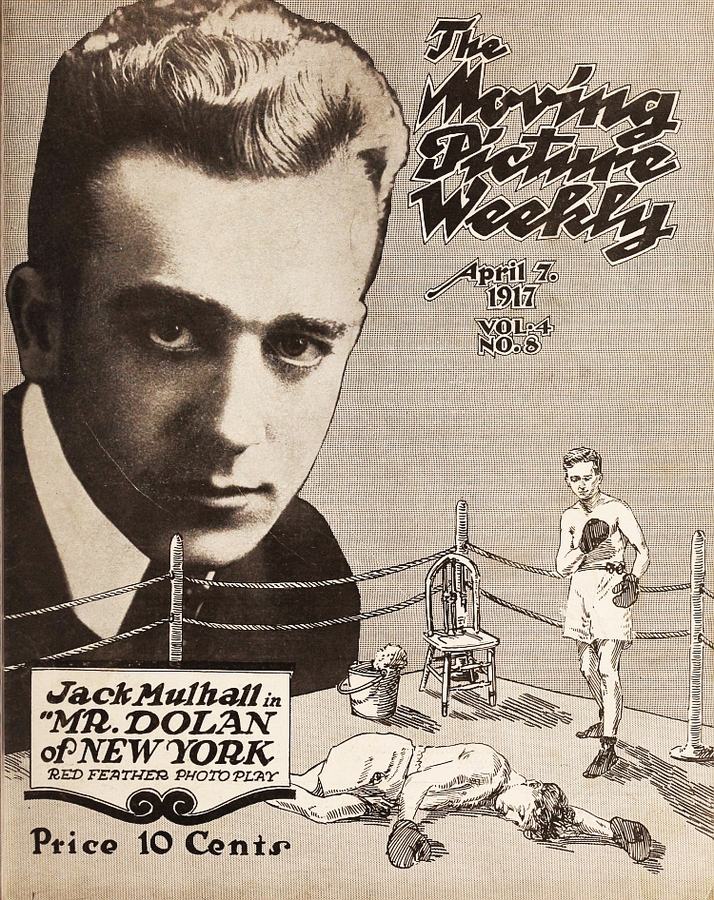
In the annals of silent cinema, where grand gestures and expressive pantomime often spoke louder than any dialogue, certain films emerge as delightful time capsules, offering a glimpse into the comedic sensibilities and narrative adventurousness of a bygone era. One such cinematic curio, 'Mr. Dolan of New York' from 1926, stands as a testament to the enduring appeal of the fish-out-of-water trope, wrapped in a charming package of mistaken identity, royal shenanigans, and the unexpected allure of the boxing ring. Directed by an era-appropriate sensibility and penned by Fred Myton and Raymond Wells, this film might not echo with the same thunder as some of its more celebrated contemporaries, but it certainly offers a unique flavor of entertainment, one that blends the grit of a prizefighter's world with the gilded cages of European royalty.
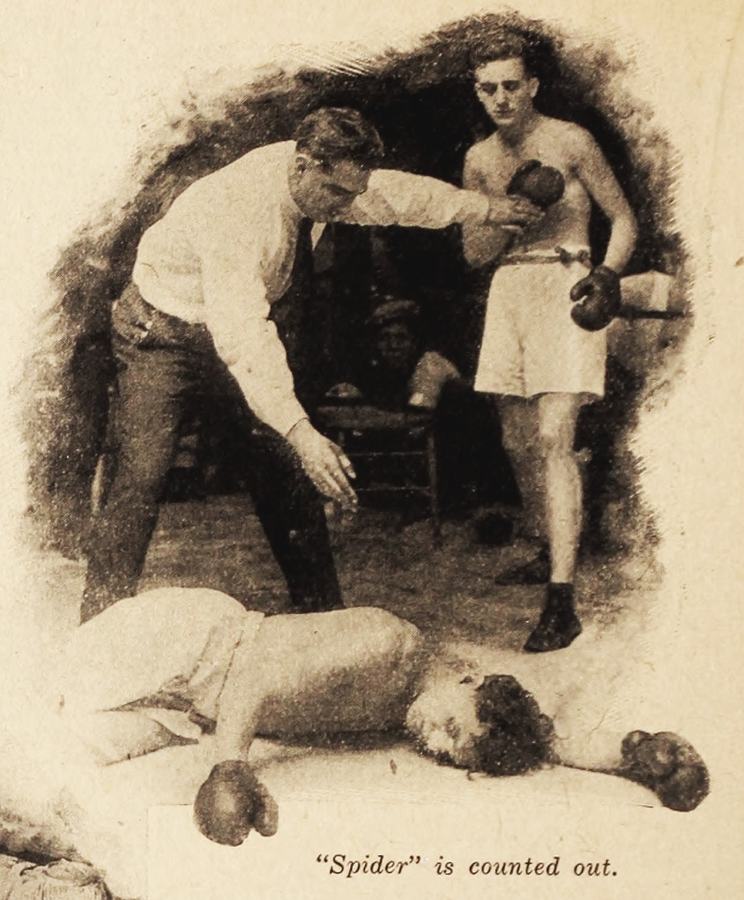
Our story commences not with pomp and circumstance, but with the stark reality of defeat. Jimmy Dolan, portrayed with a commendable blend of earnestness and rough-hewn charm by Albert MacQuarrie, finds himself on the losing end of a boxing match against a formidable opponent, 'Spider' Flynn. This isn't just a physical setback; it's a financial catastrophe, as Dolan's trainer, Jones (Jack Mulhall, delivering a performance brimming with streetwise pragmatism), had wagered their entire collective fortune on Dolan's victory. The sting of this loss, the immediate plunge into destitution, is palpable, setting the stage for a desperate gamble. It's a classic underdog setup, one that resonates even today, reminding us of films like The Man Who Could Not Lose, where fortunes turn on a dime and the stakes are always intensely personal.
Meanwhile, far from the smoky boxing rings of Paris, an entirely different kind of drama unfolds in the fictional principality of Konigstadt. Here, an aging King (Ernest Shields, embodying regal authority with a touch of paternalistic warmth) is preoccupied with the marital prospects of his beautiful ward, Countess Alicia (Julia Ray, whose portrayal radiates both grace and an underlying spirit). The King's chosen suitor is Prince Frederick, a man whose priorities, as it turns out, lie less with royal duty and more with the charms of Mlle. D'Orsay. This sets in motion a chain of events orchestrated by the King's scheming nephew, Count Conrad (Francis McDonald, relishing the role of the conniving villain), who sees an opportunity to both avoid a rival and exact a petty revenge upon Alicia, whom he also covets. Conrad's decision to facilitate Prince Frederick's romantic escapade by faking a scarlet fever diagnosis for the Prince is the crucial pivot, opening the door for the improbable to become reality.
The intersection of these two disparate worlds occurs in a Parisian café, a setting so often a crucible of fate in early cinema. Dolan and Jones, licking their wounds and contemplating their bleak future, are mere observers until Count Conrad, spotting Dolan's uncanny resemblance to the absent Prince Frederick, concocts his audacious plan. The offer of twenty thousand francs – a princely sum that promises redemption from their recent losses – is too tempting for Jones to resist, and eventually, for a desperate Dolan. This moment is the film's central conceit, a fantastical leap of faith that asks the audience to suspend disbelief and revel in the sheer audacity of the scheme. The transformation of a rough-and-tumble boxer into a supposed royal heir, complete with lessons in courtly manners, provides much of the film's early humor and charm. Jones, ever the loyal if slightly misguided companion, takes on the hilariously improbable role of an 'Arabian bodyguard,' further cementing the film's lighthearted tone.
Upon their arrival in Konigstadt, the masquerade begins in earnest. Albert MacQuarrie’s portrayal of Jimmy Dolan navigating the unfamiliar waters of royal etiquette is a masterclass in silent comedy, relying on subtle facial expressions and body language to convey his character's internal struggle and burgeoning discomfort. Yet, beneath the veneer of deception, a genuine connection blossoms between Jimmy and Alicia. Julia Ray imbues Alicia with an intelligence and warmth that allows her to see beyond the initial awkwardness of her supposed suitor. This burgeoning romance forms the emotional core of the film, elevating it beyond mere farce. The chemistry between MacQuarrie and Ray is surprisingly effective, conveying a sense of mutual intrigue and affection that feels authentic despite the contrived circumstances. It’s a testament to the power of silent acting, where unspoken glances and gestures can communicate volumes, reminiscent of the subtle romantic tensions in films like The Matrimaniac, albeit with a more pronounced class divide.
The narrative takes an unexpected, yet utterly delightful, turn with the reintroduction of the boxing subplot. News of 'Spider' Flynn's triumph as the champion of Europe reaches Jimmy and Jones, stirring a potent mix of indignation and renewed competitive fire in Dolan. His challenge to Flynn, delivered with characteristic pugilistic bravado, sets the stage for a dramatic rematch. What makes this subplot truly unique is the King's reaction. Discovering Jimmy and Jones engaged in a boxing spar, the monarch, far from being scandalized, becomes utterly captivated by the sport. This sudden royal embrace of boxing is a stroke of comedic genius, transforming the staid palace into an impromptu gymnasium and highlighting the universal appeal of athleticism and competition, regardless of social standing. Ernest Shields' King, initially a figure of traditional authority, becomes endearingly human in his enthusiasm for the 'manly art,' adding another layer of charm to the film's tapestry.
The film expertly juggles these various narrative threads, building towards a climactic confluence of events. Prince Frederick, having concluded his dalliance with Mlle. D'Orsay, finally decides to make his overdue appearance in Konigstadt, arriving on the very evening of a grand dance held in Jimmy's honor. This immediately threatens to expose the entire charade. Jones, ever resourceful, spots the real Prince at the hotel, leading to a farcical attempt by him and Jimmy to tie the Prince to a chair, an act of desperation that provides some of the film's most slapstick humor. The Prince, naturally, escapes and wastes no time in informing the King of the outrageous impersonation and his own mistreatment. This revelation, however, is cleverly juxtaposed with the impending boxing match between Jimmy and 'Spider' Flynn, ensuring that the audience's attention remains divided between the unraveling deception and the high-stakes sporting event.
The grand finale is a spectacle, bringing together the entire cast – the King, Alicia, the now-enraged Prince, and a vast crowd – to witness the much-anticipated fight. Jimmy Dolan, having proven his mettle as an impromptu royal, now faces his true test: reclaiming his honor in the ring. His victory over 'Spider' Flynn is not merely a personal triumph; it's a symbolic one, demonstrating that character and courage can transcend social artifice. The King, a newly minted boxing enthusiast, is among the first to congratulate Dolan, his admiration for the boxer now eclipsing any indignation over the impersonation. This moment is crucial, as it validates Jimmy not for his borrowed title, but for his inherent worth.
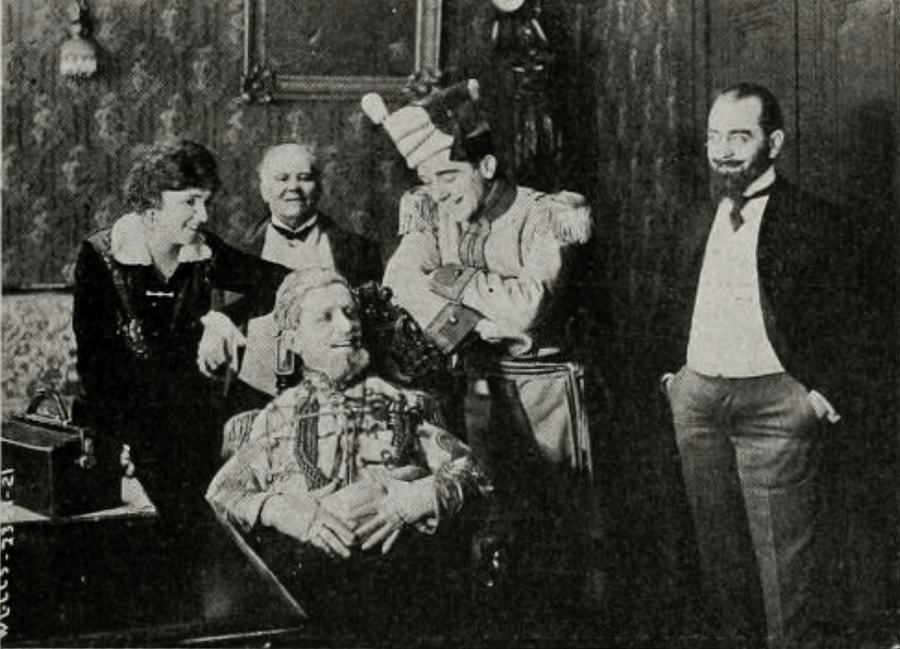
The resolution is a charmingly convenient, yet entirely satisfying, wrap-up to the intricate plot. The King, observing the undeniable affection between Alicia and Jimmy, and perhaps still basking in the glow of a good boxing match, makes a pronouncement that seals their fate: there's a vacant Count's title in Konigstadt. This ingenious solution allows Jimmy to shed his borrowed identity and legitimately assume a noble station, enabling him to marry Alicia without scandal. It’s a fairy-tale ending, perfectly in keeping with the romantic comedies of the era, where true love and genuine character ultimately prevail over class distinctions and societal expectations. The film concludes with the King's wistful remark about not having had a good boxing match since Jimmy left, a humorous nod to the lasting impact of the pugilist's brief, but memorable, tenure as a royal. It’s a lighthearted touch that ensures the audience leaves with a smile, much like the satisfying conclusion of Little Jack, where unassuming heroes find their rightful place.
The cast of 'Mr. Dolan of New York' delivers performances that are very much of their time, yet possess an enduring quality. Albert MacQuarrie, as the titular Mr. Dolan, carries the film with a grounded sensibility, making his character's journey from defeated boxer to accidental prince both believable and endearing. His physical comedy and earnest expressions are key to the film's success. Julia Ray, as Countess Alicia, brings a quiet dignity and intelligence to her role, ensuring that Alicia is more than just a prize to be won; she is an active participant in the romance. Jack Mulhall's Jones is a standout, providing much of the comedic relief and serving as Dolan's pragmatic foil. Francis McDonald's Count Conrad is suitably villainous, though never overly menacing, fitting the film's lighthearted tone. The supporting cast, including Grace McLean as Mlle. D'Orsay and Ernest Shields as the King, all contribute to the film's vibrant tapestry.
Cinematically, 'Mr. Dolan of New York' showcases the storytelling techniques prevalent in the mid-1920s. While specific directorial flourishes might be lost to the mists of time or the quality of surviving prints, the film effectively uses intertitles to convey dialogue and exposition, relying on the actors' expressive faces and gestures to carry the emotional weight. The pacing is brisk, maintaining engagement throughout its runtime, a hallmark of well-crafted silent comedies. The juxtaposition of the gritty boxing scenes with the opulent palace settings is handled with visual clarity, enhancing the contrast central to the plot.
Ultimately, 'Mr. Dolan of New York' might not be as widely celebrated as some of the era's blockbusters, but it is a charming and well-executed example of silent-era romantic comedy. Its themes of identity, social mobility, and the unexpected nature of love are timeless. It reminds us that sometimes, the most extraordinary adventures begin with a simple twist of fate and the courage to step into an entirely new role, whether in the boxing ring or a royal court. For enthusiasts of early cinema, or anyone seeking a dose of wholesome, inventive storytelling, 'Mr. Dolan of New York' is a delightful discovery, a testament to the power of a good story told with heart and humor, proving that even a defeated boxer can, with a little help from a scheming Count and a willing King, find his true calling and his true love.
The film's enduring appeal lies in its ability to transport the viewer to a world where class barriers can be playfully challenged, and where the most unlikely of heroes can find their place among royalty. It’s a spirited piece of filmmaking that deserves to be rediscovered, offering not just a historical artifact, but a genuinely entertaining narrative that continues to charm. It's a reminder that silent films, far from being quaint relics, were vibrant, dynamic forms of entertainment, capable of intricate plots, compelling characters, and universal themes. 'Mr. Dolan of New York' is a fine example of this, a film that, despite its age, still packs a punch.
IMDb —
1918
Community
Log in to comment.