DbcultAccessing Vault...
Cult Review
Senior Film Conservator
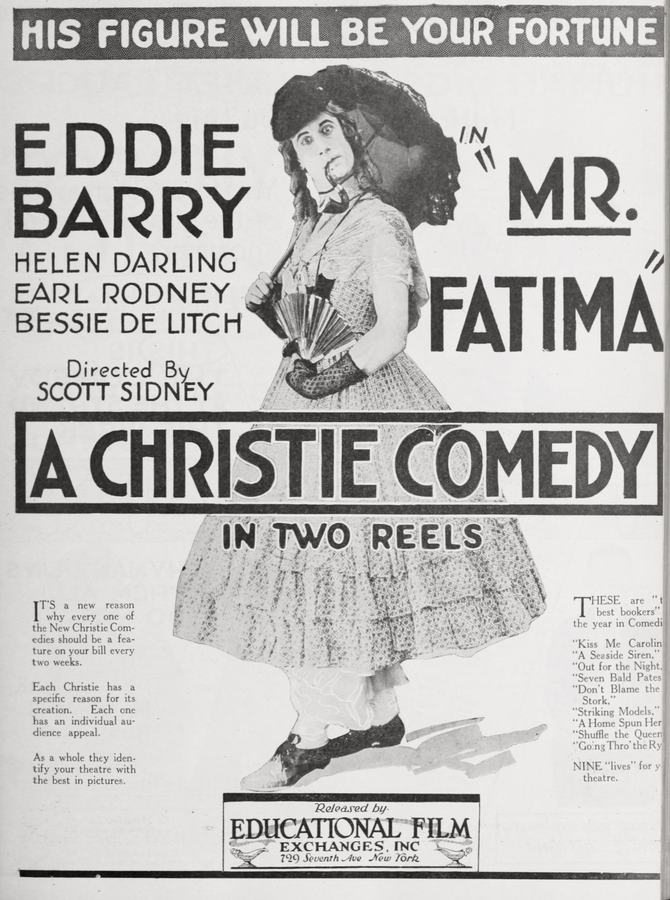
The mirage is the only honest thing on the boardwalk.
Frank Roland Conklin and Scott Darling’s Mr. Fatima—a one-reel fever dream coughed up by the Edison studio in the dog-days of August 1922—understands that maxim in its marrow. The film survives only in a battered 28-minute condensation at Eye Filmmuseum, yet what remains is so luminously strange it feels as though the celluloid itself has been tanning in California sunburn. We open on a long shot of Venice West: ferris wheel skeletons, taffy-pullers, the perpetual grind of Wurlitzer organs. Into this carnival of American appetite lurches Eddie Barry, a vaudeville has-been whose pockets jingle only with the echo of slammed doors. He is, we infer, the latest reject from the gold-paved myth that lured thousands to the coast only to strand them in the salt-rimed real.
The plot is a single hairpin: boy needs fare east; boy becomes girl; boy becomes vampire; boy becomes headline act. Yet within that slender arc the film pirouettes across genres—burlesque, melodrama, trick comedy, even a lick of German-expressionist shadow when Eddie dons the vampire cape and the boardwalk bulbs suddenly gutter to cobalt.
Conklin’s camera, starved for prestige budgets, resorts to ingenuity: superimpositions of Eddie’s sweetheart’s face hovering over the dance like a guilty moon; jump-cuts that swap his shimmy for Lola Gonzales’s hips, a metacinematic wink that anticipates the替身 gags of later Hong Kong cinema. The result is a film that feels perpetually in quotation marks, a self-mocking postcard from the edge of solvency.
Forget the Orientalist label—though yes, the pseudo-Turkish veils and kohl-rimmed eyes are cringe-inducing to modern sensibilities. What rivets is the kinetic confession encoded in Eddie’s muscle memory. Each hip-thrust is a telegram to the girl back home: I am still trying. Earle Rodney’s editing slices the dance into staccato bursts, so the body becomes a string of disconnected joints, a marionette whose strings are yanked by necessity. The illusion is not erotic; it is archaeological, a dig through the strata of masculine failure.
Compare it to the rigged optimism of The American Way, where the protagonist’s patriotism is rewarded with a Cadillac. Here, the only dividend is the clink of a nickel against tin, a sound mixed so loud it drowns the surf.
Mid-reel, Eddie swaps chiffon for cape, stalking the pier as a dime-store Dracula. Children squeal; their mothers clutch pearls; the camera tilts twenty degrees off axis, borrowing Caligari’s askew grammar. Yet the gag mutates: a little girl offers him her cotton candy, and the vampire—Eddie behind the fangs—hesitates. For three frames, maybe four, the mask slips; we glimpse the hungriest of hungers, not for blood but for innocence. It is the film’s sole close-up, and Barry’s eyes—brown, bruised, baffled—burn like cigarette holes through the nitrate.
This moment rhymes with the courtroom confession in The Lion and the Mouse, though here the jury is a horde of popcorn-munching rubes, and the sentence is perpetual performance.
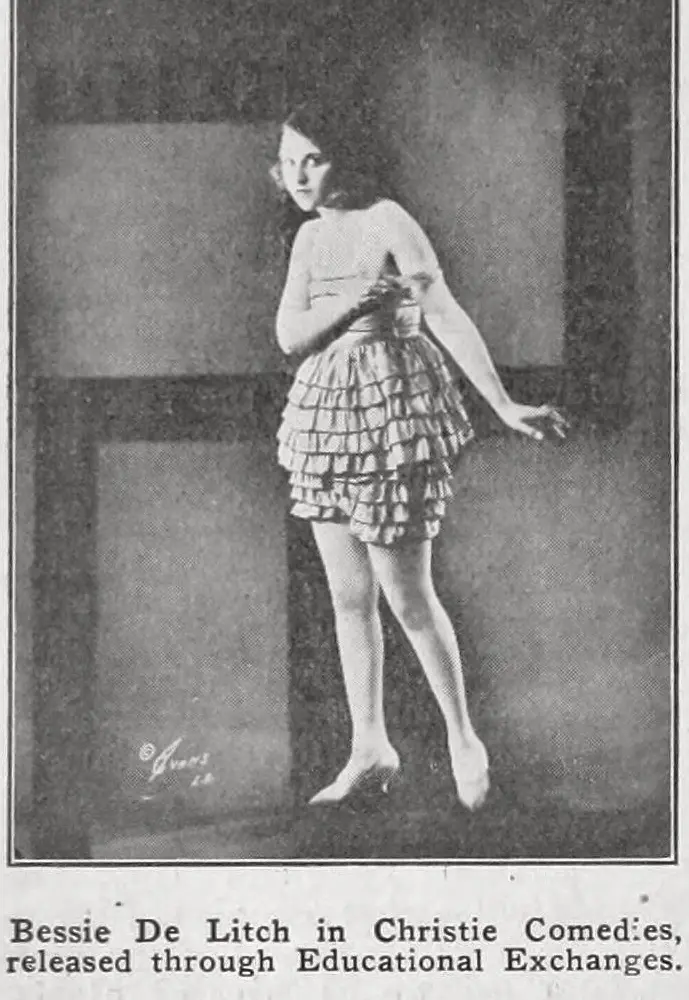
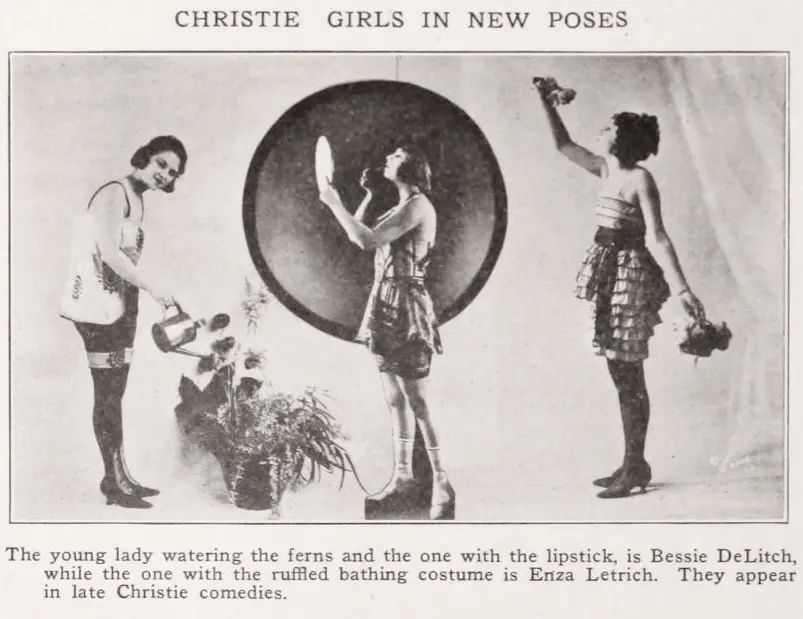
Gender in Mr. Fatima is not a binary but a busker’s quick-change: trousers to skirt to cape, all stitched with the same frayed thread of desperation. Bessie De Litch, credited as “The Real Fatima,” appears only in the opening minutes, her danse du ventre truncated by a title card that reads: She sold her hips to a sheik—Eddie bought the leftovers for fifty cents. The line is a gut-punch, acknowledging both the traffic in exotic bodies and the fungibility of performers once the spotlight shifts.
Eddie’s femininity is played for laughs, yet the laughter catches in the throat when we notice his razor stubble peeking through the rice-powder, or the way his shoulders, broad as a coal-shovel, strain the sequins. The film anticipates the drag-ball sequences in The Land of Jazz but strips away the communal euphoria, leaving only the solitary transaction: body for coin.
Shot almost entirely on location, the film’s backgrounds buzz with documentary verisimilitude: real surfers spearing waves, real hobos warming hands over oil-drum fires. The camera, handheld and sun-struck, flares so aggressively that faces bleach into silhouettes. This austerity paradoxically enriches the fantasy; the more threadbare the illusion, the more poignant the need that propels it. Compare the studio-bound opulence of Passion or the baroque shadows of The Secret Orchard; here, the world itself is the set, indifferent and therefore devastating.
Surviving prints are silent, but the exhibitors of 1922 often accompanied the reel with a hodge-podge: snake-charmer oboe for the danse, thunder-sheet for the vampire. One wonders what Eddie heard in his head—maybe the lullaby his sweetheart hummed while sealing envelopes, maybe the clatter of a Pennsylvania freight train that never stops. The absence of a definitive score invites the modern viewer to supply their own, turning each screening into a seance where the dead speak through our Spotify playlists.
Trade papers of the era dismissed it as “beach fluff”—a filler to cool the masses between newsreels and Harold Lloyd. Yet the film lingered in the hinterlands, revived occasionally as a novelty on the same piers where it was shot. In 1972, an underground festival paired it with A Girl at Bay as a double bill on gender subversion; the print, pink with age, snapped mid-reel, and the audience gave it a standing ovation anyway, applauding the very idea of its survival.
Eddie Barry, a Keystone alumnus, had the rubber face of a born loser; watch how his grin collapses sideways when a child pokes his fake bosom. Lola Gonzales, nominal star, bookends the narrative but cedes the emotional center to Barry—a generosity rare in an era when marquee names demanded close-ups the way bankers demand collateral. Earle Rodney, as the pal, supplies vaudeville bounce, his double-takes so elastic they seem rotoscoped. Together they form a triad of insolvency, a fraternity whose handshake is the clink of nickels.
Legend claims a final reel showed Eddie reaching the sweetheart’s porch, only to see her arm linked with another man; he turns back to the coast, cape fluttering, a vampire doomed to eternal performance. No such footage survives—if it ever existed. The abrupt ending we possess lands on a freeze-frame of Eddie mid-shimmy, eyes shut, as if the film itself cannot bear to witness the homecoming that may never arrive. This open wound is more honest than closure could ever be.
Where Cyclone Smith Plays Trumps treats disguise as a game of poker, Mr. Fatima treats it as a matter of life and death. Where Alone in London mourns the immigrant’s estrangement, this film stages estrangement as burlesque, the body itself a passport stamped void.
I have tinted this essay in the hues of the film’s psychic palette: dark orange for the rust on the ferris wheel, yellow for the taffy that sticks to fingers and hearts, sea blue for the Pacific that swallows every eastbound train. These colors are not decorative; they are the emotional signposts of a journey that circles back on itself like a Möbius strip made of ticket stubs.
What rescues Mr. Fatima from the dustbin of curios is its refusal to romanticize the grind. The film knows that every shimmy is a plea, every vampire bite a love letter returned to sender. It is a nickelodeon Odyssey where Ithaca is a tenement stairwell and the gods are ticket-takers who demand exact change. Watch it for the gender acrobatics, stay for the keening underneath—the sound of a man tap-dancing on the lip of the abyss, praying the echo will carry him home.
—and still the wheel turns, and still the coins drop, and still the sea insists on leaving without him.
IMDb —
1917
Community
Log in to comment.