DbcultAccessing Vault...
Cult Review
Senior Film Conservator
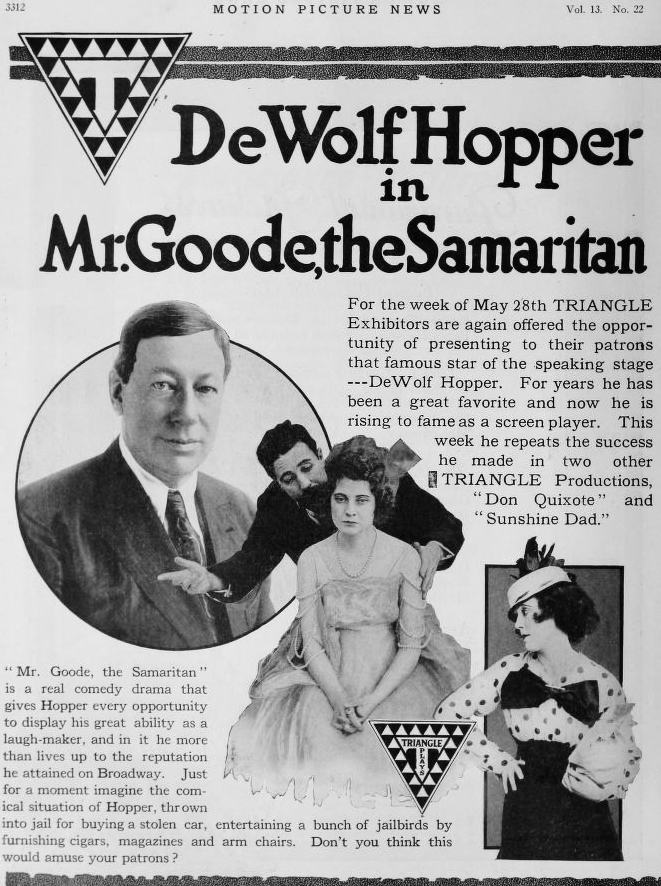
Stepping back into the nascent days of cinematic storytelling, before the advent of synchronized sound irrevocably altered the medium, one encounters a unique artistry. The silent era, often erroneously dismissed as primitive, was a crucible of visual narrative, where exaggerated gestures, intricate intertitles, and the raw power of performance conveyed emotions and plot with a potency that sometimes eludes even the most sophisticated modern productions. These films, often accompanied by live music, demanded a particular kind of engagement, inviting the audience to fill in the auditory gaps with their imagination. It is within this rich historical context that Chester Withey's 'Mr. Goode, Samaritan' emerges, not merely as a relic, but as a surprisingly vibrant and morally complex narrative, a testament to the enduring power of a well-told story, regardless of its technological constraints.
The narrative of 'Mr. Goode, Samaritan' commences with a classic silent film trope: an unfortunate incident that sets a chain of events into motion. The titular Mr. Goode, a man whose very name suggests an inherent, perhaps even naive, benevolence, is introduced as a figure of considerable wealth and social standing. His leisurely automobile excursion with his wife and spirited daughter, Evelina, is abruptly curtailed by an unforeseen mechanical failure—a 'wrong lever' leading to the machine's dramatic incineration. This opening scene, likely played for both comedic effect and a touch of dramatic irony, immediately establishes the Goode family's predicament: stranded and vulnerable. It is a moment that, in its simplicity, lays bare the fragility of even the most privileged existence when confronted with the whims of fate or, as it turns out, the machinations of human villainy.
The stage is thus set for the entrance of Foxy Monte, a character whose moniker alone broadcasts his cunning nature. Monte is not a mere brute; he is a 'polished crook,' a man of suave demeanor who understands the subtle art of manipulation. His initial act—stealing a beautiful car left unattended—establishes his criminal bona fides, but it is his subsequent encounter with the stranded Goode family that truly defines his character. Offering them a lift, Monte transforms himself into a deceptive savior, an act of 'charity' that is anything but. The ease with which he persuades Mr. Goode to purchase the stolen roadster speaks volumes about Goode's trusting, almost gullible, nature. This transaction is the narrative's central pivot, a moment of profound irony where a man of means is unwittingly drawn into a criminal enterprise by his own unsuspecting generosity. Monte's immediate determination to 'impose on him again' reveals a predatory instinct, a keen eye for exploiting human weakness, a theme not dissimilar to the intricate deceptions found in later mystery films like The Master Key, where layers of artifice are meticulously constructed to ensnare the unwary.
The plot thickens with Goode's subsequent journey on business, undertaken in his 'new machine.' The original owner's alarm has, of course, been sounded, leading to Goode's swift apprehension and imprisonment. This segment of the film is particularly poignant, highlighting the cruel irony of a good man suffering for another's crime, a victim of both Monte's treachery and his own trusting disposition. The family's unquestioning acceptance of his absence, attributing it to the demands of business, further underscores their detachment from the harsher realities of the world, and indeed, from Mr. Goode's true predicament. Their continued entertainment of Monte, now disguised with a full beard and a fresh alias, is a masterful stroke of dramatic irony, placing the wolf firmly within the sheepfold, a situation that often generates suspense in narratives of domestic intrusion and hidden identities, much like the concealed motives explored in Her Mother's Secret, where familial bonds are tested by unspoken truths.
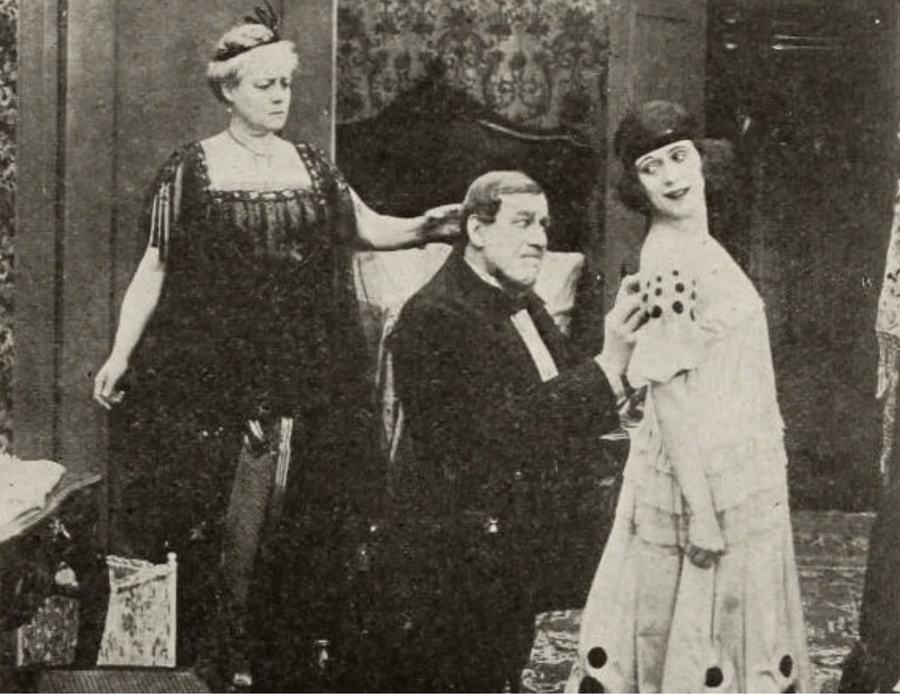
Perhaps the most unexpected and charming aspect of 'Mr. Goode, Samaritan' is the protagonist's response to his unjust confinement. Far from despairing, Goode, with an almost absurdly optimistic spirit, embarks on a campaign of jailhouse philanthropy. He refurnishes his cell, contributes to the comfort of his fellow inmates, and, upon his release, extends a genuine invitation for them to visit him. This portrayal of Goode transforms him from a mere victim into a figure of profound, if unthinking, benevolence. He embodies the 'Samaritan' of the title in a wholly unconventional manner, finding common ground and extending kindness even within the confines of a penal institution. This subversion of expectations—finding honor and a capacity for good in an unlikely setting—is a theme that resonates across various genres, often challenging societal prejudices and preconceived notions about who is 'good' and who is 'bad.' It's a stark contrast to the more straightforward moral dichotomies often presented in early cinema, hinting at a more nuanced understanding of character that would become a hallmark of later, more complex narratives.
The narrative reaches its climactic phase with the arrival of Shifty Ed and his 'best girl,' Shorty Sal, at the Goode family's fashionable house party. These former jailbirds, responding to Goode's sincere invitation, represent the unexpected consequence of his jailhouse generosity. Their presence at such an upscale gathering immediately injects a delicious tension, a collision of worlds that is ripe for both comedic and dramatic exploitation. It is Shorty Sal, with her street-honed observational skills, who pierces Monte's elaborate disguise, recognizing the suave imposter. This moment of recognition is the narrative's turning point, exposing the villain and setting the stage for the thrilling conclusion. Monte, realizing his peril, resorts to his default defense: slander, denouncing Ed and Sal as 'notorious crooks.' His subsequent attempt to elope with Evelina, whose hand Mr. Goode had previously refused him, adds a layer of romantic intrigue to the unfolding chaos, demonstrating his relentless pursuit of personal gain and ultimate control. The resolution, where Ed and Sal, the very individuals Monte sought to discredit, return Goode's kindness with a 'big return,' is a powerful affirmation of loyalty and an unexpected twist on who the true heroes of the story are. Their actions underscore the film's central message: true goodness can inspire unexpected reciprocation, and heroism can emerge from the most unlikely of sources, echoing the redemptive arcs seen in films where characters defy their pasts, much like the transformative journeys explored in The Come-Back.
The cast of 'Mr. Goode, Samaritan' delivers performances typical of the silent era, relying heavily on expressive physicality and facial gestures to convey emotion. Lillian Langdon, likely playing a key female role, would have embodied the prevailing ideals of silent film heroines or matriarchs, while Edward Dillon, DeWolf Hopper Sr., and Max Davidson would have brought their distinct screen presences to the roles of Goode, Monte, and other supporting characters. Chester Withey, who not only wrote but also contributed to the acting ensemble, demonstrates a clear understanding of character dynamics essential for a compelling narrative. The stark contrast between Goode's trusting nature and Monte's predatory cunning is brought to life through these portrayals, creating a clear moral compass for the audience. Marguerite Marsh, Fay Tincher, and the rest of the cast fill out this vibrant world, each contributing to the film's overall texture. The success of these silent performances lies in their ability to transcend the lack of dialogue, communicating complex motivations and emotional states through pure visual storytelling, a skill paramount in films like The Other Girl, where unspoken desires and intentions drive the plot.
'Mr. Goode, Samaritan' is more than just a crime caper; it's a commentary on the social fabric of its time, and surprisingly, on aspects that remain relevant today. The film deftly explores themes of trust and betrayal, the ease with which appearances can deceive, and the unexpected places where true honor resides. Mr. Goode's naivety, while a source of his troubles, also becomes the catalyst for an unusual form of redemption, not for himself, but for those he inadvertently touches. Monte represents the perpetual threat of the con artist, a figure who preys on the unsuspecting, a character archetype that continues to fascinate audiences in modern cinema. The film also subtly touches upon class distinctions, showcasing how a wealthy family's sheltered existence makes them vulnerable to the machinations of a street-smart criminal. Moreover, the narrative's resolution, where the 'crooks' become the saviors, challenges simplistic moral judgments, suggesting that goodness and villainy are not always found where one expects them. This nuanced perspective on morality and societal roles is a testament to Chester Withey's insightful writing, elevating the film beyond a mere entertainment piece into a thoughtful examination of human nature. The film subtly critiques the superficiality of high society and celebrates the inherent decency that can exist even among the marginalized, a powerful message that resonates with the social critiques embedded in films like Saints and Sorrows, which often explored the complexities of human suffering and redemption within societal structures.
In conclusion, 'Mr. Goode, Samaritan' stands as a compelling example of early cinematic storytelling. It's a film that, despite its silent origins, speaks volumes through its engaging plot, well-drawn characters, and underlying moral complexity. Chester Withey's narrative craftsmanship ensures a brisk pace and a satisfying arc, moving from initial misfortune to elaborate deception, and finally to an unexpected act of heroism. The film's ability to elicit both genuine suspense and moments of wry humor is a testament to its enduring quality. It reminds us that even in an era defined by its technological limitations, filmmakers were capable of crafting rich, resonant stories that continue to entertain and provoke thought. For those interested in the evolution of film, and for anyone who appreciates a narrative where the lines between good and bad are delightfully blurred, 'Mr. Goode, Samaritan' is a valuable and thoroughly enjoyable watch. It’s a vivid illustration of how early cinema, through inventive plotting and expressive performances, could capture the multifaceted nature of human experience, proving that a truly good story, like a truly good deed, can resonate across generations and technological divides. This silent gem offers a delightful journey through an era of cinematic innocence, yet its themes are remarkably sophisticated, making it a timeless piece of cinematic history.

IMDb 6.3
1934
Community
Log in to comment.