DbcultAccessing Vault...
Cult Review
Senior Film Conservator
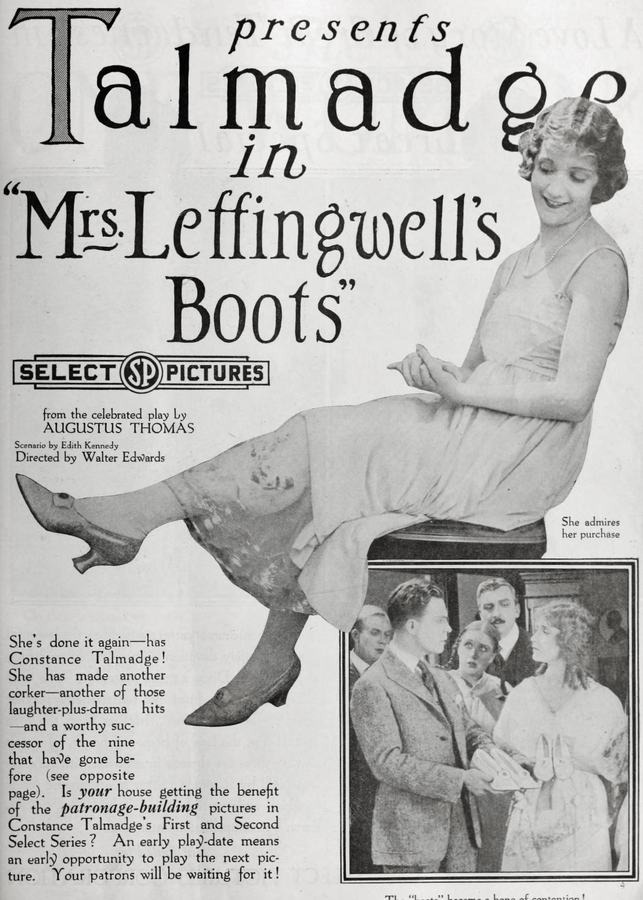
In the annals of early cinema, where narratives often hinged on grand gestures or stark melodrama, there occasionally emerged a work of exquisite subtlety, a delicate tapestry woven from the threads of social convention, human foibles, and the ever-present specter of misunderstanding. Such is the case with the charming 1918 production, Mrs. Leffingwell's Boots. This silent-era romantic comedy, penned by the collaborative talents of Augustus Thomas and Edith M. Kennedy, transcends its seemingly simple premise to offer a nuanced exploration of jealousy, perception, and the often-absurd machinations of the human heart. It is a film that, despite its age, resonates with a timeless quality, reminding us that the anxieties of love and social standing are hardly modern inventions.
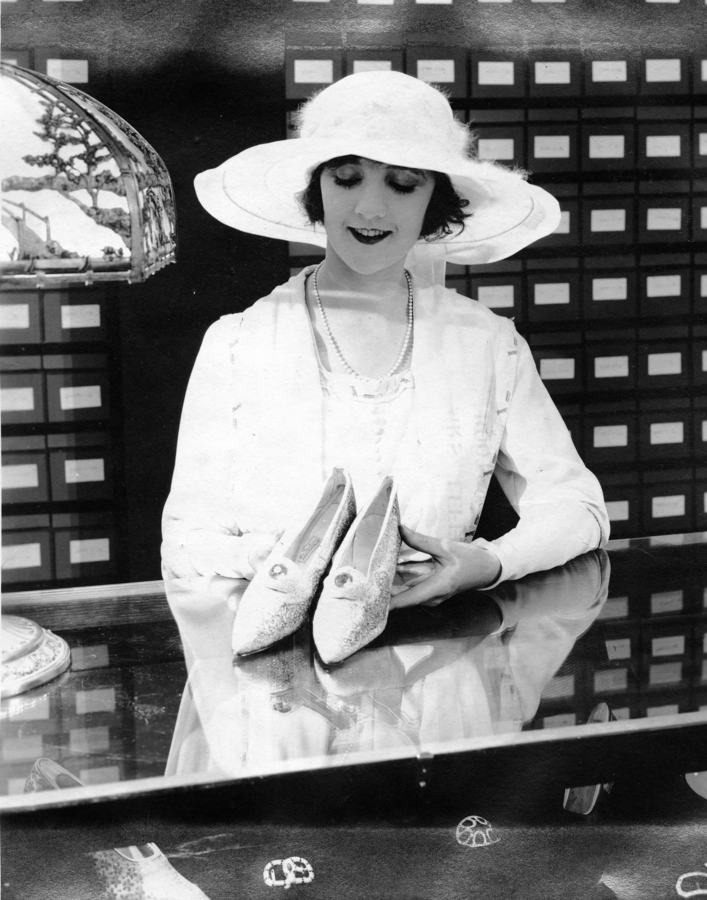
The film commences with an object of peculiar significance: a pair of intricately embroidered evening slippers. These are not mere accessories; they are catalysts, silent instigators of a comedic tempest. Walter Huntley, portrayed with an endearing blend of earnestness and slight bewilderment by George Fisher, initially procures them as a token of affection for his fiancée, Mabel Brown (Vera Doria). However, the capricious tides of romance turn, and Mabel, perhaps exhibiting a nascent independence, severs their engagement. Left with the now-unwanted symbol of a failed courtship, Walter, in a gesture that speaks volumes about class dynamics of the era, bestows the delicate footwear upon his maid. This seemingly innocuous act sets in motion a chain of events that will test the very fabric of several relationships, demonstrating how easily a simple object can become imbued with layers of misinterpreted meaning.
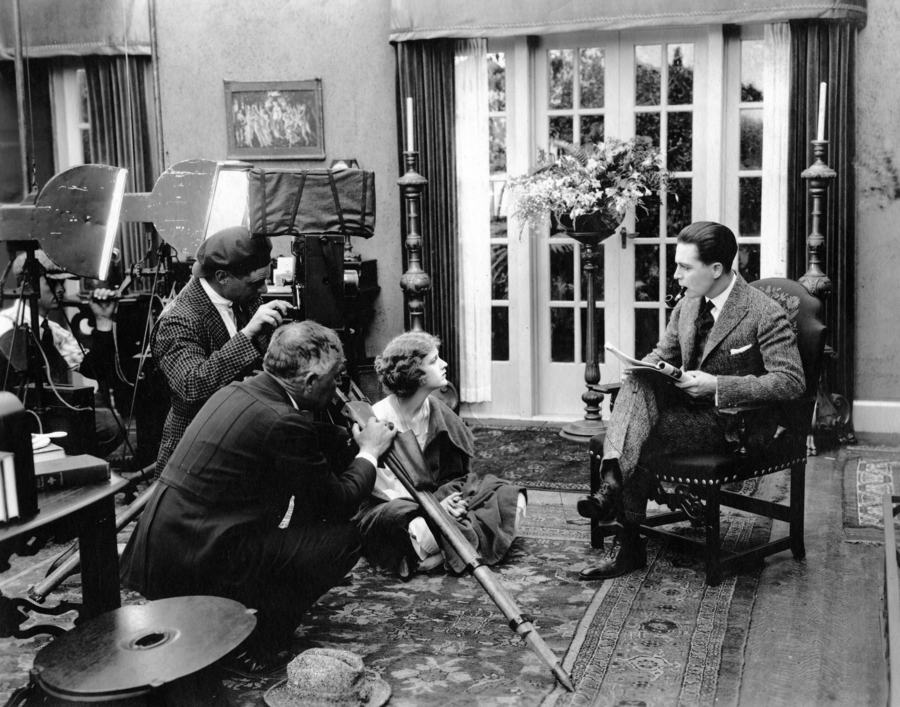
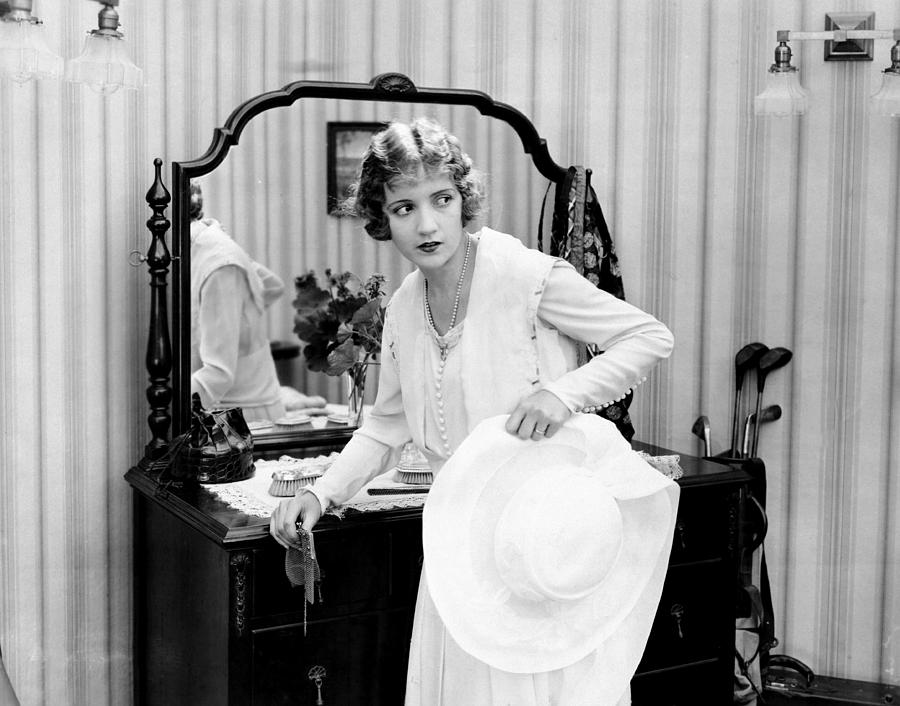
Concurrently, the titular Mrs. Leffingwell, brought to life with captivating grace and a touch of vivaciousness by Constance Talmadge, acquires an identical pair of these distinctive slippers. Talmadge, a luminary of the silent screen known for her comedic timing and effervescent personality, imbues Mrs. Leffingwell with an undeniable charm. She dons them for a fashionable dance, where her presence, accentuated by the unique footwear, draws the admiring gaze of Walter Huntley. This innocent, albeit conspicuous, interaction ignites a spark of possessive fury in her husband, Mr. Leffingwell (Fred Goodwins), whose abrupt departure from the ballroom signals the nascent stages of his burgeoning jealousy. Goodwins masterfully conveys the simmering resentment and wounded pride of a man who perceives his wife's social success as a personal affront, a testament to the power of non-verbal acting in the silent era.
The narrative brilliantly escalates this initial misapprehension. Later that same evening, Mr. Leffingwell, still stewing in his indignation, passes Walter's room. There, he observes a woman removing the embroidered slippers from her feet. The audience, privy to the earlier events, understands this to be Walter's maid, innocently reveling in her new finery. However, Mr. Leffingwell's perception, clouded by suspicion and a pre-existing bias, leads him to the damning conclusion that his wife has succumbed to Walter's overtures. This moment is a potent illustration of how confirmation bias can warp reality, transforming innocent acts into damning evidence. It echoes the kind of dramatic irony found in films like The Jury of Fate, where characters are often victims of circumstances they misinterpret, leading to grave, though in this case comedic, consequences.
The ensemble cast is instrumental in carrying this delicate comedic structure. George Fisher's Walter Huntley is the quintessential well-meaning but somewhat naive gentleman, caught in the crosscurrents of social expectation and romantic entanglement. His interactions with Vera Doria's Mabel Brown, particularly as they navigate the rocky path towards reconciliation, provide a secondary romantic arc that grounds the more farcical elements of the plot. Mabel, though initially breaking off the engagement, is portrayed with a quiet dignity, suggesting a woman of substance rather than mere flightiness. The legendary Harrison Ford, a prominent actor of the silent era (distinct from the modern superstar of the same name), also appears, lending his considerable screen presence to the proceedings. His inclusion, even in what might be a supporting capacity, speaks to the caliber of talent assembled for such productions during this vibrant period of cinematic history. Other notable performances include Mercedes Temple, Herbert Prior, and Julia Faye, each contributing to the rich tapestry of supporting characters that populate this bustling social world.
The genius of Mrs. Leffingwell's Boots lies not just in its plot mechanics, but in its ability to extract humor and pathos from the very human tendency to jump to conclusions. The writers, Augustus Thomas and Edith M. Kennedy, demonstrate a keen understanding of character motivation and the dramatic potential of situational irony. Their script, conveyed through expressive performances and carefully crafted intertitles, builds tension masterfully, allowing the audience to anticipate the inevitable unraveling of the misunderstanding with a mixture of amusement and genuine concern for the characters' fates. This intricate plotting, where objects become central to the narrative's progression, is a hallmark of well-crafted silent comedies, demanding precision in both writing and direction.
The narrative reaches its crescendo on a stormy evening, a classic cinematic trope for escalating drama. Mrs. Leffingwell attends a dinner party, a social gathering fraught with unspoken tensions, particularly as Walter and Mabel, now teetering on the precipice of reconciliation, are also present. The atmosphere is thick with potential romantic realignments and the still-simmering resentment of Mr. Leffingwell. When he arrives, his suspicions are reignited by a seemingly damning piece of evidence: his wife's distinctive slippers drying by the fire. This visual cue, devoid of context for the jealous husband, appears to confirm his worst fears, pushing him to the brink of abandoning his marriage entirely. The emotional stakes are palpable, and the audience is left to wonder how such a deeply entrenched misunderstanding can possibly be resolved without irreparable damage. The fragility of marital bonds, often explored with tragic gravity in films like Married in Name Only, is here treated with a lighter, yet no less insightful, touch, emphasizing the profound impact of perceived infidelity.
However, just as the Leffingwells' union hangs by a thread, a deus ex machina in the form of the maid appears, carrying her identical pair of shoes. This moment of serendipitous revelation is both a comedic payoff and a profound release of tension. The visual juxtaposition of the two identical pairs of slippers, one by the fire and one on the maid, instantly unravels the entire intricate web of suspicion and jealousy. It is a testament to the power of simple, visual storytelling in the silent era, where a single shot can convey a complete shift in narrative and emotional understanding. The maid, an otherwise minor character, becomes the unwitting savior, her presence a crucial pivot point in the plot. The Leffingwells' marriage is dramatically salvaged, not through grand declarations or intricate explanations, but through the irrefutable evidence of a shared, yet distinct, sartorial choice.
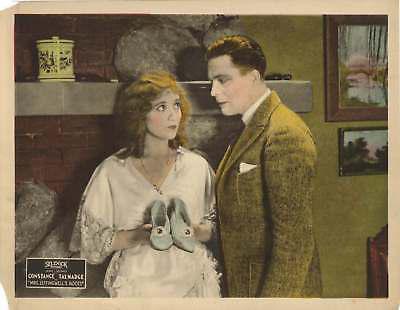
From a critical perspective, Mrs. Leffingwell's Boots stands as an exemplar of early comedic filmmaking. It demonstrates a sophisticated understanding of pacing, character development through gesture and expression, and the effective use of a central motif. The film's direction, while perhaps less overtly stylized than some of its contemporaries, is nevertheless precise, allowing the narrative to unfold with clarity and engaging momentum. The use of close-ups, though perhaps not as revolutionary as those found in later works, is employed judiciously to highlight crucial details, such as the slippers themselves or the facial expressions of the actors conveying their internal turmoil.
The film also offers a fascinating glimpse into the social mores and anxieties of the period. The emphasis on appearances, the fragility of reputation, and the strictures of marital fidelity are all subtly explored. It's a world where a pair of shoes can nearly dismantle a marriage, underscoring the era's heightened sensitivity to propriety and perceived impropriety. Yet, it does so with a light touch, ensuring that the audience remains entertained rather than lectured. This ability to weave social commentary into an engaging narrative is a testament to the enduring power of well-crafted storytelling, regardless of the technological limitations of its time.
In an era of rapidly evolving cinematic language, Mrs. Leffingwell's Boots showcases the burgeoning artistry of the medium. It's a reminder that even without spoken dialogue, filmmakers could craft narratives of considerable emotional depth and comedic brilliance. The performances, particularly from Constance Talmadge, are captivating, demonstrating the expressive power of silent acting. Her ability to convey wit, charm, and vulnerability without uttering a single word is a masterclass in screen presence. Fred Goodwins' portrayal of Mr. Leffingwell, too, is a study in restrained fury and eventual relief, making his character arc particularly satisfying.
The enduring appeal of Mrs. Leffingwell's Boots lies in its universal themes: the dangers of jealousy, the importance of clear communication, and the often-comical misunderstandings that arise in human relationships. It is a film that, even a century later, can elicit genuine laughter and a knowing nod of recognition. For enthusiasts of silent cinema, it offers a delightful window into the era's comedic sensibilities and the talents of its performers and creators. It might not possess the epic scale of The Battle Cry of Peace or the gothic terror of The Wolf Man, but its intimate focus on domestic comedy proves just as compelling.
In conclusion, Mrs. Leffingwell's Boots is far more than a historical curiosity; it is a vibrant, engaging piece of cinematic history that holds up remarkably well. Its intricate plot, delivered with comedic precision by a talented cast and guided by the insightful writing of Thomas and Kennedy, provides a delightful exploration of human nature's more absurd tendencies. The film serves as a potent reminder that sometimes, the most dramatic resolutions arise from the simplest of objects, and that a pair of embroidered slippers can indeed carry the weight of an entire narrative. It’s a compelling argument for revisiting the often-overlooked treasures of the silent era, proving that genuine wit and charm are truly timeless. It's a film that deserves to be rediscovered, celebrated for its craftsmanship and its enduring ability to charm and amuse audiences across generations. Its narrative, while rooted in the social conventions of its time, speaks to universal truths about love, jealousy, and the power of perception, making it a remarkably resonant experience even today.
IMDb —
1928
Community
Log in to comment.