DbcultAccessing Vault...
Cult Review
Senior Film Conservator
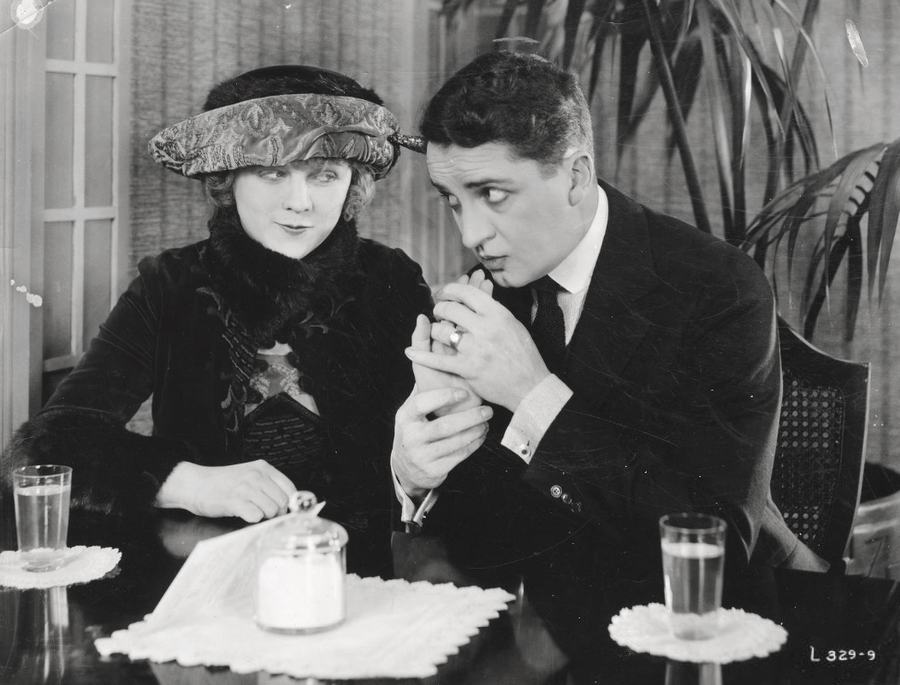
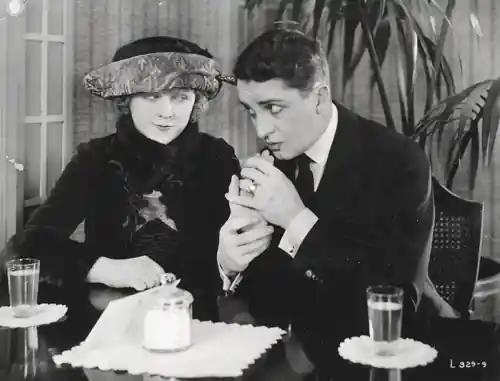
Picture, if you can, a speakeasy of the heart where every frosted glass trembles with suspicion; that is the micro-climate Bryant Washburn navigates as Jack Temple—a man whose smile arrives half a beat before his conscience. The film’s very first iris-in occurs inside an ice-cream parlor that looks like a cathedral of sugar: gilded columns, brass rails, a cherub of a soda-jerk doling out guilt in silver dishes. The camera, nosy as ever, dollies past tables of linen and gossip until it lands on Temple spooning strawberry ripple opposite a woman who might as well be a dropped handkerchief with a pulse. Carmen Phillips plays this unnamed vamp with the slow-motion arrogance of a match considering ignition. She chews her maraschino cherry, spits the stem into the ashtray, and suddenly every other patron feels extraneous. No dialogue cards are needed; her eyes say you’re already unfaithful.
The genius of the sequence lies in its refusal to hurry. Director Frank Wyatt lets the couple’s flirtation steep like over-strong tea, cutting only once—to a medium shot of Jack’s wedding ring catching the light, trembling as if aware it may soon be melted down. When the scene ends on a freeze of Phillips’ lacquered grin, the audience has already tasted the bitterness beneath the sweetness. This is 1920, remember; the Hayes office is still a twinkle in the censor’s eye, so sin may still be served à la mode.
Fast-forward to the department-store roof garden, an art-deco Eden potted with painted palms and paper lanterns. The vamp reappears, this time in a dress the color of scandalized gossip. The pair linger past closing, trading quips that float above the city’s drone like kites without strings. Wyatt achieves a delicious claustrophobia once the steel shutters slam: suddenly the expanse of rooftop becomes a cage shot through with vertigo. The camera peers over the parapet; streetcars below resemble phosphorescent beetles, and the abyss seems to breathe upward. It’s one of the earliest instances of a filmmaker using altitude as metaphor for moral free-fall—anticipating Hitchcock’s Vertigo by almost four decades.
Morning finds Jack inventing John Brown, a phantom wing-man who will vouch for his virtue. Enter Edward Jobson as Frank Fuller, a second-string Lothario with the spine of a chocolate éclair. Fuller agrees to impersonate Brown, but the ruse already reeks of collapse—like a soufflé watched too eagerly. Meanwhile, Anne Schaefer’s Mrs. Temple prowls her boudoir in a peignoir heavy enough to anchor a dirigible, dictating a telegram that will detonate every landmine her husband has buried.
The real John Brown—Leo White’s pompadoured, poetry-spouting barber—arrives with operatic flourish, clutching a valise full of curling tongs and undeclared longing for his employer. White plays him like a Neapolitan mooncalf, all wrists and wounded vowels. His entrance is timed to coincide with the arrival of his own wife, a fireplug of suspicion named Rosa (Sylvia Ashton, whose face could sour milk at twenty paces). Add Wanda Hawley as the cousin/vamp, now revealed in a third act coup that feels like pulling a thread and discovering the sweater is chainmail, and you have a farcical cyclone that still manages to land emotional punches.
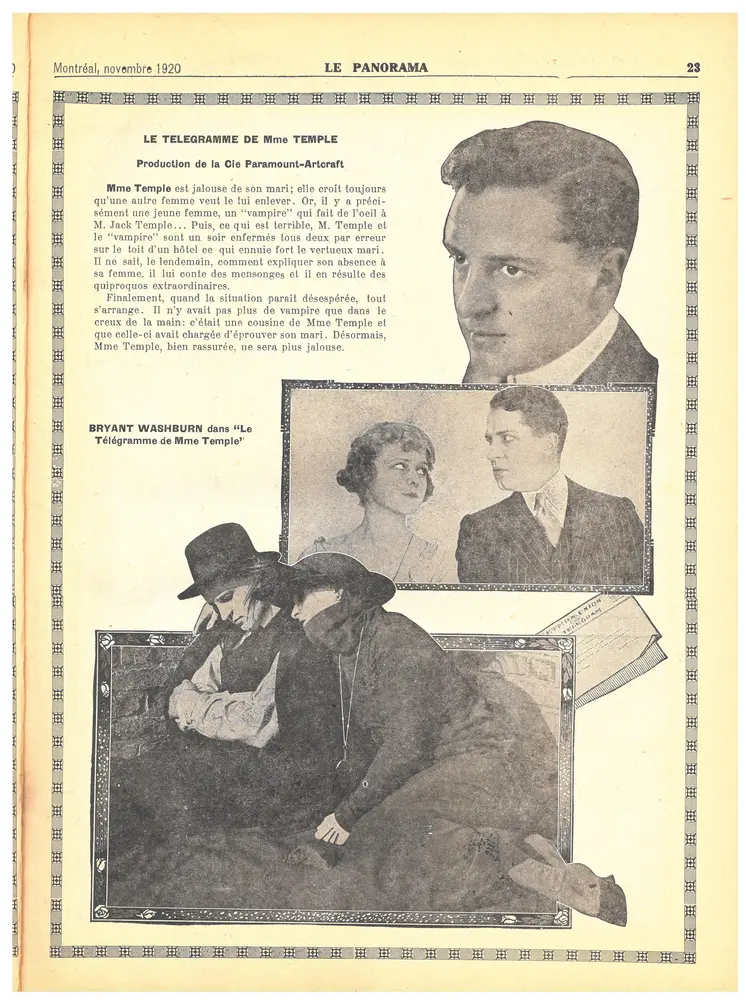
What keeps the film from capsizing into cacophony is Wyatt’s rhythmic control. He alternates long shots—where characters sprint through corridors like wind-up toys—with intimate close-ups that linger until discomfort pools. One such insert frames Mrs. Temple’s eyes as she deciphers the vamp’s confession: the iris slowly contracts until her pupils become twin black suns. In that moment, jealousy is not an emotion but a cosmology.
The screenplay, credited to William Morris and Elmer Harris, crackles with Jazz-age slang. Intertitles read like telegram prose: "Wife wired Brown. Trouble follows like caboose." Yet beneath the staccato beats lurk surprising pathologies. Jack’s infidelity is less lust than fear of domestication; Mrs. Temple’s possessiveness masks terror of abandonment. Even the vamp, once unmasked, delivers a soliloquy—via dialogue card—about cousinly duty that could make a cynic blink. It’s as if The Fibbers took a master-class in melancholy.
Visually, the picture exploits every gradation of monochrome. The rooftop sequences were shot day-for-night using a then-novel cobalt filter, lending the sky a bruised sapphire glow. Interior scenes favor high-contrast side-lighting that carves cheekbones into cliff faces. Note the moment Brown’s wife discovers her husband’s treachery: the light strips her face to a Kabuki mask, shadows pooling like spilled ink. It’s horror by chiaroscuro.
Performances oscillate between slapstick and scalpel. Washburn, often dismissed as a pretty matinee idol, here plays fear like a violin—every glance toward the exit is a squeaky note. Schaefer, saddled with the “suspicious wife” trope, undergirds it with regal fatigue; you sense she’s jealous because she’s read too many novels, not because she’s irrational. And Carmen Phillips—well, she should have become the era’s femme fatale prototype, but history relegated her to footnotes. Watch her final curtain: she folds the confession letter into a paper boat, sets it afloat in a rain puddle, and smiles as if forgiving herself. The gesture lasts three seconds yet haunts the remaining reel.
Comparative contextualists will spot DNA shared with A Wife by Proxy and Down to Earth: the marital masquerade, the therapeutic deception. But where those films resolve with patriarchal head-pats, Mrs. Temple’s Telegram ends on a question mark. The final tableau shows the reunited couple exiting the courthouse as a gust of wind whips the wife’s veil skyward; the camera tracks upward to an empty balcony where the cousin once stood. The implication: jealousy may be cured, but surveillance is eternal.
Musically, the original exhibition would have relied on house orchestras plucking out “Oh, You Beautiful Doll” during lighter passages and thundering Rachmaninoff for rooftop angst. Modern silent-film festivals often commission new scores; I caught a 2019 screening with a trio using electric cello and typewriter percussion—an anachronism that somehow fit like spats on sneakers.
The film’s cultural footprint is faint—no surviving full-length 35 mm negative is known—but a 35-minute abridgment circulates among collectors, transferred from a 16 mm show-at-home print. Even truncated, it pulsates. The missing footage reportedly deepened Brown’s backstory: flashbacks of him composing odes to his client’s hair while she snores under the dryer. Lost cinema is always more poetic in theory, yet what remains is sufficient to earn canonical respect.
Contemporary reviewers, if we lend them ventriloquism, might fault the picture’s manic coincidences. A cousin masquerading as a vamp? A hairdresser moonlighting as epistolary object? But farce is the domain of escalations, not probabilities. The better complaint is the underuse of Walter Hiers as a bumbling floorwalker; his pratfalls could have seeded a spin-off serial. Instead he’s a human exclamation point, popping up to yelp "Store’s closed!" before vanishing into lobby limbo.
Still, nitpicks evaporate when one considers the film’s proto-feminist wink. The puppet-mistress here is not a mustache-twirling villain but a woman remedying another woman’s emotional captivity. She weaponizes patriarchal paranoia against itself, turning the male gaze into a boomerang. In 1920, that’s subversion disguised as soufflé.
Restorationists at La Cineteca del Friuli have floated rumors of a 2K scan from a newly discovered Portuguese internegative, complete with bilingual intertitles. Should that surface, expect social-media memes of Phillips’ vamp raising an eyebrow above the legend "Your insecurity is showing." The GIF potential alone could fund a Blu-ray bonus feature.
Until then, we savor what flickers: a 63-minute morality play that pirouettes on skyscraper ledges, a comedy that laughs so hard it coughs up guilt. If you crave antecedents to The Criminal’s psychological noir or The Virtuous Thief’s redemptive grifters, start here. Mrs. Temple’s telegram may have been sent a century ago, but its wires still hum with electricity.
Verdict: A caffeinated waltz across marital fault lines, equal parts soufflé and stiletto. Seek it out, project it on a bedsheet, let the carbon-arc of jealousy illuminate your popcorn. Four stars carved into the balcony door.

IMDb —
1919
Community
Log in to comment.