DbcultAccessing Vault...
Cult Review
Senior Film Conservator
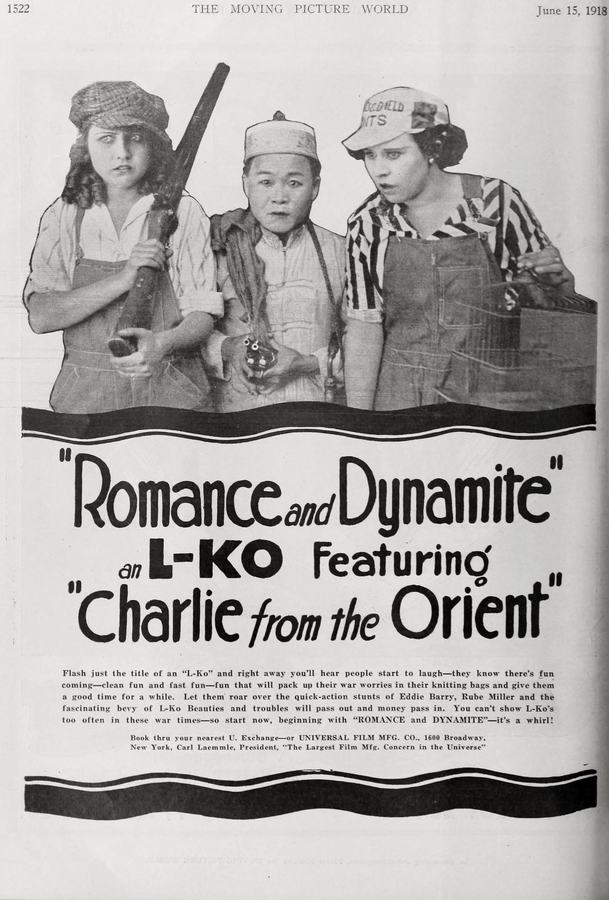
The silent era, a crucible of raw emotion and kinetic storytelling, frequently gifted audiences with narratives that, despite their lack of spoken dialogue, roared with profound human experience. Among these, 'Romance and Dynamite' stands as a captivating, albeit often overlooked, testament to the period's narrative prowess. This is not merely a film; it is a meticulously crafted tableau, a pulsating melodrama that harnesses the visceral power of its title to deliver a tale both tenderly romantic and explosively thrilling. It plunges us headlong into a world on the cusp of seismic change, where personal desires clash violently with grander, more perilous societal currents, all rendered with an artistry that belies its age.
From its very inception, the film establishes a compelling dichotomy, juxtaposing the fragility of human connection against the destructive potential of radical ideology. Our protagonist, Lily, brought to vibrant life by the remarkable Eva Novak, is no mere damsel in distress. Novak imbues Lily with a spirited resilience, a tangible strength that shines through the grime and grit of the munitions factory where she earns her meager living. Her expressive eyes, a hallmark of silent film acting, convey a complex inner world – a yearning for stability, a flicker of ambition, and an unwavering moral compass. Her performance is a masterclass in non-verbal communication, her every gesture, every subtle shift in posture, speaking volumes. One might draw parallels to the spirited independence seen in characters from films like A Daughter of the Poor, where female protagonists navigated harsh realities with unyielding fortitude, yet Novak’s Lily possesses a unique blend of vulnerability and quiet determination that makes her utterly compelling.
Opposite Novak stands Rube Miller as Cyrus, the earnest foreman. Miller, with his rugged charm and steadfast demeanor, perfectly embodies the archetype of the reliable, morally upright hero. His performance is characterized by an understated sincerity, a quiet strength that grounds the more flamboyant elements of the plot. Cyrus is a man of action, but also of deep feeling, and Miller conveys this internal conflict with admirable restraint. We witness his burgeoning affection for Lily, a tender bloom in the harsh industrial landscape, and feel the weight of his responsibility as he uncovers the sinister plot unfolding around them. His portrayal is reminiscent of the grounded heroes found in films such as The Hoosier Schoolmaster, where integrity and perseverance often triumphed over adversity, but Miller brings a more overtly physical dynamism to the role, particularly in the film's climactic sequences.
The true catalyst for the 'dynamite' in the title, however, is Eddie Barry's chilling portrayal of 'The Shadow.' Barry delivers a performance that is both magnetic and menacing, capturing the insidious allure of radical ideology. His Shadow is not a simplistic villain; he is a man driven by a twisted vision of justice, a charismatic figure capable of inspiring both fear and fervent loyalty. Barry’s physicality is crucial here; his shadowy entrances, his piercing gaze, and his sudden, decisive movements create an omnipresent threat that permeates every frame. He represents the volatile undercurrents of a society grappling with rapid change, a force of disruption that challenges the established order. His performance brings to mind the nuanced antagonists of films like Ambition, where moral complexities often blurred the lines between hero and villain, though Barry's portrayal leans more definitively into the realm of destructive fanaticism.
Adding further layers to this already intricate tapestry is Carolyne Wright, whose character injects a fascinating element of ambiguity and moral quandary. Wright's performance is a study in subtle manipulation and veiled intentions. Is she a jilted lover, a jealous rival for Cyrus's affections, or perhaps a more cunning operative secretly aligned with The Shadow? Her exquisite costumes and enigmatic expressions hint at a deeper, more complicated agenda, keeping the audience perpetually guessing. She embodies the classic silent film trope of the alluring yet dangerous woman, a figure whose beauty often masks a treacherous heart. Her presence adds a delicious tension, a simmering undercurrent of betrayal that could erupt at any moment, echoing the femme fatale archetypes that would become more prominent in later noir, but already present here in nascent form. Her dramatic flourishes, though restrained, speak volumes about her character's internal turmoil and external machinations, a testament to her mastery of the cinematic language of the time.
The supporting cast, too, contributes significantly to the film's rich texture. Russ Powell, often cast in roles of authority or comic relief, here plays a character who, while perhaps initially appearing bumbling, proves to be surprisingly pivotal. His performance provides moments of levity that skillfully punctuate the escalating tension, offering brief respites before plunging the audience back into the heart of the drama. Yet, he also carries the weight of officialdom, representing the often-slow-moving forces of law and order attempting to catch up with the faster, more chaotic pace of The Shadow's scheme. His character serves as a vital counterpoint, highlighting the urgency of Cyrus's individual heroism against the backdrop of institutional responses.
Perhaps the most intriguing and visually striking performance comes from Chai Hong. His portrayal of a silent, loyal, and utterly enigmatic accomplice to The Shadow is a masterstroke of understated power. Hong's character, with his exotic appearance and stoic demeanor, adds an element of the unknown, a silent menace that is both captivating and terrifying. He moves with a predatory grace, his loyalty to The Shadow unwavering, making him a formidable antagonist. There's a certain cultural resonance here, an exploration of 'the other' that was common in the era, yet Hong's performance elevates it beyond caricature, imbuing his character with a quiet dignity and deadly efficiency. His presence adds a global dimension to the otherwise localized conflict, hinting at broader revolutionary movements that transcended national borders during this tumultuous period.
The film's visual language is as compelling as its performances. The cinematography of 'Romance and Dynamite' is exemplary, employing stark contrasts between light and shadow to heighten the dramatic impact. The industrial settings are rendered with a powerful realism, the towering factory structures and grimy machinery becoming almost characters in themselves, symbols of both progress and potential destruction. The close-ups are particularly effective, allowing the audience to intimately connect with the characters' unspoken emotions, while the wider shots capture the scale of the unfolding events, particularly during the climactic sequences. The film's pacing is masterfully controlled, building tension gradually through a series of escalating threats and near-misses, culminating in a breathtaking explosion of action that is both visually spectacular and emotionally resonant. The use of intertitles is sparse but impactful, serving to advance the plot and underscore key emotional beats without interrupting the visual flow, a testament to the filmmakers' confidence in their actors' abilities to convey meaning without words.
The thematic richness of 'Romance and Dynamite' extends beyond its immediate plot. It grapples with profound questions of love, sacrifice, and the enduring human spirit in the face of overwhelming odds. It explores the dangerous allure of radical ideologies, the fine line between fighting for justice and succumbing to destructive fanaticism. The film also subtly comments on the industrial age itself, presenting the factory as both a source of livelihood and a potential instrument of mass destruction, a powerful symbol of modernity's dual nature. This exploration of societal anxieties, particularly the fear of anarchism and labor unrest, places it firmly within the context of its time, echoing similar concerns found in more overtly political films like La España trágica o Tierra de sangre, though 'Romance and Dynamite' couches these themes within a more personal, romantic framework.
The film's climax is a tour de force of silent cinema, a symphony of suspense and daring stunts. The race against time to disarm the dynamite, the frantic struggle between Cyrus and The Shadow, and Lily's desperate attempts to aid her hero are choreographed with an exhilarating precision. The actual explosion, when it comes, is not merely a spectacle but a cathartic release, a symbolic purging of the tensions that have built throughout the narrative. It is a moment that resonates with the grand, sweeping gestures of films like Scrambles in the High Alps, not in subject matter, but in its sheer ambition to capture breathtaking, large-scale visual drama, proving that silent film was capable of delivering blockbuster thrills long before the advent of sound.
What makes 'Romance and Dynamite' particularly compelling is its ability to weave together disparate elements into a cohesive and emotionally satisfying whole. The romance between Lily and Cyrus is genuinely affecting, providing a vital human core to the high-stakes drama. The tension generated by The Shadow's plot is palpable, keeping the audience on the edge of their seats. And the supporting characters, rather than being mere plot devices, add depth and intrigue, complicating the moral landscape and enriching the narrative texture. It is a film that rewards close attention, revealing new nuances with each viewing, a hallmark of truly great cinema.
The film also serves as a fascinating historical document, offering a glimpse into the anxieties and aspirations of an earlier era. The fear of industrial sabotage, the burgeoning strength of organized labor, and the social stratification depicted are all reflections of the period in which it was made. Yet, its themes of love, loyalty, and the struggle against destructive forces are timeless, ensuring its continued relevance. It speaks to the enduring human capacity for both creation and destruction, for profound love and fervent hatred. The film's message, that true courage lies not just in grand gestures but in unwavering conviction and selfless action, remains as powerful today as it was a century ago.
In terms of legacy, 'Romance and Dynamite' may not have achieved the widespread recognition of some of its more celebrated contemporaries, but its quiet brilliance merits a reevaluation. It is a testament to the collaborative spirit of silent filmmaking, where the collective talents of its cast and crew coalesced to produce something truly memorable. Eva Novak's performance, in particular, solidifies her status as a leading lady of considerable talent, capable of conveying profound emotion with grace and conviction. Rube Miller's grounded heroism provides the perfect foil, anchoring the more melodramatic elements with believable human emotion. The film’s intricate plot, while adhering to certain genre conventions of the time, consistently surprises with its clever twists and turns, maintaining a gripping pace throughout.
Comparisons to other films of the era reveal its unique qualities. While it shares the melodramatic intensity of The Unpardonable Sin, 'Romance and Dynamite' infuses its high stakes with a more overt sense of social commentary, grounding its personal drama in the larger context of societal unrest. Its exploration of youthful passion and ambition, though set against a darker backdrop, might evoke echoes of The Kingdom of Youth, but with a more mature and perilous edge. The film’s narrative sophistication, combining romance, suspense, and social commentary, positions it as a work that, while entertaining, also invites deeper reflection on the forces that shape human destiny. It manages to balance these disparate elements with remarkable skill, ensuring that neither the 'romance' nor the 'dynamite' ever overshadows the other, but rather informs and amplifies its counterpart.
The film's aesthetic choices are also noteworthy. The costume design, though period-appropriate, subtly hints at character. Lily’s practical, modest attire contrasts sharply with Carolyne Wright’s more elaborate, fashionable garments, visually reinforcing their differing roles and statuses. The set design, particularly within the factory, is meticulously detailed, lending an air of authenticity to the industrial environment. The effective use of practical effects for the explosions and stunts demonstrates a commitment to cinematic spectacle that was truly groundbreaking for its time. These elements combine to create a deeply immersive experience, transporting the viewer directly into the heart of the story and its tumultuous setting. The director's keen eye for composition ensures that every frame is not just functional but also aesthetically pleasing, contributing to the overall artistic merit of the production.
Ultimately, 'Romance and Dynamite' is a film that deserves to be rediscovered and celebrated. It is a vibrant, thrilling, and emotionally resonant piece of silent cinema that showcases the enduring power of visual storytelling. Its stellar cast, led by the captivating Eva Novak and the steadfast Rube Miller, delivers performances that transcend the limitations of spoken dialogue, communicating complex emotions with remarkable clarity. The film's meticulous craftsmanship, from its compelling narrative to its striking cinematography, ensures its place as a significant, if unsung, work of the era. It’s a powerful reminder that even without a single spoken word, cinema can ignite our imaginations, stir our hearts, and leave an indelible mark on our collective consciousness. This cinematic explosion of emotion and intrigue is not merely a historical artifact; it is a living, breathing testament to the timeless appeal of a well-told story, demonstrating that the 'romance' and the 'dynamite' of human experience are, indeed, inextricably linked.
IMDb —
1921
Community
Log in to comment.