DbcultAccessing Vault...
6.5/10
Senior Film Conservator
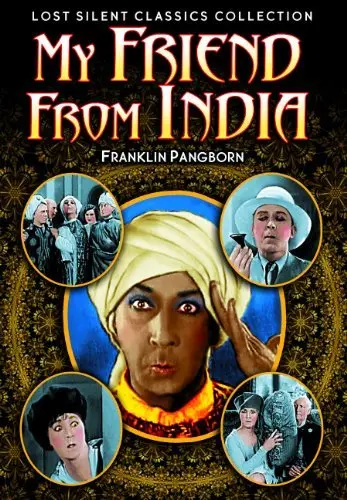
A definitive 6.5/10 rating for a film that redefined the boundaries of cult cinema. My Friend from India remains a cornerstone of transgressive art.
Is "My Friend from India" worth watching today? Short answer: yes, but with significant caveats. This 1927 silent comedy, a delightful if uneven period piece, offers a fascinating glimpse into a particular brand of farcical humor that was prevalent in early cinema.
It's a film for those who appreciate the foundational elements of comedic storytelling and silent-era performances, particularly fans of Franklin Pangborn. However, it is decidedly not for viewers seeking modern pacing, deep character development, or consistently sophisticated humor.
This film works because of its central premise, which, despite its age, still holds a certain comedic potential, driven by the sheer absurdity of mistaken identity. Franklin Pangborn's committed performance as Tommy Valentine anchors the chaos, showcasing his innate ability to convey both bewildered charm and a surprising knack for improvisation under pressure. The film's brief, sharp moments of visual gag and physical comedy genuinely land, providing glimpses of its intended comedic rhythm.
This film fails because its narrative, while promising, often struggles with inconsistent pacing, allowing certain scenes to drag beyond their comedic shelf life. The supporting characters, outside of Pangborn, often feel underdeveloped, serving more as plot devices than fully realized comedic foils. Furthermore, the film's reliance on cultural caricatures, particularly regarding the 'Hindu prince,' feels dated and uncomfortable by contemporary standards, detracting from the overall enjoyment.
You should watch it if you are a dedicated enthusiast of silent cinema, particularly if you're keen to explore the evolution of comedy and the early work of performers like Pangborn. It's also suitable for film historians and those interested in the social dynamics and comedic tropes of the 1920s, offering a valuable, if flawed, artifact of its era.
"My Friend from India", directed by Rex Taylor, is a quintessential silent-era farce that plays heavily on the trope of mistaken identity and the absurd lengths to which social climbers will go for perceived status. The narrative, penned by Taylor and Henry A. Du Souchet, sets up a cascade of comedic errors, all stemming from Aunt Bedelia's desperate desire to impress her society circle. The film's initial setup is surprisingly engaging, with the charming Tommy Valentine, played by Franklin Pangborn, stepping into the role of a chivalrous rescuer, albeit one whose motivations quickly shift from genuine concern to a rather whimsical pursuit of Barbara Smith.
The story's strength lies in its ability to escalate the stakes with each new misunderstanding. From Tommy's accidental befriending of Barbara's brother, Charlie, to the fateful morning where a simple towel-wrapped head transforms him into a 'Hindu Prince,' the film builds its comedic foundation brick by brick. What follows is a delightful descent into pandemonium, where the audience is privy to the deception while the characters within the film remain blissfully, or stubbornly, ignorant. This dramatic irony is the lifeblood of the silent comedy, and "My Friend from India" taps into it with commendable enthusiasm.
However, the film’s commitment to this escalating farce sometimes outpaces its ability to maintain consistent comedic energy. There are stretches where the gags feel repetitive, or the reactions prolonged beyond their initial humor. For instance, Aunt Bedelia's persistent, almost cartoonish, social climbing, while central to the plot, occasionally verges on tiresome rather than hilariously desperate. It's a fine line between relentless comedic drive and narrative bloat, and "My Friend from India" occasionally stumbles.
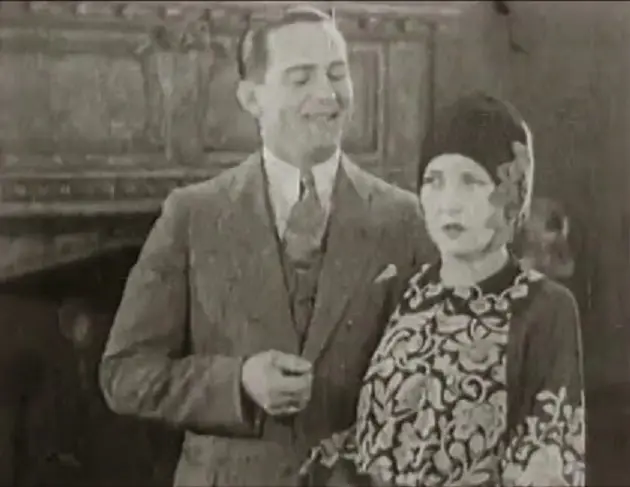
Franklin Pangborn is, without question, the shining beacon of "My Friend from India." As Tommy Valentine, he embodies the perfect blend of bewildered innocence and comedic resilience. Pangborn, known for his fastidious, often flustered characters, brings a nuanced physical performance to the role. His expressions, ranging from wide-eyed confusion to a forced aristocratic poise, are incredibly effective in conveying the internal struggle of a man caught in an increasingly ludicrous situation. One particular moment that stands out is his initial reaction to being introduced as a prince; his eyes dart frantically, a subtle tremor in his hands, perfectly communicating his internal panic without a single spoken word.
Pangborn’s performance is a masterclass in silent film acting, where exaggerated gestures and facial expressions are paramount. He doesn't just act out the plot; he elevates it. He manages to make Tommy Valentine a character the audience genuinely roots for, despite his complicity in the deception. His scenes with Elinor Fair as Barbara Smith, though limited, carry a genuine charm, suggesting a budding romance that feels surprisingly authentic amidst the surrounding chaos. This connection is vital, providing an emotional anchor to an otherwise purely farcical plot.
The supporting cast, while functional, largely serves as foils to Pangborn's central performance. Ethel Wales, as Aunt Bedelia, leans into the caricature of the social climber with gusto, her every movement and expression screaming desperation. While effective in driving the plot, her portrayal lacks the subtle layers Pangborn brings. Charlie, Barbara's brother, is a less defined character, primarily existing to set the plot in motion and then react to the ensuing pandemonium. Their performances are standard for the era, but it's Pangborn who truly leaves an indelible mark.
Rex Taylor's direction in "My Friend from India" is characteristic of silent comedies of the late 1920s. The film relies heavily on clear, straightforward framing and editing to convey its narrative. Intertitles are used extensively, not just for dialogue but also to advance the plot and explain character motivations, a common practice that could sometimes slow down the visual flow. While some films of this period experimented with more dynamic camera work, Taylor opts for a more traditional, theatrical approach, allowing the actors' performances and the escalating gags to take center stage.
The pacing of the film is perhaps its most inconsistent element. The initial setup, detailing Tommy's rescue of Barbara and his subsequent quest, feels somewhat deliberate. While this builds anticipation, it also means that the comedic momentum takes a while to truly ignite. Once the mistaken identity plot kicks in, the pace quickens, leading to a series of rapid-fire developments. The arrival of the *second* fake prince, for instance, is handled with a swift, almost chaotic energy that genuinely amplifies the absurdity, creating a compelling visual cacophony of confusion.
However, there are moments where the film lingers a little too long on a reaction shot or a minor plot point, causing the comedic tension to dissipate. A tighter edit in certain sequences could have significantly enhanced the overall impact, ensuring that the laughs come more consistently. This is a challenge many silent comedies faced, balancing the need for exposition with the desire for rapid-fire humor. Compared to more tightly wound farces like those of Buster Keaton or Harold Lloyd, "My Friend from India" sometimes feels a touch indulgent in its narrative meandering.
The cinematography in "My Friend from India" is functional and serves the narrative without striving for overt artistic flourishes. The film's visual style is typical of its time, characterized by static camera setups, clear lighting, and an emphasis on capturing the full physical comedy of the performers. The sets, particularly the "palatial home" of the Smiths, are adequately dressed to convey the desired atmosphere of upper-class aspiration, even if they occasionally feel more like stage backdrops than lived-in environments. The costuming, too, plays a crucial role, especially the distinct attire of the 'Hindu Prince,' which immediately signals the cultural caricature being employed.
One notable aspect is the reliance on visual gags that transcend the need for dialogue. The moment Tommy appears with a towel on his head, immediately mistaken for an exotic dignitary, is a purely visual punchline that lands effectively. The chaotic scene where both 'princes' are present, creating a double dose of deception, is another strong visual highlight, allowing the audience to track multiple layers of comedic misunderstanding simultaneously. This kind of physical and visual storytelling is where silent cinema truly shines, and "My Friend from India" delivers on this front.
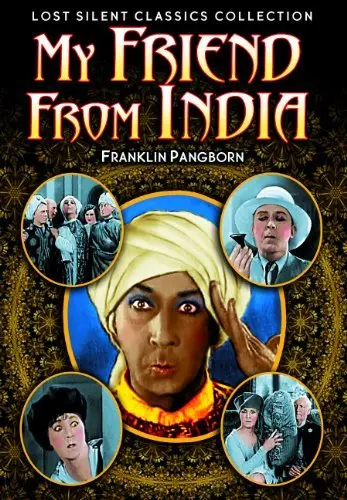
The film's visual quality, as seen in available prints, may vary, but even in less-than-pristine conditions, the clarity of the comedic intentions remains. The use of close-ups is sparing but effective, often reserved for Pangborn's reactions, allowing the audience to connect directly with his escalating predicament. While not groundbreaking in its visual approach, the film competently uses the cinematic tools available to it to tell its story and elicit laughter.
Yes, "My Friend from India" is worth watching for specific audiences. It’s a valuable historical artifact. It offers genuine laughs if you appreciate silent-era farce. Franklin Pangborn's performance alone justifies a viewing. Be prepared for dated cultural elements. It’s a charming, if imperfect, piece of cinematic history.
"My Friend from India" is undeniably a product of its time, and this is most evident in its central premise of a 'Hindu Prince.' The film's portrayal, while intended as lighthearted farce, relies on stereotypes that are, by modern standards, uncomfortable and simplistic. The idea of an exotic, mysterious 'other' used as a prop for social climbing was a common trope in early 20th-century entertainment, from vaudeville to cinema. The film doesn't engage with Indian culture in any meaningful way; rather, it uses the idea of it as a mere plot device to generate comedic confusion.
This aspect of the film presents a challenge for contemporary viewers. While it's important to view historical films through the lens of their era, it's equally important to acknowledge how such portrayals contribute to broader cultural understandings. The film’s reliance on the 'foreign prince' trope, while a staple of its era, feels less like quaint nostalgia and more like a missed opportunity for genuine wit that could have transcended such easy caricatures. A truly great farce finds humor in universal human foibles, not in reductive cultural shorthand.
That said, the film's primary target of satire isn't the 'prince' himself, but rather Aunt Bedelia's desperate social climbing and the gullibility of her high-society peers. The humor, in this sense, is directed at the superficiality of status and the absurdity of keeping up appearances. This element remains surprisingly relevant, as the human desire for social validation, regardless of the era, is a timeless comedic wellspring. So, while the vehicle for the mistaken identity is problematic, the underlying satirical target retains some bite.
"My Friend from India" is a charming, if imperfect, relic of the silent film era. It works. But it’s flawed. Its comedic engine is powered almost entirely by the indefatigable Franklin Pangborn, whose performance as the bewildered Tommy Valentine is a masterclass in silent-era physical comedy and expressive acting. He alone is reason enough to seek out this film, especially for those who appreciate the foundational elements of screen performance. The escalating farcical premise offers genuine laughs and a fascinating window into the social anxieties and entertainment styles of the late 1920s.
However, one cannot overlook the film's significant drawbacks. Its inconsistent pacing demands patience, and its reliance on a dated and culturally insensitive 'Hindu Prince' caricature can be jarring for modern sensibilities. This makes it a film that requires a certain historical understanding and willingness to overlook elements that have not aged well. It’s a film that exists in a specific historical context, and its value is often tied to that context.
Ultimately, "My Friend from India" is not a forgotten masterpiece, nor is it a film that will appeal to everyone. It is, however, a valuable piece of cinematic history, particularly for those interested in the trajectory of comedic film and the early career of talents like Pangborn. It serves as a reminder that even in the most straightforward farces, there are layers to unpack, both in terms of entertainment and cultural reflection. If you're a student of silent cinema or a fan of classic screwball setups, give it a watch, but approach it with a critical eye and an appreciation for its place in time. For a more consistently engaging silent farce, you might consider works like A Close Shave, which often demonstrate a tighter comedic rhythm.
IMDb —
1921
Community
Log in to comment.