DbcultAccessing Vault...
6.8/10
Senior Film Conservator
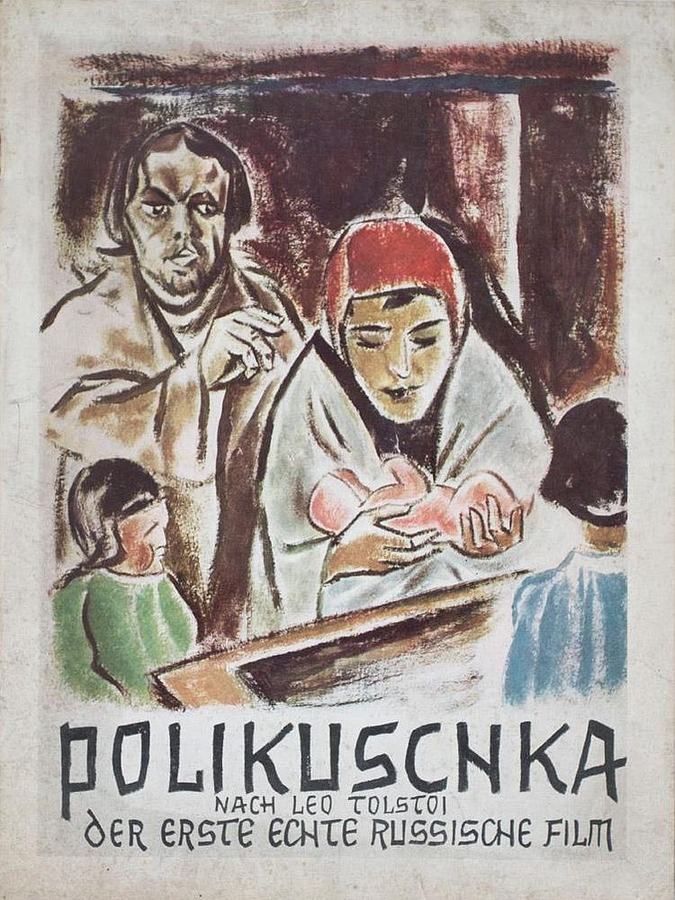
A definitive 6.8/10 rating for a film that redefined the boundaries of cult cinema. Polikushka remains a cornerstone of transgressive art.
To witness Aleksandr Sanin’s 1922 adaptation of Lev Tolstoy’s Polikushka is to step into a temporal vortex, one that bridges the gap between the theatrical traditions of the Moscow Art Theatre and the nascent, raw power of early Soviet cinema. This isn't merely a silent film; it is a visceral excavation of the human soul under pressure. While many contemporary films of the era, such as The Firm of Girdlestone, leaned heavily on Victorian moralizing and industrial melodrama, Polikushka operates on a plane of psychological realism that feels shockingly modern. It captures a specific Russian malaise—a blend of fatalism and deep-seated longing for worth—that few films since have managed to replicate with such unvarnished honesty.
The narrative centers on Polikei, played with haunting intensity by Ivan Moskvin. Polikei is a man defined by his failures. In the eyes of the village and the estate management, he is a thief, a drunkard, and a liability. Yet, the landlady, driven by a mixture of noblesse oblige and a desire to prove her enlightened management style, chooses him for a task of immense trust: transporting a large sum of money from the city. This decision is the fulcrum upon which the entire tragedy pivots. Unlike the clear-cut heroics found in The Mediator, where social boundaries are navigated with a certain romanticized grace, Polikushka presents the class divide as a jagged, impassable ravine.
Moskvin’s performance is nothing short of legendary. Having originated the role on stage, he brings a physicality to the screen that transcends the limitations of silent acting. There is no exaggerated pantomime here; instead, we see the micro-expressions of a man desperately trying to keep his dignity afloat. Every twitch of his beard, every nervous adjustment of his cap, speaks volumes about the weight of the responsibility he carries. It is a performance that mirrors the quiet desperation seen in The Ticket of Leave Man, though Polikushka strips away the genre safety nets to leave us with pure, unadulterated pathos.
The cinematography in Polikushka is a masterclass in atmospheric storytelling. The Russian landscape is not a postcard; it is a character—muddy, vast, and indifferent. The interior shots of the peasant huts are cramped and heavy with shadows, contrasting sharply with the airy, albeit sterile, elegance of the landlady’s manor. This visual dichotomy reinforces the social themes without the need for didactic intertitles. When Polikei loses the money—a sequence filmed with a mounting sense of dread that rivals any modern thriller—the camera lingers on his realization with a cruelty that is almost unbearable. The lost envelope becomes a talisman of his doom, a physical manifestation of his inability to escape the gravity of his social standing.
Compare this to the social dramas of the West during the same period. While a film like Behold My Wife might explore the friction of class through a lens of romantic scandal, Polikushka treats the loss of money as an existential erasure. For Polikei, the money isn't just currency; it is his life's breath. Without it, he ceases to exist as a redeemed man and reverts to the 'thief' the world always insisted he was. The inevitability of his descent is handled with a narrative precision that reminds one of the darker turns in Ashes of Embers, yet here the stakes feel infinitely more grounded in the soil of the earth.
The supporting cast, largely drawn from the Moscow Art Theatre, provides a rich tapestry of village life. Vera Pashennaya and Varvara Massalitinova deliver performances that ground the tragedy in a domestic reality. The scenes between Polikei and his wife are particularly poignant; they share a shorthand of suffering that is painful to behold. Their relationship isn't the lighthearted banter found in The Cabaret Girl or the youthful folly of The Tomboy. Instead, it is a bond forged in the fires of poverty, where love is often overshadowed by the sheer logistics of survival.
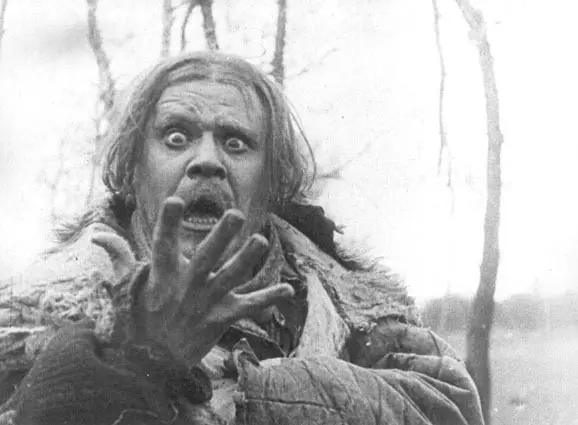
The landlady, played by Evgeniya Raevskaya, is perhaps the most complex figure next to Polikei. She is not a villain in the traditional sense. She isn't the scheming antagonist of The Typhoon. Her cruelty lies in her ignorance—the casual way she gambles with Polikei’s life for the sake of a moral experiment. This critique of the 'benevolent' ruling class is a hallmark of Tolstoy’s writing, and Sanin translates it to the screen with devastating clarity. Her eventual guilt is a hollow thing, coming far too late to alter the trajectory of the tragedy she initiated.
In the broader landscape of 1922 cinema, Polikushka stands as a grim monolith. While American audiences were enjoying the escapism of His Royal Slyness or the light-hearted antics of A Flivver Wedding, the Soviet film industry was using the medium to dissect the very foundations of human society. Even when compared to international dramas like Sua figlia! or the Danish intensity of Udenfor loven, Polikushka possesses a unique, heavy gravity. It lacks the melodramatic flourishes that often date silent films, opting instead for a gritty, proto-neorealist approach that would not be fully realized in the West for another two decades.
The film’s pacing is deliberate, allowing the tension to simmer until it boils over. The sequence in the tavern, where Polikei momentarily enjoys the illusion of status before the crushing weight of his loss hits him, is a masterclass in editing and performance. It captures that fleeting moment of joy that makes the subsequent fall even more agonizing. It’s a far cry from the sentimental journeys seen in Kennedy Square; here, the square is a place of judgment, not community.
Why does Polikushka remain relevant a century later? Perhaps because the themes of debt, reputation, and the systemic failure of the vulnerable are timeless. We see echoes of Polikei’s plight in every modern story about the working poor. The film doesn't offer easy answers or a cathartic ending. It ends with a silence that is louder than any orchestral score. It challenges the viewer to look at the 'Polikeis' of their own world—those who are given just enough rope to hang themselves by a society that values capital over character.
Technically, the restoration of the film allows us to appreciate the nuanced lighting and the incredible textures of the costumes. The coarse wool of the peasant coats, the cold gleam of the coins, the dirt under Polikei’s fingernails—these details matter. They create a world that is lived-in and tactile. It lacks the polish of The Emotional Miss Vaughn, but it gains a tremendous amount of power through its raw edges. Even the minor characters, like those played by Sergei Aidarov or Barbara Bulgakov, feel like they have entire lives existing off-camera, a testament to the ensemble's depth.
"Polikushka is not merely a film to be watched; it is an experience to be endured. It demands that you sit with the discomfort of Polikei’s failure and acknowledge the structures that made his tragedy inevitable."
As we navigate an era of cinema often dominated by spectacle, returning to Polikushka is a sobering reminder of what the medium can achieve with a single face and a simple, tragic mistake. It doesn't need the frantic energy of I'm Ringing Your Party to keep our attention; the sheer human stakes are enough. Sanin’s direction is invisible in the best way possible, allowing Tolstoy’s prose to breathe through the celluloid. The film remains a towering achievement of the silent era, a dark orange sunset over the fields of old Russia, signaling the end of an era and the birth of a new, more cynical cinematic language.
Ultimately, Polikushka serves as a haunting memento mori for the soul. It suggests that our value is often determined by those who have never known our struggles, and that the loss of a few rubles can be the loss of an entire universe. It is a mandatory watch for anyone serious about the history of film, not just as a historical curiosity, but as a living, breathing piece of art that still has the power to bruise the heart. The sea blue coldness of the final acts will stay with you long after the screen goes black, a reminder of a man who tried to be good in a world that only required him to be useful.
IMDb 4.9
1933
Community
Log in to comment.