DbcultAccessing Vault...
Cult Review
Senior Film Conservator
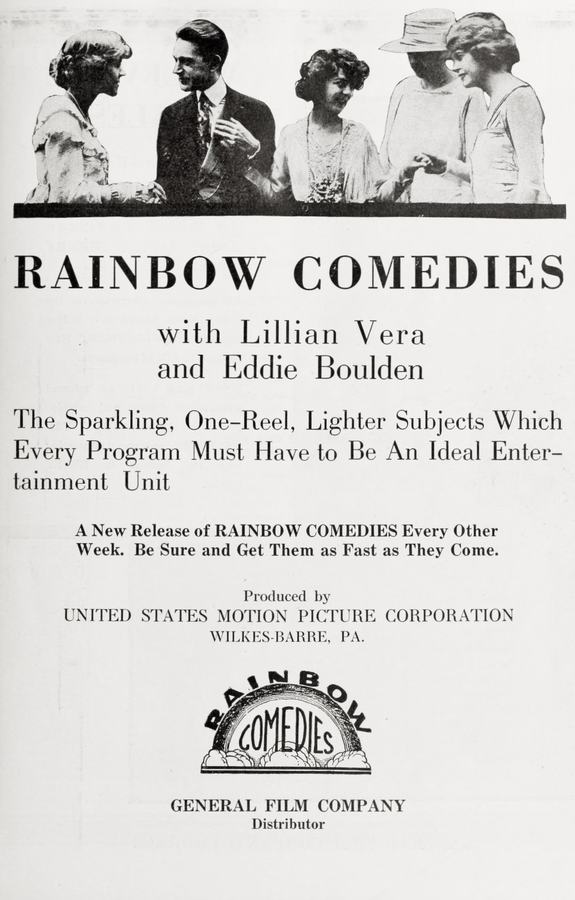
In the vibrant, yet often understated, tapestry of early cinema, where grand narratives frequently contended with the intimate and the quotidian, "My Lady's Slipper" (1918) emerges as a fascinating, albeit frequently overlooked, artistic relic. This silent-era production, featuring the nuanced, often poignant talents of Lillian Vera and Edward Boulden, distills the intricate complexities of human interaction into a deceptively simple premise: the escalating friction between two widowed neighbors, a conflict catalyzed and amplified by the incessant rivalry of their beloved pets. It’s a microcosmic study of how trivial irritations can metastasize into profound estrangement, particularly when cloaked in the silent grief and unspoken loneliness that so often accompany personal loss. The film, entirely stripped of spoken dialogue, relies instead upon the eloquent gestures and expressive visages of its leads, alongside the symbolic interplay of its animal antagonists, to convey a narrative rich in unspoken longing and comedic exasperation, a testament to the potent visual language of the era.
At its very core, "My Lady's Slipper" functions as a poignant exploration of human vulnerability, skillfully masked by an outward display of animosity. The widow, portrayed with a delicate blend of decorum and simmering frustration by Lillian Vera, finds profound solace and perhaps a surrogate family in her feline companion. Across the verdant expanse of the dividing fence, Edward Boulden’s widower, a figure of gruff solitude, dotes with equal measure upon his loyal canine friend. These animals, far from being mere narrative embellishments or charming accessories, become potent extensions of their owners’ personalities and emotional states. The cat’s sly independence and occasional mischievousness, for instance, subtly mirror the widow’s initial guardedness and underlying resilience. Conversely, the dog’s boisterous loyalty and territorial instincts reflect the widower’s more direct, if sometimes clumsy, approach to life. Their subsequent skirmishes thus transcend simple pet squabbles, setting the stage for a series of encounters imbued with deeper symbolic resonance.
The inherent brilliance of this narrative lies in its remarkable ability to take an utterly everyday scenario—the perennial bane of neighborly disputes—and elevate it through the lens of shared, though initially unacknowledged, sorrow. Both characters are navigating the solitary aftermath of profound loss, and their shared grief, rather than drawing them together in mutual understanding, initially serves as a formidable barrier, manifesting as defensiveness, projection, and irritability. The cat and dog, therefore, become unwitting proxies in a silent war of wills, their territorial skirmishes providing a socially acceptable, almost theatrical, outlet for the raw, unchanneled emotions of their human counterparts. It’s a profound testament to the era's sophisticated storytelling capabilities that such a deep psychological undercurrent could be communicated with such clarity, entirely without a single spoken word, relying instead on the nascent visual language of cinema and the expressive capabilities of its seasoned performers.
Lillian Vera's performance as the widow is nothing short of a masterclass in silent film acting. Her gestures are meticulously precise, her facial expressions conveying an expansive spectrum of emotions, from mild annoyance to a profound longing that she herself might not yet fully articulate. There's a palpable, subtle vulnerability beneath her outward indignation, a delicate hint of a woman grappling with a new, solitary existence after profound change. We observe her primness, her unwavering attempts to maintain a semblance of order and dignity in a world that has been irrevocably upended. Her interactions with her cat are infused with a tender, almost maternal, affection, revealing a deep-seated need for connection, which the animal faithfully provides. This emotional anchor makes her subsequent outbursts against the widower all the more compelling, as they seem to spring from a place of wounded pride and perhaps a nascent fear of further emotional entanglement, a common theme in the quiet dramas of the period, often explored with similar subtlety as in Fyrvaktarens dotter, focusing on inner lives.
Edward Boulden, in turn, crafts a remarkably sympathetic, if initially gruff, widower. His portrayal leans into the archetypal silent film strongman, yet he imbues the character with a quiet, affecting pathos. His unwavering devotion to his dog is evident, a perfect mirror to Vera's attachment to her cat, highlighting their shared, though unacknowledged, need for companionship. Boulden's performance is less about grand theatrical gestures and more about conveying the inner world of a man accustomed to his routines, resistant to change, and perhaps a little bewildered by the unfamiliar emotional landscape he now inhabits. The burgeoning conflict with his neighbor, spurred by their pets, serves as a crucial catalyst, forcing him to confront not just an external irritant, but also the profound internal void left by his own loss. The dynamic between Vera and Boulden, though largely adversarial for much of the film, is charged with an understated tension that hints at a potential, albeit reluctant, connection. Their remarkable ability to communicate complex emotional states solely through body language and nuanced expressions is a hallmark of the era's finest performers, and My Lady's Slipper stands as a compelling testament to their exceptional skill.
When considering "My Lady's Slipper," it's incredibly valuable to position it within the broader tapestry of early 20th-century cinema. While it undoubtedly lacks the sprawling grandeur or overt social commentary of films like Mysteries of London, which delved into the grittier, darker underbelly of urban life, or the intense psychological depth of a production such as Mania. Die Geschichte einer Zigarettenarbeiterin, exploring the harrowing plight of the working class, "My Lady's Slipper" instead champions the intimate, the everyday, the deeply personal. It finds its enduring power in the meticulous minutiae of domestic life, a theme that, while perhaps less sensational or overtly dramatic, is no less universal or profoundly resonant. This steadfast focus on the personal rather than the societal aligns it more closely with the character-driven narratives prevalent at the time, where individual struggles and evolving relationships formed the dramatic, emotional core.
Indeed, while the epic scope and literary gravitas of a production like Hamlet (1911) might overshadow it in terms of historical recognition and academic dissection, "My Lady's Slipper" offers a distinctly different kind of cinematic pleasure: the quiet, almost voyeuristic, observation of human foibles and the slow, gratifying unraveling of emotional barriers. Unlike the high-stakes drama and moral quandaries found in films such as Pawn of Fate or The Evil Thereof, where characters grapple with grand moral dilemmas or life-altering, often dire, decisions, the central conflict here is born of seemingly petty annoyances. Yet, it’s precisely this grounded realism, this charming relatability, that gives the film its enduring appeal. It taps into the universal experience of dealing with difficult neighbors, albeit through an ingenious, animalistic lens, offering a gentle mirror to our own everyday frustrations and eventual reconciliations.
The storytelling techniques prevalent in 1918 relied heavily on visual metaphors, compelling intertitles, and strong, recognizable character types. Intertitles were, of course, crucial for conveying dialogue and essential plot points, but the true artistry of the era lay in how directors and actors utilized non-verbal cues—a sidelong glance, a slight shrug, a sudden stiffening of posture—to communicate profound emotional depth. "My Lady's Slipper" exemplifies this visual mastery, transforming simple actions—a cat scaling a fence with disdain, a dog barking furiously at an unseen rival—into potent narrative propulsion. The film's pacing, typical of the era, might initially feel deliberate to modern audiences accustomed to rapid-fire editing, but it thoughtfully allows for a deeper appreciation of the subtle shifts in emotion and the gradual development of the characters' understanding, both of each other and of themselves. It stands in intriguing contrast to more action-oriented films like On the Fighting Line or Her Fighting Chance, where physical prowess and direct confrontation drive the plot. Here, the 'fighting line' is merely a shared property boundary, and the 'chance' is for an emotional reconciliation, a quiet triumph of human spirit over petty grievances.
The cat and dog are not, by any stretch, merely props; they are essential, almost anthropomorphic, characters in their own right, serving as both initial instigators and eventual, innocent facilitators of understanding. The cat, with its innate aloofness and occasional mischievousness, perfectly embodies the widow's initial guardedness and independent spirit. The dog, with its boundless energy and fiercely territorial instincts, reflects the widower's more direct, if sometimes clumsy, approach to life and his protective nature. Their escalating squabbles—a brazenly stolen slipper, a frantic chase through the meticulously kept garden—are not just sources of gentle humor but also powerful symbolic representations of the human protagonists' inability to find common ground. It's a remarkably clever narrative device that allows the characters to express their frustrations indirectly, through their beloved pets, until the sheer absurdity of the situation forces a more direct, human confrontation. This subtle characterization through animal surrogates is a technique that can be observed in other films of the period, albeit perhaps less centrally, demonstrating a nascent yet sophisticated understanding of symbolic storytelling in early cinema.
The film’s central conflict, driven by these charming animal antagonists, reaches a gentle crescendo that ultimately forces the human characters to look beyond their superficial grievances and perceived slights. It compels them to see the shared humanity, the common thread of loneliness and longing, beneath the surface of their squabbles. The resolution, though perhaps predictable by modern cinematic standards, is painstakingly earned through the gradual, almost imperceptible, thawing of their icy exteriors. It's a compelling journey from initial isolation to tentative connection, from defensive projection to a nascent mutual understanding. This narrative arc, while a common trope, is handled with such a delicate, sensitive touch that it prevents the film from descending into saccharine sentimentality, maintaining instead a genuine sense of authentic emotional progression and quiet triumph.
"My Lady's Slipper" also offers a subtle, yet insightful, commentary on societal norms and expectations of the early 20th century. The prescribed roles and expectations placed upon widows and widowers, the decorum of neighborly interaction, and the quiet dignity often maintained in the face of profound personal sorrow are all implicitly present and skillfully woven into the fabric of the narrative. The film, in its sensitive depiction of two individuals grappling with the profound weight of loneliness, touches upon universal themes explored in other character studies of the era, such as The Nightingale, which often focused on the intricate inner lives and emotional resilience of its protagonists. The film's gentle humor and eventual warmth suggest a hopeful and optimistic outlook on human connection, even for those who initially seem determined to remain isolated. It’s a testament to the enduring idea that even the most stubborn and guarded hearts can be softened by shared experience and a touch of serendipity, often initiated by the very creatures we share our lives with.
The film deliberately doesn't aim for the dramatic heights or the profound moral complexities seen in weighty productions like Hans Faders Ære or The Man Who Forgot, which might tackle grand themes of honor, memory, or profound personal sacrifice. Instead, its ambition is more modest, yet equally impactful: to eloquently illustrate the simple, often humorous, path to understanding between individuals. It deftly demonstrates how seemingly superficial disagreements can often mask deeper, more fundamental needs for companionship and empathy. The silent screen, in its profound capacity for visual storytelling and emotional conveyance, here finds a perfect canvas for such a delicate and nuanced narrative, proving that grand budgets weren't always necessary for powerful storytelling.
Despite its significant age and the apparent simplicity of its plot, "My Lady's Slipper" retains a certain timeless appeal and undeniable charm. It serves as a gentle, yet potent, reminder that human nature, with its inherent quirks, its defensive mechanisms, and its fundamental need for connection, has remained remarkably consistent across the decades. The film's gentle humor and the universal theme of overcoming initial prejudices to find common ground resonate powerfully even today, making it surprisingly contemporary. It stands as a charming and compelling example of how early cinema, often mistakenly considered primitive, was in fact capable of profound emotional depth, subtle character development, and ingenious narrative construction. The film’s approach to depicting the gradual softening of two hardened hearts, often through the innocent and unwitting agency of their beloved pets, is a narrative device that continues to be remarkably effective and emotionally resonant.
While it may not possess the grand romantic sweep of a lavish production like The Bronze Bride or the intricate, labyrinthine plot twists of a mystery like Herregaards-Mysteriet, "My Lady's Slipper" carves out its own unique and significant niche in cinematic history. It’s a quiet triumph, a small-scale drama that, through its focused lens, speaks volumes about the enduring human condition. Its legacy lies not in blockbuster status or groundbreaking technical innovation, but rather in its charming, authentic portrayal of everyday life, elevated by compelling, sincere performances and an ingenious, heartfelt use of its animal co-stars. It's a film that, despite its complete lack of dialogue, manages to tell a complete, emotionally satisfying, and deeply resonant story, inviting audiences to reflect on their own relationships with neighbors and pets, and the often-unseen pathways to understanding that exist all around us. It serves as a poignant reminder that sometimes, the greatest dramas and most profound human connections unfold not on battlefields or in grand ballrooms, but right across the unassuming garden fence.
In an era of fervent cinematic experimentation, where filmmakers were still diligently discovering the full expressive potential of the burgeoning medium, "My Lady's Slipper" stands as a delightful and significant example of how simple concepts, when executed with sincerity, artistic integrity, and a keen eye for human nature, can yield enduring artistic value. It’s a film that quietly but firmly asserts the profound power of empathy, the inherent humor in our everyday squabbles, and the often-unexpected ways in which genuine connection can bloom, even from the most unpromising soil of mutual annoyance. Its charm is undeniable, and its message, though delivered without a single spoken word, resonates with remarkable clarity and warmth, making it a worthy subject of re-evaluation and appreciation for enthusiasts of silent film and timeless human drama alike. This cinematic slipper, though perhaps tiny in comparison to some of its more grandiose contemporaries, nonetheless leaves a lasting, comforting imprint on the heart and mind.
IMDb —
1919
Community
Log in to comment.