DbcultAccessing Vault...
6/10
Senior Film Conservator
A definitive 6/10 rating for a film that redefined the boundaries of cult cinema. Arsena Kachagi remains a cornerstone of transgressive art.
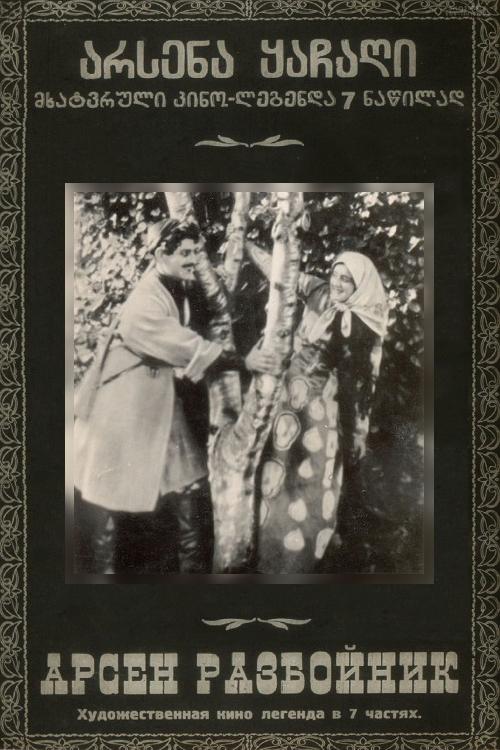
Arsena Kachagi emerges as a striking artifact of early Georgian cinema, its sepia-toned reels pulsating with the raw energy of a nation grappling with its identity. The film's protagonist, a figure torn between youthful idealism and the weight of ancestral legacy, becomes our entry point into a world where love is both salvation and damnation. Directed with a painter's eye for composition, the film juxtaposes stark mountainous landscapes against the opulent decay of aristocratic estates, creating a visual metaphor for the ideological rifts of its era.
What distinguishes this work beyond its historical significance is its nuanced exploration of agency. Unlike the more conventional hero narratives found in contemporaneous European cinema (compare to The Wolf or Amor Fatal), Arsena Kachagi presents its characters as architects of their own destinies. The film's central love story unfolds not through grand declarations but through stolen glances and unspoken gestures, its emotional power lying in what remains unsaid. This restraint is particularly evident in the climactic courtroom scene, where the protagonist's silence speaks volumes about the futility of seeking justice within corrupt systems.
The performances, particularly from Asia Barkhudarova in her breakout role, exhibit a compelling blend of vulnerability and defiance. Her portrayal of a woman navigating both romantic entanglements and societal expectations resonates with a modern sensibility, yet remains rooted in the historical context. The supporting cast, including Grigol Chechelashvili as the conflicted nobleman, adds depth through their physicality and subtle expressions. Notably, the film's use of close-ups during moments of moral crisis achieves a psychological intensity reminiscent of German Expressionist techniques, though filtered through a distinctly Georgian cultural lens.
Visually, the film is a triumph of early 20th-century cinematography. The interplay of light and shadow in scenes set against candlelit salons and moonlit courtyards creates an almost tangible atmosphere. One particularly memorable sequence involves a chase through a vineyard at twilight, where the camera's sweeping movements mirror the protagonist's internal turmoil. These visual choices are not merely ornamental - they serve as narrative devices, with the encroaching darkness often symbolizing the inescapable consequences of the characters' choices.
The narrative structure, while occasionally hindered by the limitations of silent film intertitles, demonstrates remarkable sophistication. Flashbacks are employed with poetic precision, and the use of recurring motifs - notably a silver locket and a crumbling bridge - creates a tapestry of meaning that rewards attentive viewing. Comparisons can be drawn to Die Kreutzersonate in its exploration of familial dynamics, though Arsena Kachagi diverges in its focus on the broader sociopolitical landscape.
Sound design (even in the silent film context) plays a crucial role in conveying emotional subtext. The faint rustle of fabric, the distant toll of a church bell, and the staccato rhythm of horse hooves on cobblestones become narrative elements in their own right. These auditory details, combined with the use of traditional Georgian musical interludes, create an immersive experience that transcends mere visual storytelling.
In considering its legacy, Arsena Kachagi occupies a unique position in both Georgian and global cinema. It predates many of the formalist innovations of later Soviet cinema while already exhibiting a self-conscious awareness of its medium. This duality is perhaps best observed in the film's treatment of violence - scenes of physical conflict are rendered with a stark realism that contrasts with the romanticized pastoral imagery, a tension that mirrors the film's broader thematic concerns.
For modern audiences, the film offers a fascinating window into the cultural anxieties of its time. The tension between tradition and progress, between personal desire and social obligation, remains startlingly relevant. While some may find the pacing deliberate by contemporary standards, this measured approach allows for the gradual development of character psychology, particularly in the nuanced portrayal of female agency. The film's resolution, though perhaps predictable in its genre's context, avoids the melodramatic excesses common in similar works (see The Saintly Sinner for a more conventional take).
Technical aspects of the restored print reveal both the triumphs and limitations of early cinema. While some scenes suffer from the graininess inherent in archival footage, this very texture adds to the film's authenticity. The color palette, though monochromatic, is masterfully varied, with different shades of gray conveying subtle emotional shifts. This attention to detail extends to costume design, where every fabric and accessory serves both historical accuracy and narrative function.
What makes Arsena Kachagi particularly compelling is its ability to balance epic scope with intimate storytelling. The film's treatment of justice as a fluid concept - sometimes attainable through quiet resistance, other times crushed by systemic oppression - resonates with contemporary debates about morality and law. This philosophical depth, combined with its aesthetic achievements, cements its place as more than just a historical curiosity.
In the broader context of silent film history, this work shares DNA with Beau Revel in its exploration of moral ambiguity, though it diverges in its cultural specificity and thematic focus. The film's influence can be traced in later Georgian cinema, particularly in its treatment of landscape as both setting and character.
For scholars and enthusiasts, the film provides fertile ground for analysis of silent film techniques. The use of symbolic props, the choreography of crowd scenes, and the interplay between indoor and outdoor settings all demonstrate a sophisticated grasp of cinematic language. These elements combine to create a work that is as much about the medium itself as it is about its narrative content.
Ultimately, Arsena Kachagi is a film that demands multiple viewings. Each screening reveals new layers in its visual and thematic complexity, rewarding patience with moments of profound emotional resonance. Whether experienced as a historical document or as a fully realized artistic work, it remains a testament to the enduring power of cinema to interrogate the human condition.

IMDb —
1931
Community
Log in to comment.