DbcultAccessing Vault...
Cult Review
Senior Film Conservator
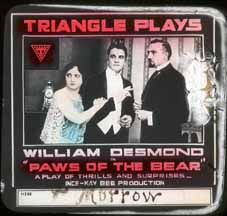
Stepping into the world of Paws of the Bear, a 1917 cinematic offering, is akin to unearthing a finely crafted relic from the nascent days of narrative film. In an era when the world was gripped by the unprecedented cataclysm of the Great War, and the silver screen was still finding its voice through compelling visuals and emotive performances, films like this served as both escapism and a reflection of the anxieties permeating society. This particular silent drama, penned by J.G. Hawks, stands as a testament to the intricate storytelling capabilities of the period, weaving together threads of espionage, moral quandary, and an unexpected romance against the tumultuous backdrop of a continent at war. It’s a narrative that, despite its century-old vintage, retains a surprising freshness in its psychological depth and ingenious plot mechanics, inviting us to delve beyond mere spectacle into the very heart of human dilemma.
The film plunges us directly into the maelstrom of conflict, setting its initial scene in Belgium at the very moment war's grim shadow descends. Here, we are introduced to Olga Raminoff, a Russian agent portrayed with a compelling blend of defiance and vulnerability by Clara Williams. Her opening gambit is nothing short of audacious: a direct assassination attempt on a German general as enemy forces sweep into town. This act of overt resistance immediately establishes the high stakes and the perilous landscape in which our characters operate. It’s a bold stroke, painting Olga not merely as a passive victim of circumstance but as an active, albeit desperate, participant in the grand geopolitical game. Her actions resonate with a fierce, almost primal patriotism, or perhaps a deep-seated conviction in her mission, setting her apart from many female characters of the era who were often relegated to more domestic or purely romantic roles.
Into this volatile scenario stumbles Ray Bourke, an American traveler embodied by the charismatic William Desmond. His presence in war-torn Belgium feels almost anachronistic, a reminder of America's initial neutrality, yet his inherent decency quickly pulls him into the fray. Witnessing Olga's desperate act and subsequent capture, Ray, driven by a chivalrous impulse that feels distinctly American in its idealism, offers her the protection of his name. This seemingly simple act of gallantry, however, proves to be a double-edged sword, intertwining their fates irrevocably. Both are swiftly condemned to death, highlighting the brutal summary justice of wartime and the ease with which an innocent bystander can be swept into the vortex of conflict. The tension here is palpable, a silent scream of injustice and impending doom that keeps the audience riveted.
Just as the gallows loom, a deus ex machina descends from the heavens in the form of an Allied rescue plane, plucking Olga and Ray from the very jaws of execution. This dramatic escape sequence, while perhaps stretching credulity for a modern audience, would have been a thrilling spectacle for viewers of the time, underscoring the precariousness of life and the fleeting nature of hope during wartime. It also serves as a crucial plot device, allowing the narrative to pivot from immediate survival to the more nuanced complexities of espionage and personal entanglement. Their shared trauma, the brush with death, forges an undeniable bond between them, laying the groundwork for the emotional core of the story.
Aboard the ship bound for home, the intricate web of connections tightens further with the introduction of Curt Schreiber, played by Robert McKim. Schreiber is not merely an old college friend of Ray's; he is an agent in the service of the German government, entrusted with highly sensitive papers destined for Washington. This revelation immediately elevates the narrative from a simple war romance to a sophisticated espionage thriller. Schreiber, acutely aware of the risk of being searched on board, shrewdly entrusts these vital documents to Ray. This act of trust, rooted in their past friendship, establishes a profound moral dilemma for Ray. His word, his honor, is now inextricably linked to a mission that serves the very enemy against whom Olga fought so fiercely. The narrative cleverly avoids painting Schreiber as a caricature villain; instead, he is a man of duty, operating within his own framework of loyalty, making his actions understandable, if not sympathetic, from a certain perspective.
As the journey progresses, Olga's burgeoning affection for Ray intensifies, leading her to make a fervent plea: that he relinquish the papers for her sake. This moment is the narrative's emotional fulcrum. Ray is caught between his growing love for Olga, who represents the Allied cause he implicitly supports, and his sacred word to Schreiber, a bond of trust that transcends national allegiances. William Desmond’s portrayal of Ray here is critical, conveying the internal struggle without the aid of dialogue. His steadfast refusal, driven by an unwavering commitment to his promise, highlights a profound sense of personal integrity that defines his character. It’s a powerful examination of honor, suggesting that some vows, once made, are unbreakable, regardless of the shifting tides of war or personal desire. This ethical stance elevates the film beyond a simple chase narrative, imbuing it with a philosophical weight.
The narrative, however, is far from static. As America draws near, Ray, ever the pragmatist with a romantic streak, presents Olga with an astonishing proposition: he will endeavor to return the papers if she agrees to marry him. This bold move, while seemingly transactional, underscores the complex interplay of their relationship. It's not merely a bargain; it's an attempt to reconcile his conflicting loyalties, to find a path where both honor and love can coexist. Olga accepts, and their marriage marks a new chapter, one where the immediate dangers of war give way to the more subtle dynamics of domesticity, albeit with an unresolved secret simmering beneath the surface. They settle into his estate, a picture of marital tranquility that belies the lingering tension of the undelivered papers.
The film's true genius, and perhaps its most enduring legacy, lies in its intricate resolution. One day, Curt Schreiber, the German agent, arrives at Ray’s estate for a visit. This reunion is fraught with unspoken tension, a silent dance between two men bound by a secret. The climax unfolds with stunning subtlety: as Schreiber prepares to depart, he "borrows" a suitcase from Ray. It is only later, upon opening the bag, that he discovers the very papers he had entrusted to Ray, now safely retrieved. This brilliant maneuver allows Schreiber to reclaim his vital documents without Ray ever having to overtly break his promise to Olga or betray his word to his friend. It’s a masterclass in narrative economy and moral circumvention, a twist that satisfies all parties without compromising the integrity of the protagonist.
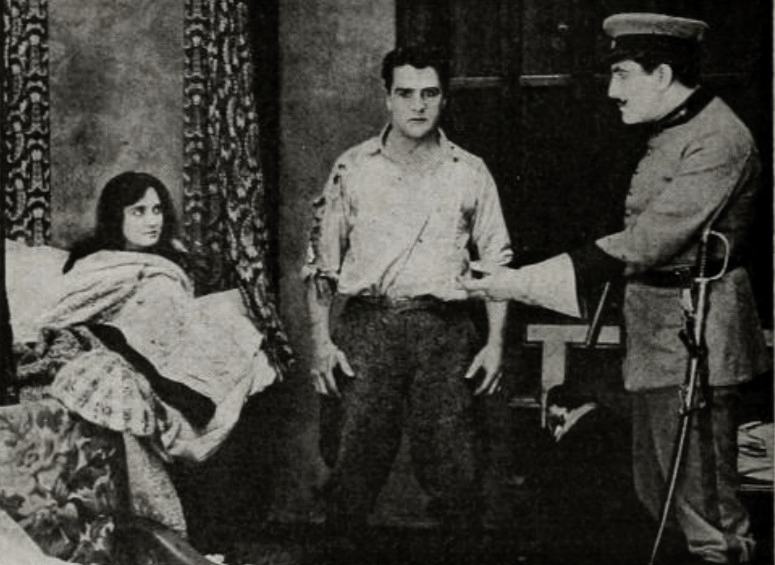
This resolution is remarkable for its era. It eschews simplistic good-versus-evil tropes, instead opting for a nuanced understanding of loyalty and duty. Ray's promise to Schreiber remains inviolable, yet Olga's desire to see the papers kept from German hands is also, in a way, fulfilled, as they are not directly delivered by Ray. The ingenious method of retrieval speaks volumes about the intelligence of the characters and the cleverness of the screenplay. It transforms what could have been a tragic dilemma into a testament to human ingenuity and the power of subtle manipulation. This kind of intricate plotting, where character motivations and narrative twists converge so elegantly, sets Paws of the Bear apart from many contemporaries, perhaps even earning it a place alongside more celebrated thrillers of the silent era like Queen of Spades for its psychological depth and intricate character play, or The Gray Mask for its cloak-and-dagger elements.
In a silent film, the burden of conveying emotion, intent, and character falls squarely on the actors' physical presence, facial expressions, and gestural language. The cast of Paws of the Bear rises admirably to this challenge. Clara Williams, as Olga Raminoff, delivers a performance that oscillates between fierce determination and tender vulnerability. Her eyes, often the most expressive tools in silent cinema, effectively communicate her character's internal conflicts and burgeoning affection for Ray. She manages to imbue Olga with a complexity that transcends the typical "damsel in distress" archetype, presenting a woman of agency and conviction.
William Desmond, as Ray Bourke, is the film's moral compass and romantic lead. Desmond projects an air of earnest integrity and quiet strength, making Ray's unwavering commitment to his word entirely believable. His portrayal skillfully navigates the tightrope between his duty to a friend and his growing love, allowing the audience to empathize with his predicament. His charisma is undeniable, a quality essential for a silent film protagonist who must carry much of the narrative through sheer presence. Robert McKim, as Curt Schreiber, is equally effective, portraying a man of measured resolve and strategic intelligence. He avoids villainous histrionics, instead presenting a formidable, yet honorable, adversary whose actions are driven by his own sense of duty. The interactions between Desmond and McKim, particularly in the later scenes, are subtle masterclasses in unspoken tension and mutual respect, a testament to their craft. Charles K. French and Wallace Worsley, though perhaps in less central roles, contribute to the film's texture, ensuring that even minor characters feel integrated into the unfolding drama.
At its core, Paws of the Bear is a profound meditation on the nature of loyalty. Ray's commitment to his word, given to a friend who happens to be an agent of an enemy power, forms the central ethical dilemma. This isn't a simple case of patriotism; it’s a more complex exploration of personal honor transcending national boundaries, a theme that resonates deeply even today. The film forces us to consider where our ultimate loyalties lie: to country, to a friend, to a lover, or to an abstract principle of integrity. Olga's loyalty shifts from her initial mission to her growing devotion to Ray, highlighting how personal connections can complicate, and sometimes even supersede, geopolitical allegiances.
The romance between Olga and Ray is not a saccharine, straightforward affair. It is forged in the crucible of shared danger and moral conflict. Their love story is intertwined with the espionage plot, making it feel organic and earned, rather than merely tacked on. The proposal, made under the shadow of the undelivered papers, speaks volumes about the pragmatic yet deeply felt nature of their bond. It suggests a love that is willing to confront and navigate profound challenges, a partnership built on mutual respect and a shared understanding of life's complexities. This pragmatic romanticism offers a refreshing contrast to some of the more idealized love stories prevalent in cinema, demonstrating a maturity in storytelling that was ahead of its time.
Furthermore, the film delves into the subtleties of deception within espionage. It's not about brute force or overt betrayals, but about clever maneuvering and psychological gamesmanship. The final resolution, where Schreiber retrieves his papers without Ray breaking his promise, is a testament to this nuanced approach. It shows that in the world of spies, ingenuity can often trump direct confrontation, and that honor can be maintained through clever circumvention rather than outright lies. This sophisticated portrayal of espionage, relying on character and cunning rather than constant action, gives the film a depth that allows it to stand shoulder-to-shoulder with other intricate silent era narratives.
While specific details about the cinematography or directorial style of Paws of the Bear might be scarce for a film of this vintage, we can infer much from the narrative's strength and the performances. The pacing, crucial for silent films to maintain audience engagement, appears well-managed, moving from high-tension escape sequences to more intimate, morally charged dialogues. The use of intertitles would have been vital, not just for conveying dialogue but for explaining crucial plot points and character motivations, ensuring that the audience grasped the intricate nature of the espionage. The film's ability to sustain suspense and build towards its ingenious climax speaks volumes about the directorial vision and the clarity of J.G. Hawks' screenplay.
Paws of the Bear, in its quiet brilliance, offers a compelling glimpse into early 20th-century cinema's capacity for complex storytelling. It's a film that, rather than relying on overt spectacle, finds its power in the moral dilemmas of its characters and the intricate dance of loyalty and deception. It reminds us that even in the absence of spoken dialogue, cinema can explore profound human truths and weave narratives that resonate long after the final reel. For enthusiasts of silent film and historical dramas, it’s a compelling example of how early filmmakers tackled weighty themes with remarkable sophistication. Its unique resolution, in particular, sets it apart, making it a noteworthy entry in the annals of early espionage thrillers. It serves as a reminder that the foundational elements of compelling drama—character, conflict, and clever plotting—were firmly in place even before the advent of sound, making films like Paws of the Bear not just historical artifacts, but enduring works of art.
IMDb —
1926
Community
Log in to comment.