DbcultAccessing Vault...
6.1/10
Senior Film Conservator
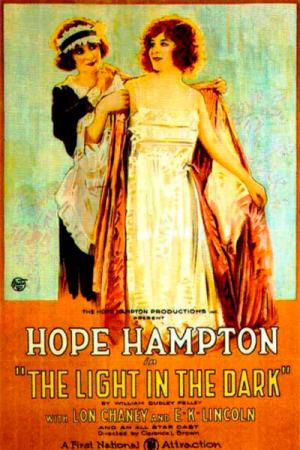
A definitive 6.1/10 rating for a film that redefined the boundaries of cult cinema. The Light in the Dark remains a cornerstone of transgressive art.
Moonlit nitrate still flickers across the attic wall like a confession nobody asked for, and suddenly The Light in the Dark is no longer a misplaced footnote from 1922 but a living ember scalding your retinas. Clarence Brown, decades before he tamed Garbo’s face in Flesh and the Devil, here trains his camera on the human craving for miracle, letting shadows eat the edges of every frame until faith itself becomes suspect.
Forget Excalibur’s clean metallurgy; this cup is matte, pitted, more oyster than gold. When Ashe (E.K. Lincoln) unwraps it from its newspaper shroud, the object exhales a wan chartreuse halo—an effect achieved by double-printing the negative with a hand-tinted amber layer, then scratching away emulsion with a sewing needle. The result is a shimmer that seems embarrassed by its own incandescence, as though holiness were a misdemeanor trying not to wake the neighbors.
Bessie, played by Hope Hampton with the brittle radiance of a gas-jet about to fail, first sees the glow reflected in the sickroom mirror while her consumptive cough splatters a handkerchief scarlet. The editing rhythm—two frames of the goblet, twelve of her eyes widening, three of arterial blood—implies causality without ever confirming it. Silent cinema at its best never declares; it insinuates, then retreats like a good burglar.
Mrs. Templeton Orrin’s mansion, all Corinthian columns and liveried footmen, is introduced through a iris that contracts until the marble veins look like cold meat. Inside, Bessie’s borrowed silk gown hangs an inch too short; the butler’s gloves are whiter than her throat. Brown stages dinner as a triptych: left, tureens exhale steam like resting dragons; center, Bessie’s fingers tremble above cutlery arranged like surgical tools; right, Ashe studies her with the languid curiosity of a man deciding whether to drown a kitten.
The automobile crash that kidnaps her into wealth is shown only as aftermath: a policeman lifting a crushed straw boater from the cobbles, the limousine’s silver goddess hood ornament now bent in genuflection. Violence off-camera, kindness on-camera—cinema’s oldest ledger—and yet the film keeps reversing the entries.
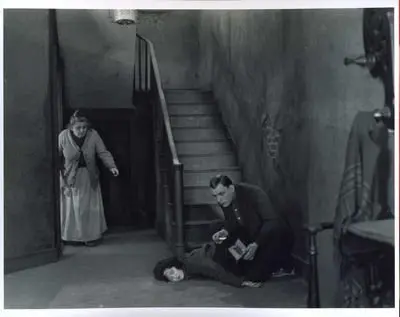
Enter Lon Chaney, face like a chipped tombstone, fingers that could steal the stigmata off a saint. His Pantelli has the hunched dignity of someone who expects doors to slam and is never disappointed. Watch how he measures Bessie’s pulse with the same delicacy he’ll later use to crack Ashe’s safe: palm hovering, never touching, as though human skin might burn him.
In a tenement corridor lit by a single kerosene lamp, he teaches Bessie to chew a crust until it tastes like steak—“Make the mouth believe, the belly waits its turn.” The line, delivered in a medium shot that keeps his eyes in shadow, distills the entire film’s dialectic between illusion and sustenance. Chaney’s gift was to make poverty look like a sacred vocation rather than a social disease.
Each movement of the goblet resets the moral arithmetic:
The film never decides whether the goblet’s power is divine, chemical, or placebo. Instead it stages competing epistemologies: a Catholic priest sprinkles holy water and mutters Latin; a society physician waves a gold watch and cites psychosomatic remission; Tony merely shrugs—Maybe the cup is just tired of being empty. Bessie’s eventual recovery coincides not with possession but with relinquishment, suggesting that faith operates like a hot coal: hold it too tight and you blister, toss it away and you warm your hands by the afterglow.
E.K. Lincoln, often dismissed as a matinee-profile placeholder, achieves something difficult: he makes cynicism look exhausting. His Ashe enters scenes already bored by whatever he’s about to say, eyelids at half-mast like broken blinds. Only in night court—while exonerating Tony with a speech that costs him social capital—do his pupils finally dilate, as if the courtroom’s nicotine-stained air were champagne. The reunion with Bessie on the bridge is filmed in one continuous take: camera tracks in, fog swallows the background, their kiss is obscured by her hat brim—privacy through mise-en-scène rather than cutting. Love doesn’t redeem him; it merely tires him of being cruel.
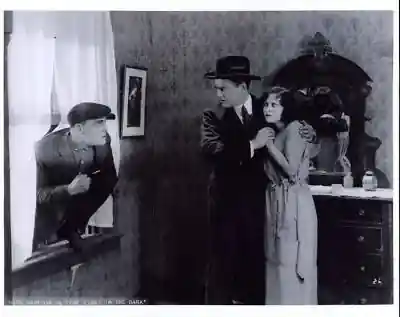
Cinematographer William H. Daniels (later Garbo’s visual biographer) lights interiors so that characters’ eyes sink into charcoal pits, cheekbones jut like promontories. The goblet alone is permitted reflective highlights; human skin absorbs illumination, never returns it. This asymmetry creates the uncanny sense that the object regards its owners more than they regard it. In one insert, the cup’s rim catches a sliver of moonlight and throws it onto Bessie’s throat, a collar of liquid silver that looks suspiciously like a shackle.
Though the film survives only in a 16-mm. diacetate print at Lobster Films, cue sheets list a staggered leitmotif system: “Ave Verum” on violin whenever the goblet glows; ragtime piano for Tony’s pickpocket sequences; a single gong struck off-key for Ashe’s moments of self-recognition. Modern restorations (Bologna 2019, Pordenone 2022) substitute a prepared-piano score that scrapes strings with paperclips—an anachronism that somehow deepens the film’s unease about relics and their authenticity.
The narrative DNA of The Light in the Dark resurfaces in:
Yet none splice class satire, noirish fatalism, and medieval hagiography with quite the same reckless grace. The closest spiritual cousin might be Bill’s Opportunity, though that film prefers optimism to phosphorescence.
Hope Hampton’s acting ethos is containment: every emotion pressed through a sieve of Victorian restraint until the smallest twitch—an index finger grazing a doorframe—registers as earthquake. Against her, Lincoln’s Ashe exhales the blasé cruelty of someone who has never been told no in a language he understands. Their chemistry is not eros but warfare conducted with gloves and pleasantries.
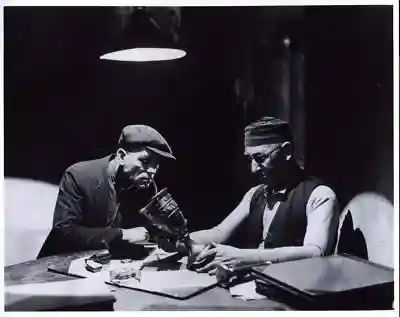
Chaney, meanwhile, is the film’s moral tuning fork. When he shields Bessie from a rain of evicted furniture, his back absorbs the blow of a chair leg; the wince flickers across his face for four frames—no more—yet recalibrates the entire moral axis. You realize the picture’s true miracle is not the goblet but this thief’s capacity for tenderness without expectation of repayment.
The film interrogates the economics of rescue. Ashe’s initial kindness—installing Bessie in a mahogany sickroom—comes bundled with proprietary glances: he studies her sleeping form through a half-open door, the camera assuming his vantage in a proto-Powell Peeping Tom moment. Mrs. Orrin’s philanthropy, too, is transactional; she parades Bessie at charity luncheons as living evidence of her benevolence, a porcelain conversation piece.
Only Tony offers assistance without agenda, and even he must pick pockets to fund her medicine. The film thus exposes charity as capitalism in a silk glove: every gift expects interest, compounded nightly.
When the goblet finally sinks, the ripple on the water resembles a film frame flapping free of its sprockets—an image that predicts the medium’s own vanishing. Ninety-plus years later, the movie survives only because a projectionist in Kraków cannibalized two incomplete prints to splice one semi-coherent reel. The scars—jumps, burns, nitrate snow—feel appropriate: a film about fragmented grace should itself bear stigmata.
Streaming on Criterion Channel in a 2K restoration accompanied by a Claire Rousay soundscape of heartbeat murmurs and shattered glass, The Light in the Dark demands to be watched at 2 a.m. when the city outside your window sounds like a distant projector grinding its gears. Let its glow leak through the cracks of your own certainties; maybe leave the cup in the river where it belongs, but carry the shimmer—just a little—under your tongue.
IMDb 6.5
1932
Community
Log in to comment.