DbcultAccessing Vault...
Cult Review
Senior Film Conservator
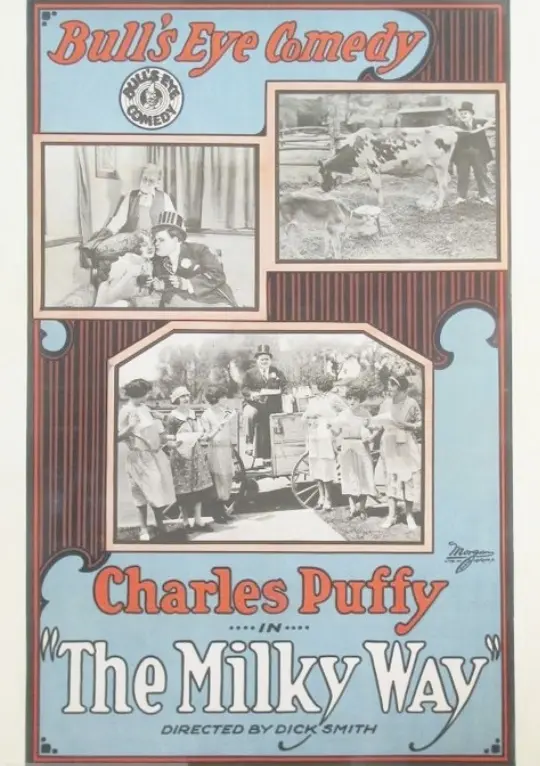
Is 'The Milky Way' worth watching today? Short answer: yes, but with significant caveats that demand a specific taste. This early silent comedy is a quirky historical artifact, best suited for dedicated cinephiles and enthusiasts of slapstick's formative years, rather than casual viewers seeking broad entertainment. It’s a fascinating glimpse into the nascent stages of cinematic comedy, showcasing the raw, physical humor that would eventually evolve into more sophisticated forms.
For those with an appreciation for the historical context and the foundational elements of silent film, 'The Milky Way' offers genuine, if rudimentary, pleasures. However, if your comedic palate is attuned to modern sensibilities or even the refined slapstick of Chaplin or Keaton, you might find its charms somewhat elusive. It’s a film that asks for patience and a willingness to contextualize its humor within its era.
'The Milky Way' emerges from an era when cinema was still finding its voice, a time when storytelling was often secondary to the novelty of moving pictures and the immediate impact of physical gags. Released in a period brimming with experimental shorts and theatrical adaptations, this film stands as a testament to the popular appeal of rudimentary slapstick. It doesn't aim for the profound social commentary or character nuance that would define the 'Golden Age' of silent film; instead, it revels in straightforward, almost childlike humor.
The genre it occupies is firmly rooted in vaudeville traditions, where exaggerated movements, pratfalls, and visual jokes were paramount. There’s a distinct theatricality to the performances, particularly from Károly Huszár, which suggests actors were still adapting their stagecraft for the nascent medium of film. This isn't a criticism, but an observation of its historical placement. It’s a bridge between the stage and the silver screen, a stepping stone in the development of cinematic language.
One could argue that the film's greatest value lies not in its entertainment factor for a modern audience, but in its ability to transport us to a time when laughter was simpler, less demanding, and often derived from pure, unadulterated chaos. It’s a raw, unfiltered look at comedic intent before the advent of sophisticated editing techniques or complex character arcs. It feels almost like watching a live performance captured on film, retaining that immediate, unpolished energy.
Károly Huszár, as Puffy, is the undisputed gravitational center of 'The Milky Way'. His performance is a masterclass in early physical comedy, relying almost entirely on broad gestures, exaggerated facial expressions, and a remarkable willingness to endure comedic indignities. There’s an undeniable energy to his portrayal, a relentless enthusiasm that carries the thin narrative forward. He commits wholeheartedly to every predicament, no matter how absurd, and this commitment is where much of the film’s charm resides.
Consider the infamous scene where Puffy attempts to milk a bull. This moment, while perhaps predictable in its outcome, showcases Huszár’s fearless approach to slapstick. His wide-eyed confusion, followed by the frantic, flailing attempts to control the agitated animal, are delivered with a conviction that transcends the rudimentary filmmaking. It's a sequence that, despite its simplicity, elicits a genuine chuckle, primarily due to Huszár’s sheer physical effort and comedic timing.
His character, Puffy, is not a deep psychological study; he is an archetype. The well-meaning but bumbling hero, driven by love and a sense of duty, who inadvertently creates more chaos than he resolves. Huszár embodies this archetype with an almost childlike innocence, making his mishaps endearing rather than frustrating. It’s a performance that doesn’t require dialogue or complex camera work; it relies solely on the actor’s body and face to convey emotion and humor. In an era where many actors struggled to adapt to the silent screen, Huszár’s natural theatricality proved to be a significant asset.
Unconventional Observation: Huszár’s performance, while undeniably effective for its time, also highlights a peculiar aspect of early silent comedy: the protagonist’s almost masochistic relationship with misfortune. Puffy endures constant physical abuse, not with a sense of defiance or cleverness, but with a bewildered acceptance that somehow makes him more relatable to an audience watching the world turn upside down.
The direction in 'The Milky Way' is, by modern standards, incredibly straightforward. The camera is largely static, functioning more as a spectator than an active participant in the storytelling. Scenes are often framed in wide shots, allowing the audience to take in the full scope of the physical comedy and the theatrical blocking. There's a clear emphasis on ensuring the gags are visible and understandable, even if it means sacrificing dynamic camera movements or sophisticated editing.
Cinematography, too, is functional rather than artistic. The lighting is basic, aiming for clarity over mood. There are no dramatic close-ups to heighten emotion, no intricate tracking shots to build suspense. This simplicity, however, isn't necessarily a flaw; it's a reflection of the filmmaking techniques prevalent at the time. The visual language is direct, prioritizing the action and the reaction of the performers over stylistic flourishes. This approach forces the viewer to focus entirely on the physical comedy unfolding within the frame.
The pacing of the film is a curious mix. Individual gags are often executed with a rapid-fire energy, designed to elicit immediate laughter. Yet, the overall narrative progression can feel somewhat episodic and, at times, drawn out. The film relies on a series of escalating mishaps, but the transitions between these comedic set pieces aren't always seamless. This creates a rhythm that is both frenetic and occasionally ponderous, a characteristic common in early shorts that were still experimenting with narrative flow.
The tone is consistently lighthearted and farcical. There’s no genuine threat or emotional depth, even when the dairy faces ruin. The stakes, while presented as dire for the characters, are clearly understood by the audience to be merely a pretext for more comedic chaos. This unwavering commitment to levity ensures that 'The Milky Way' remains an innocent, if somewhat superficial, viewing experience. It never attempts to be more than a vehicle for uncomplicated laughter, a goal it largely achieves within its own historical context.
Richard Smith's screenplay for 'The Milky Way' is a prime example of early
IMDb —
1920
Community
Log in to comment.