DbcultAccessing Vault...
Cult Review
Senior Film Conservator
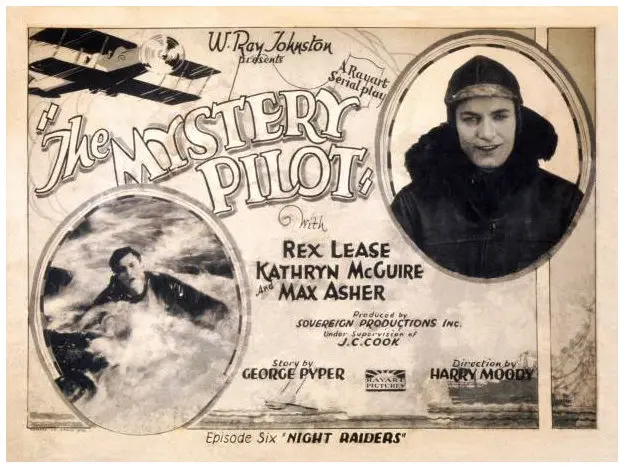
Short answer: yes, but primarily for those who view cinema as a time machine. Mystery Pilot (1926) is a fascinating artifact for aviation enthusiasts and silent film collectors, though it will likely alienate modern viewers who require high-speed editing or digital clarity.
This film is for the historian, the lover of practical stunts, and the viewer who finds beauty in the grain of a century-old reel. It is absolutely not for anyone looking for a tight, logical thriller or contemporary special effects.
This film works because it captures the genuine danger of 1920s barnstorming, where the lack of safety nets is palpable in every frame.
This film fails because the narrative connective tissue between the flight sequences is often thin, relying on tired tropes of the era.
You should watch it if you want to see Kathryn McGuire outside of her famous collaborations with Buster Keaton and appreciate the raw mechanics of early flight.
Mystery Pilot is a product of its time, specifically an era where the public was obsessed with the 'knights of the air.' Unlike the more polished The Isle of Lost Ships, which leaned into high adventure, this film feels more grounded in the grease and grit of the hangar. The plot, written by George W. Pyper, serves as a functional, if somewhat uninspired, scaffold for the aerial sequences.
The story involves a pilot (Jack McCredie) caught in a conspiracy. While the 'mystery' of the title is fairly transparent by modern standards, the way the film integrates the technology of the time is impressive. We see the planes not just as props, but as volatile characters. In one specific scene, the camera lingers on the vibration of the cockpit during a takeoff, a detail that feels more like a documentary than a scripted drama.
This focus on the machine over the man is a common trait of the mid-20s. If you compare this to The Carter Case, which focused heavily on the detective procedural, Mystery Pilot is far more concerned with the physics of the chase. It is a film that breathes through its engines.
Jack McCredie gives a performance that is sturdy, if not particularly emotive. He possesses the physical stature required for a 1920s hero, but he lacks the expressive range seen in the leads of Discontented Husbands. However, in an aviation film, his stoicism actually works in his favor. He looks like a man who belongs in a cockpit, not a parlor.
Kathryn McGuire is the real draw here. Known for her work in The Navigator, she brings a level of professionalism to the screen that elevates the material. She isn't just a damsel; she has a presence that suggests she understands the stakes. When she is on screen with McCredie, the film finds a human pulse that it otherwise lacks during the long stretches of technical setup.
The supporting cast, including Max Asher and Barney Furey, provide the necessary flavor. Asher, in particular, manages to avoid the over-the-top mugging that plagued many silent-era character actors. His performance is restrained, allowing the tension of the 'mystery' to remain somewhat intact. It’s a far cry from the experimental energy of Kino Pravda No. 16, but it serves the genre well.
The cinematography in Mystery Pilot is where the film earns its keep. Shooting from one plane to another in 1926 was an exercise in bravery and logistical nightmares. The frames are often shaky, but this adds a layer of authenticity that modern CGI cannot replicate. You can feel the wind resistance. You can see the actual altitude.
One standout moment involves a low-altitude flyover that must have been terrifying for the ground crew. The camera placement is aggressive for the period. It doesn't just sit back and watch; it tries to participate in the flight. This level of immersion is something you also see in Danger Within, though Mystery Pilot feels more focused on the spectacle of the machine.
The lighting in the interior scenes is standard for the mid-20s—high contrast and somewhat flat. But when the film moves outdoors, the natural light of the California sun gives the planes a silver sheen that is truly striking. It’s a visual language of metal and sky. It works. But it’s flawed in its consistency.
The pacing is where modern audiences will struggle most. Like many films of this era, such as Wild Primrose, the first act is a slow burn of exposition. We spend a lot of time in offices and hangars looking at maps and talking about things that should be shown. The 'mystery' takes a back seat to the logistics of the setting.
However, once the film hits the second act, the momentum shifts. The tone moves from a dry procedural to a high-stakes adventure. The transition is somewhat jarring, but welcome. The film doesn't have the lyrical flow of Prima Vera, but it makes up for it with sheer adrenaline during the final twenty minutes.
The editing is functional. It doesn't take the risks seen in Hypocrites, but it manages to maintain a clear sense of geography during the aerial chases. You always know where the planes are in relation to each other, which is a feat many modern directors still fail to achieve.
Is Mystery Pilot (1926) a lost masterpiece that every movie fan needs to see?
No. It is a genre piece that was designed for a specific audience at a specific time. However, for those interested in the evolution of action cinema, it is an essential watch. It represents the bridge between the 'trick films' of the early 1900s and the sophisticated epics that would follow in the 1930s. If you can appreciate the historical context, the film is a rewarding experience.
Pros:
Cons:
When placed alongside other films of the time, Mystery Pilot holds its own as a mid-tier programmer. It doesn't have the social weight of Open Your Eyes, nor does it have the whimsical charm of Home Brew. It is a meat-and-potatoes thriller that knows its audience wants to see planes, and it eventually delivers them.
There is a certain honesty in this kind of filmmaking. It wasn't trying to change the world; it was trying to thrill a Saturday afternoon crowd. In that regard, it is more successful than the overly ambitious A Girl at Bay. It stays in its lane—or rather, its flight path.
Mystery Pilot is a rugged, unpretentious slice of silent cinema. It isn't a work of high art, but it is a work of high effort. The stunts are real, the stakes felt real in 1926, and the flickering images still carry a certain ghostly power today. If you want to understand where the modern action movie came from, you have to look at films like this. It is flawed, it is old, and it is occasionally boring, but it is also a genuine piece of history. Watch it for the wings, stay for the history, but don't expect a revelation.
IMDb 6.2
1929
Community
Log in to comment.