DbcultAccessing Vault...
Cult Review
Senior Film Conservator
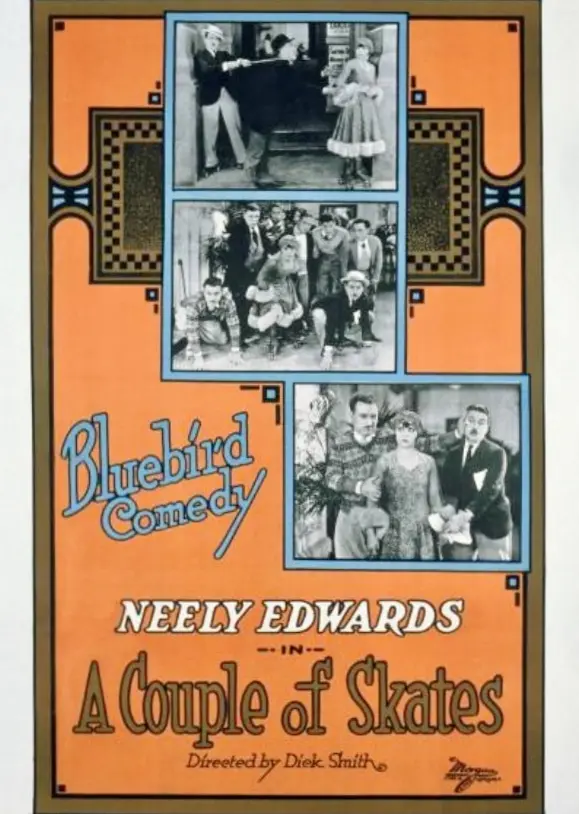
Is A Couple of Skates worth watching today? Short answer: yes, but only if you view it as a frantic time capsule of physical risk rather than a coherent narrative. This film is specifically for students of early slapstick and those who find humor in the total lack of safety standards in 1920s filmmaking; it is definitely not for viewers who require nuanced character development or a plot that treats women as more than a trophy at the finish line.
This 1923 short is a fascinating, if occasionally uncomfortable, look at the kinetic energy of the early silent era. It lacks the polish of a Chaplin feature, but it possesses a raw, unhinged quality that modern CGI-heavy comedies simply cannot replicate. It works because the physical stakes of skating through real traffic are visibly high. It fails because the central conceit—a father auctioning his daughter via a race—feels dusty and transactional even by the standards of its time. You should watch it if you want to see how the 'chase' sequence evolved from stage-bound antics to the dangerous streets of the early 20th century.
The premise of A Couple of Skates is brutally simple. A father, tired of his daughter's indecision or perhaps just bored with traditional courtship, declares a race. The winner gets Thelma. While this trope appears in other films of the era like Discontented Husbands, here it is stripped of any domestic drama and turned into a pure physical challenge. Thelma Hill, who plays the prize, is given little to do other than look concerned, which is a shame given her natural screen presence.
Neely Edwards, however, is the engine of the film. His performance is built on a series of controlled stumbles. In the opening rink scenes, he displays a level of clumsiness that requires immense athletic skill to pull off. There is a specific moment where he nearly collides with a group of onlookers, only to pivot on one wheel with a grace that contradicts his character's supposed ineptitude. It is this tension between the character's failure and the actor's precision that keeps the first act engaging.
The film truly finds its footing—or loses it—when the race leaves the confines of the skating rink. The transition from the controlled environment of the interior to the chaotic exterior of the city streets is where the directing shines. Unlike the more static compositions found in A Girl at Bay, the camera here attempts to capture the velocity of the skaters as they weave through 1920s traffic. It is messy. It is dangerous. It is undeniably real.
One standout sequence involves the suitors becoming entangled with a passing vehicle. There are no stunt doubles here. You can see the genuine puff of exhaust and the very real danger of those wooden wheels hitting a pothole. This isn't the high-concept adventure of The Isle of Lost Ships; it is the low-rent, high-stakes comedy of the everyday. The film captures a world that was still adjusting to the speed of the automobile, making the roller skates feel like an anarchic middle ground between pedestrian life and the machine age.
A Couple of Skates is worth watching for anyone interested in the technical evolution of the 'chase' sequence. While it doesn't have the social bite of The National Rash or the documentary-style intrigue of Life in the Sudan, it excels at capturing a specific type of urban madness. It is a minor work, but a vital one for understanding how comedy moved out of the theater and into the world.
The film works as a 15-minute adrenaline shot. It doesn't overstay its welcome. It sets a goal, introduces an obstacle, and then runs (or rolls) toward the finish line with reckless abandon. If you can stomach the dated gender politics, the physical comedy is top-tier. It’s fast. It’s loud. It’s over before you can blink.
The pacing of A Couple of Skates is relentless. Unlike the slow-burn tension of Wild Primrose or the philosophical weight of Hypocrites, this film operates on a high-frequency loop. Each gag is stacked on top of the next. When Neely trips, he doesn't just fall; he slides into a series of secondary accidents that escalate the stakes. This 'snowball effect' is a staple of the era, but here it feels particularly dangerous because of the wheels involved.
The cinematography is functional but effective. The camera operators clearly struggled to keep up with the skaters on the street, leading to some shaky-cam moments that feel surprisingly modern. It lacks the lyrical beauty of Prima Vera, but it makes up for it with a documentary-like urgency. You aren't just watching a race; you are witnessing a logistical nightmare being filmed in real-time.
Pros:
Cons:
When compared to more serious fare like The Carter Case or the bootlegging humor of Home Brew, A Couple of Skates feels like a pure distillation of the 'fun' side of the 1920s. It doesn't try to be a newsreel like Kino Pravda No. 16; it just wants to make you laugh at a man falling down. There is a certain honesty in that.
The film shares some DNA with After the Ball in its depiction of social gatherings, but it quickly abandons the ballroom for the gutter. It lacks the psychological depth of Danger Within or the moral weight of Hush Money, but it occupies a necessary space in cinema history. It is the bridge between the vaudeville stage and the action-comedy blockbusters of the future. It reminds us that before we had superheroes, we had men on roller skates trying not to die in traffic.
A Couple of Skates is a loud, rattling, and occasionally brilliant piece of silent comedy. It is not a masterpiece of storytelling, but as a showcase for physical comedy and early location shooting, it is indispensable. It is a film that demands you look past its archaic social views to appreciate the sheer bravery of its performers. It’s flawed. It’s frantic. And it’s a hell of a lot of fun if you’re in the right mindset. While it lacks the 'prestige' of Open Your Eyes, it offers a different kind of vision: one where the world is a playground and the only thing that matters is crossing the finish line first.

IMDb 7
1919
Community
Log in to comment.