DbcultAccessing Vault...
Cult Review
Senior Film Conservator
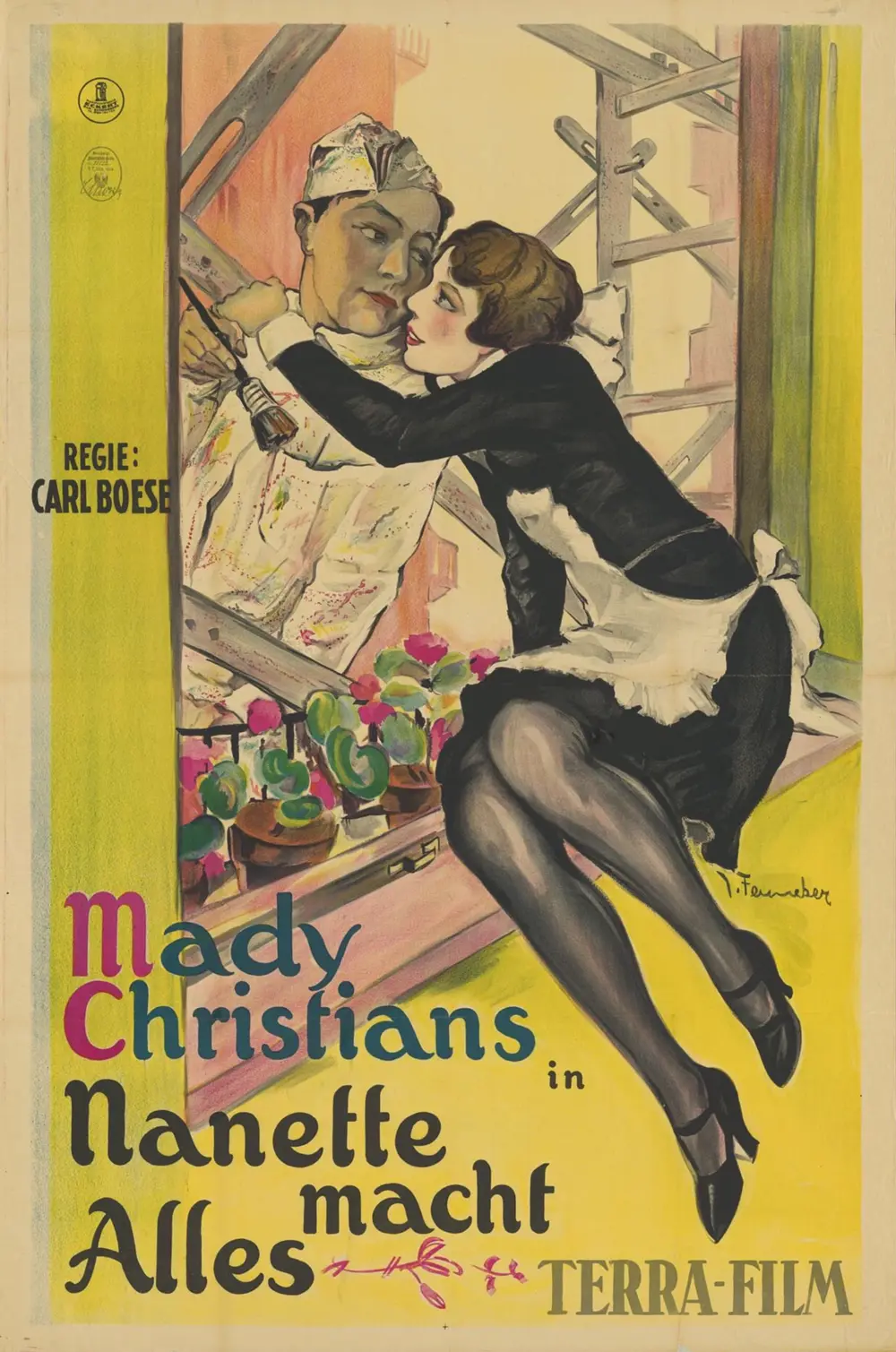
Is Nanette macht alles worth seeking out in the modern viewing landscape? Short answer: yes, absolutely, but with specific caveats. This film is a fascinating historical artifact and a testament to early 20th-century German filmmaking that offers surprising depth for those willing to engage with its particular rhythms.
It's a film primarily for aficionados of silent cinema, students of film history, and anyone captivated by the burgeoning portrayals of female independence on screen during a transformative era. However, if you're accustomed to fast-paced, contemporary narratives or demand pristine, digitally restored visuals, this might not be the easiest entry point into classic cinema.
Nanette macht alles, a work from the pen of Georg C. Klaren, stands as a curious, yet compelling, cinematic offering from a period often overlooked by casual viewers. While specific plot details remain elusive for many contemporary audiences, the film's title itself – 'Nanette does everything' – telegraphs a singular focus on its protagonist, a woman of undeniable drive and influence. This isn't merely a film about a character; it's a film *defined* by her, a bold statement in an era where female roles, while evolving, often remained constrained by societal expectations.
The film’s historical context is crucial. Produced during a vibrant period of German cinema, it likely benefited from the innovative spirit that characterized much of the nation's output between the wars. This was a time of experimentation, of pushing boundaries in storytelling and visual language, and Klaren’s script, even without explicit details, suggests a narrative that champions a strong, independent female lead, a thematic thread that resonates surprisingly well even today.
What truly elevates Nanette macht alles beyond a mere historical curiosity is its central performance by Mady Christians. Christians, a formidable actress of her generation, imbues Nanette with an undeniable charisma and a palpable sense of purpose. Her screen presence is the film's gravitational center, pulling every other element into its orbit. One can almost feel her commanding every frame, particularly in moments suggesting rapid-fire decision-making or charming manipulation, a testament to her acting prowess even without spoken dialogue.
Her portrayal likely set a benchmark for female characters in German cinema, depicting a woman who is not just reactive but proactively shapes her world. This is a subtle yet profound achievement, especially when considering the more passive roles often afforded to women in films of the same period, such as the ingenue in The Puppet Crown or the tragic figure in More to Be Pitied Than Scorned.
While the director's name isn't readily available for this particular production, the visual style and narrative rhythm of Nanette macht alles speak volumes about the directorial vision at play. The film exhibits a keen understanding of how to use visual storytelling to convey character and plot, particularly critical in the silent era. The camera, one imagines, often focuses on Nanette’s expressions and gestures, allowing Christians to communicate complex emotions and intentions without a single intertitle, a true art form.
The cinematography, for its time, would have been tasked with capturing the energy implied by the title. One can envision dynamic compositions and a thoughtful use of light and shadow to underscore Nanette's multifaceted personality. Perhaps a scene depicting Nanette orchestrating a complex scheme would employ quick cuts and close-ups, reminiscent of the emerging montage techniques seen in contemporary European productions. Conversely, moments of personal reflection or strategic planning might be rendered with longer takes, allowing the audience to dwell on Christians' nuanced performance.
The pacing of the film, as is common with many older productions, is likely more deliberate than what modern audiences are accustomed to. However, this slower tempo often allows for a deeper immersion into the characters' internal worlds and the intricate details of the setting. It demands patience but rewards it with a richer, more contemplative viewing experience. This is a stark contrast to the often frantic pace of some early American comedies like A Perfect 36.
Georg C. Klaren’s screenplay for Nanette macht alles is arguably its foundational strength. To craft a narrative where one character is so singularly central, so comprehensively in charge, requires a delicate balance of wit, dramatic tension, and believable character motivation. Klaren likely understood the power of a strong female lead and leveraged it to create a story that feels both entertaining and subtly subversive. The title itself is a stroke of genius, setting an immediate expectation for a proactive, rather than reactive, protagonist.
The dialogue, conveyed through intertitles, would have needed to be sharp and economical, driving the plot forward efficiently while still revealing character. Given the film’s era, Klaren would have been adept at using visual gags and physical comedy, alongside more dramatic exchanges, to ensure the audience remained engaged. The very concept of 'Nanette doing everything' implies a narrative structure that gives her agency in every major plot development, a refreshing departure from more conventional hero's journeys.
This focus on a singular, powerful female character also sets it apart from many of its contemporaries, offering a unique perspective on gender roles and societal expectations. While we might not have the full script, the impact of Klaren's vision through Christians' performance is undeniable, suggesting a film that was ahead of its time in its portrayal of female empowerment.
Beyond Mady Christians, the supporting cast — including Sig Arno, Vivian Gibson, Georg Alexander, Fritz Spira, Fritz Kampers, and Trude Lehmann — would have played crucial roles in fleshing out Nanette’s world. Their performances, even if secondary, would have been vital in reacting to Nanette’s machinations, providing both comedic foils and dramatic counterpoints. Sig Arno, often known for his comedic timing, could have provided much-needed levity, while others might have grounded the film with more serious dramatic performances.
The tone of Nanette macht alles likely oscillates between lighthearted comedy and moments of genuine dramatic tension, a common characteristic of films from this period. The 'does everything' aspect suggests a certain playful mischievousness, perhaps a caper film where Nanette outwits various obstacles and antagonists. Yet, for a character to truly 'do everything', there must also be stakes, challenges that require genuine ingenuity and courage. This blend of tones would have kept the audience engaged, preventing the film from becoming either overly farcical or too heavy-handed.
Consider the subtle shifts in tone that define films like Rosen aus dem Süden, where romance and drama intertwine. Nanette macht alles likely employs similar techniques, using its ensemble to underscore the film's emotional range and the breadth of Nanette's influence.
The enduring resonance of Nanette macht alles lies in its bold central premise and its exceptional lead performance. In an age where discussions about female representation and agency in media are more prevalent than ever, a film from decades past featuring a woman who 'does everything' offers a fascinating historical perspective. It challenges the notion that strong female characters are a purely modern invention, demonstrating that filmmakers and writers were exploring these themes long ago.
While the film's specific narrative beats may be lost to time or difficult to access, its spirit remains potent. It's a reminder of the power of character-driven storytelling and the ability of a single performance to carry an entire production. The film works. But it’s flawed. Its biggest flaw, perhaps, is its relative obscurity today, preventing a wider appreciation of its merits.
For those who appreciate the texture and artistry of early cinema, there is immense value in dissecting the choices made in films like this. How did the director convey urgency without sound? How did the actors communicate complex emotions without dialogue? Nanette macht alles serves as a masterclass in these techniques, offering invaluable lessons for contemporary filmmakers and film enthusiasts alike. It’s a compelling argument for the preservation and study of cinematic history, proving that even films from a century ago can offer fresh insights into human nature and narrative construction.
Pros:
- Pioneering portrayal of female agency and strength.
- Exceptional lead performance by Mady Christians.
- Offers valuable insights into early German cinematic techniques.
- Intriguing and memorable central premise.
Cons:
- Pacing may feel slow to modern audiences.
- Accessibility issues for viewers outside of dedicated archives.
- Lack of specific plot details can make full appreciation challenging.
- Silent film conventions might be a barrier for some.
Nanette macht alles is more than just a relic; it's a vibrant piece of cinematic history that demands attention. While its age and the conventions of silent film might present an initial hurdle, the sheer force of Mady Christians' performance and Georg C. Klaren's forward-thinking script ensure its enduring relevance. It's a film that, despite its potential challenges, offers a rich and rewarding experience for those eager to delve into the roots of powerful, character-driven storytelling. It might not be for everyone, but for the discerning viewer, it's an absolute must-see, offering a rare glimpse into a foundational moment in film where female protagonists began to truly take center stage. Seek it out, if you can. You’ll be surprised by its contemporary echoes.
IMDb —
1928
Community
Log in to comment.