DbcultAccessing Vault...
5.9/10
Senior Film Conservator
A definitive 5.9/10 rating for a film that redefined the boundaries of cult cinema. Earth Spirit remains a cornerstone of transgressive art.
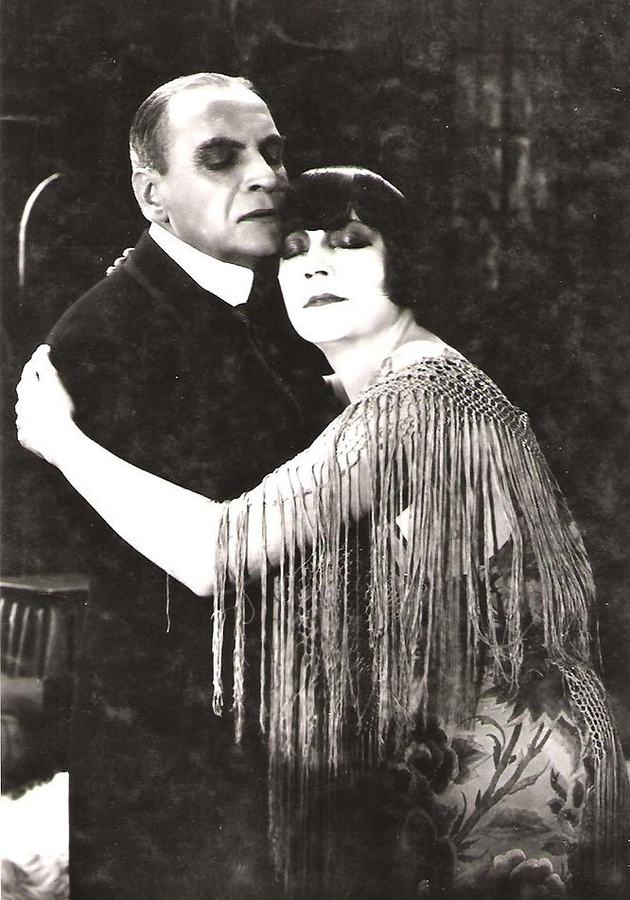
To witness Leopold Jessner’s 1923 adaptation of Earth Spirit (Erdgeist) is to subject oneself to a masterclass in the cinematic translation of Frank Wedekind’s provocative stagecraft. This isn't merely a silent film; it is a rhythmic, almost pulsatory exploration of the id. At its center stands Asta Nielsen, an actress whose face was the very landscape of German Expressionism. Unlike the more sanitized portrayals of fallen women in contemporary American cinema, such as those found in Heedless Moths, Nielsen’s Lulu is an elemental force—a creature of instinct who exists outside the reach of conventional morality.
The film opens with a visual lexicon that immediately establishes the hierarchy of the era. Dr. Schön, played with a brittle, authoritarian grace by Carl Ebert, represents the crumbling edifice of the old world. His attempt to domesticate Lulu is the quintessential tragedy of the Enlightenment: the belief that nature can be tamed by the intellect. Jessner utilizes his famous 'Jessner-Treppen' (stairs) to signify social ascent and moral descent, a technique that provides a verticality to the drama that few directors of the period could replicate.
What makes Earth Spirit so enduringly unsettling is its refusal to condemn its protagonist. In many films of the 1920s, like The Scarlet Oath, the 'transgressive' woman is eventually crushed by the weight of her own sins or redeemed by a masculine savior. Lulu, however, offers no such catharsis. She is a tabula rasa upon which the men around her project their fantasies and fears. Heinrich George’s performance adds a layer of visceral, almost grotesque masculinity that contrasts sharply with Nielsen’s ethereal, yet grounded, presence.
The cinematography captures the chiaroscuro of the soul. Shadows do not just hide the actors; they define them. When Lulu moves through the doctor's house, she seems to disturb the very air, a stark contrast to the more traditional dramatic framing seen in Princess Romanoff. Jessner understands that the horror of the story lies not in the violence, but in the inevitability of the social collapse. The film functions as a precursor to the noir movement, yet it retains a theatricality that is quintessentially European.
The sets in Earth Spirit are psychological extensions of the characters. The sharp angles and distorted perspectives reflect a world where the moral compass has been demagnetized. While a film like The Toilers might use realism to ground its narrative, Jessner leans into the abstract. The doctor’s study is a cage of rationality, while the spaces Lulu inhabits feel expansive and dangerous. This interplay between the confined and the chaotic is what drives the film’s tension toward its bloody zenith.
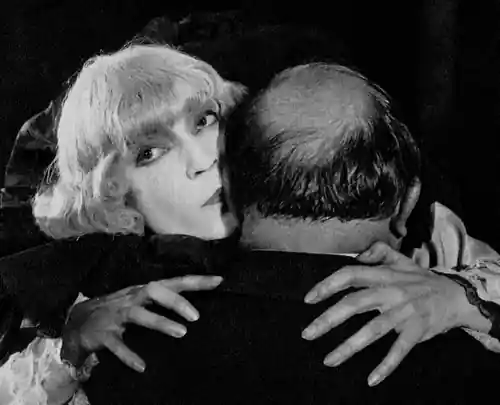
The screenplay, co-written by the legendary Carl Mayer, strips away the verbosity of Wedekind’s play to focus on the power of the image. Mayer, the architect of the 'Kammerspielfilm', understands that a look from Nielsen is worth more than ten pages of dialogue. Her eyes, rimmed with kohl and flickering with a mixture of boredom and predatory intent, anchor the film’s more avant-garde flourishes.
To fully appreciate the radical nature of this work, one must look at the landscape of 1923. While audiences were being entertained by the light-hearted antics of Everybody's Doing It or the rural dramas like Alma Sertaneja, Earth Spirit was interrogating the very foundations of the family unit. It shares some DNA with the social critiques found in Ungdomssynd, but it pushes the boundaries of acceptable 'art' much further.
Where a film like 'Twas Ever Thus might suggest that societal roles are immutable and perhaps even comforting, Earth Spirit posits that they are merely a thin veneer over a boiling cauldron of atavistic urges. The character of Alwa, the son, represents the new generation—one that is paralyzed by the legacy of its fathers and seduced by the very things it was taught to despise. His 'serious decision' in the final act is not just a plot point; it is a surrender to the inevitable cycle of destruction.
The lighting in the film deserves its own monograph. Using a palette of deep blacks and sharp, piercing whites, the cinematographer creates a world that feels both ancient and frighteningly modern. There is a scene where Lulu is framed against a window that looks less like a portal to the outside world and more like a void waiting to consume the room. This level of visual storytelling is far more sophisticated than the standard fare of the time, such as Thunderbolt Jack or Mice in Council.
Asta Nielsen’s performance is often compared to Louise Brooks’ later turn as Lulu in *Pandora’s Box*, but they are vastly different interpretations. Brooks is a flapper, a creature of the jazz age; Nielsen is a mythic figure, a Gorgon for the industrial era. Her movements are deliberate, almost serpentine. When she shoots Dr. Schön, there is no malice in her face—only a profound, terrifying indifference. It is this indifference that makes the film so modern. She doesn't hate the men she destroys; she simply outlasts them.
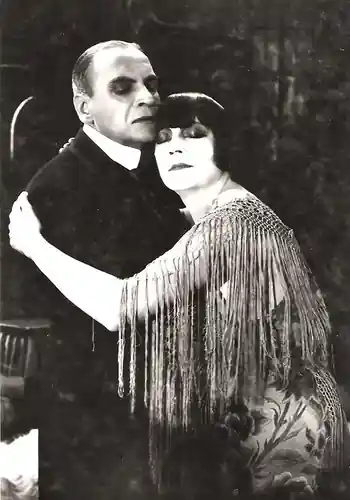
The film’s influence can be traced through the decades, from the noir fatales of the 40s to the psychological thrillers of the present. It captures a specific moment in German history—the hyperinflation, the social unrest, and the artistic explosion that occurred between the wars. It lacks the sentimentality found in My Wild Irish Rose or the straightforward melodrama of The Interloper. Instead, it offers a cold, hard look at the mechanics of desire.
In the final sequence, as Alwa faces the wreckage of his life, the film reaches a crescendo of existential dread. The 'Earth Spirit' cannot be contained in a drawing-room or a marriage contract. It is a force that demands everything and gives nothing back. This thematic ruthlessness is what elevates the film above mere period-piece status. It remains a vital, breathing piece of cinema that challenges the viewer to look into the dark and see what looks back.
Reviewing Earth Spirit requires one to abandon the comforts of modern pacing and embrace the deliberate, agonizing build-up of tension that Jessner favors. It is a film that demands your full attention, rewarding the patient viewer with some of the most haunting imagery ever committed to celluloid. While it may not have the populist appeal of Torchy's Feud or the simple charms of His Wife Jimmy, it possesses an intellectual and emotional weight that those films simply do not aim for.
Ultimately, Earth Spirit is a testament to the power of the silent medium to convey complex, taboo subjects through the sheer force of visual composition and acting. Asta Nielsen remains the undisputed queen of this era, and this film is perhaps her most significant contribution to the art form. It is a dark, beautiful, and deeply disturbing exploration of the human condition that feels as relevant today as it did a century ago. It is the cinematic equivalent of a fever dream—one that you are glad to have experienced, even if the shadows it leaves behind linger long after the lights come up.
For those interested in the evolution of the 'femme fatale' and the psychological depths of Weimar cinema, this is mandatory viewing. It stands alongside Venganza de bestia in its raw portrayal of primal emotions, yet it achieves a level of artistic sophistication that remains unparalleled.
IMDb —
1922
Community
Log in to comment.