DbcultAccessing Vault...
3.1/10
Senior Film Conservator
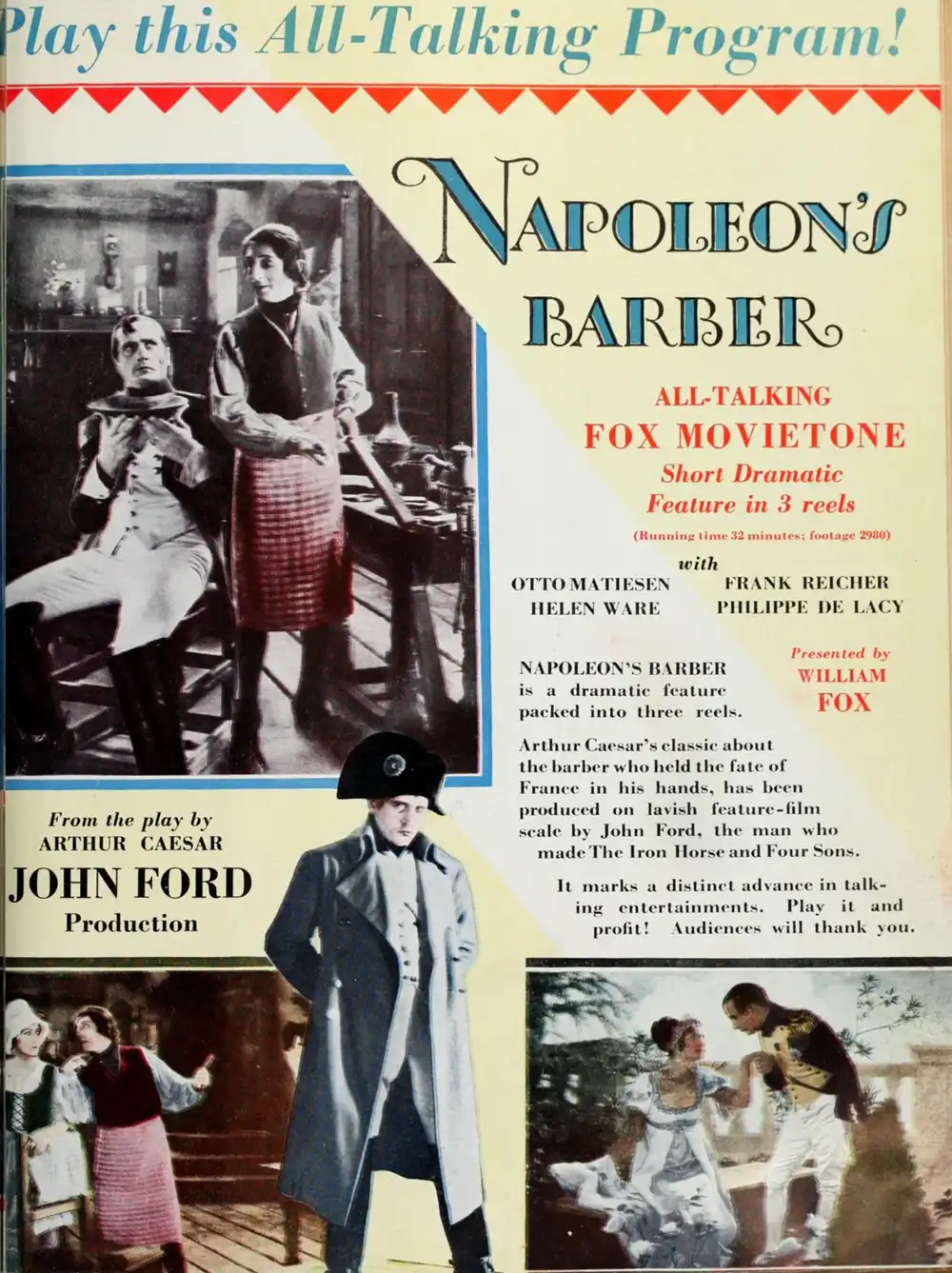
A definitive 3.1/10 rating for a film that redefined the boundaries of cult cinema. Napoleon's Barber remains a cornerstone of transgressive art.
For anyone curious about early John Ford or the quirks of silent cinema, Napoleon's Barber is a fascinating, if slight, diversion. It's a quick watch, maybe 25 minutes, and offers some interesting glimpses into a filmmaker finding his footing with a historical comedy-drama. If you're looking for a deep narrative or modern pacing, you'll probably find it a bit quaint, maybe even a little silly. But for those who appreciate the era's unique rhythm, there are definitely moments here worth seeing.
The film starts with Otto Matieson as the barber, an ordinary guy with an outsized ego, dreaming of greatness. Matieson really leans into the 'little man with big dreams' thing, perhaps a little too much. His gestures are huge, especially in the opening scenes where he's just fantasizing about his importance. It’s almost cartoonish. Then again, it’s a silent film; subtlety wasn't always the goal.
John Ford's touch is visible, even in this early, short work. There are a few shots, particularly inside the barber shop, that have a surprising depth to them. You can see him playing with the space, not just staging everything flatly. It's a small detail, but it stands out.
The shift from the barber's domestic squabbles – arguments with his wife, who understandably finds his grandiosity tiresome – to suddenly being face-to-face with Napoleon feels incredibly jarring. One minute he's complaining about his mundane life, the next he's practically a secret agent. The story just... jumps. It never really earns that transition.
Frank Reicher's Napoleon feels a bit understated. He's supposed to be this towering historical figure, but he mostly just looks tired and a bit put-upon. It's an interesting choice, for sure, making him seem more human and vulnerable, but it sometimes saps the dramatic tension you’d expect from a man whose fate supposedly rests on a barber’s decision.
The whole idea of a barber holding 'the fate of France' is pretty silly, and the movie seems to know it sometimes. There are these moments of genuine, albeit brief, tension, then a cut to Matieson making a goofy face or an exaggerated shrug. It's a strange tonal balance, almost a battle between high drama and low comedy that never quite resolves itself.
The sets, for all the 'lavish feature-film scale' talk, feel a bit... contained. The Parisian streets look fine, but the crowd scenes have this oddly empty feeling, like half the extras wandered off for a coffee break. It doesn't quite convey the bustling, urgent atmosphere you'd expect around a historical figure like Napoleon.
Where it does work is the climactic scene. The barber has Napoleon at razor-point, a moment of genuine vulnerability for the emperor. The close-ups on their faces, the way the tension builds through their expressions and the barber's trembling hand – that actually works. You almost forget how quickly the film got them to this improbable situation. It’s the kind of visual storytelling that silent film excelled at, even if the surrounding narrative is a bit flimsy.
The intertitles are a mixed bag. Some are perfectly punchy, moving the story along with concise dialogue. Others are a bit wordy, slowing things down to a crawl just when the momentum is starting to build. It’s inconsistent, making the pacing feel uneven.
And then the ending. It just... happens. There's no real resolution for the barber's personal life or his grand ambitions, just a quick wrap-up of the historical crisis. It leaves you hanging a bit, like they ran out of film or just decided to call it a day. It’s abrupt, almost anticlimactic after the razor-point drama.
Ultimately, Napoleon's Barber is less a grand historical epic and more a curious footnote in Ford's early career. It's a film with some interesting ideas and a few genuinely effective moments, but it's also a product of its time, with all the narrative shortcuts and broad performances that implies. Worth it for the film history buff, or anyone who enjoys seeing a master director in his formative years, figuring things out.
IMDb 6.8
1927
Community
Log in to comment.