DbcultAccessing Vault...
5.8/10
Senior Film Conservator
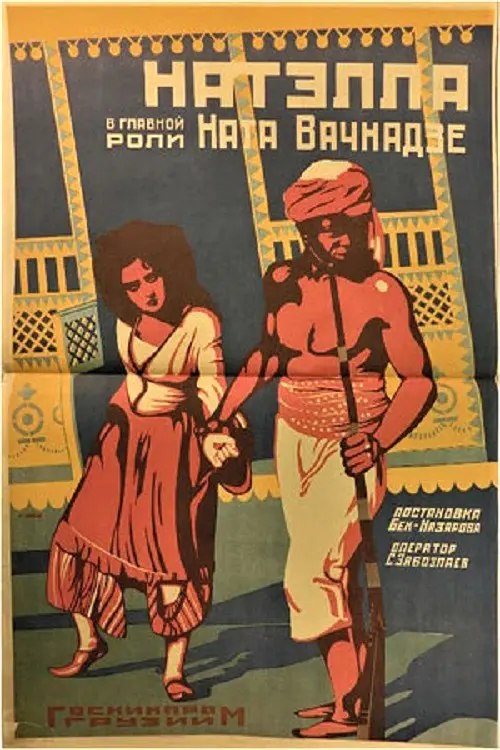
A definitive 5.8/10 rating for a film that redefined the boundaries of cult cinema. Natela remains a cornerstone of transgressive art.
Is Natela worth watching today? Short answer: Yes, provided you are a fan of historical preservation and the raw, unpolished energy of early silent cinema. This film is for the patient viewer who finds beauty in the grain of the film stock and the exaggerated, yet deeply felt, physical performances of the 1920s; it is not for those who require high-speed editing or modern narrative hand-holding.
To understand Natela, one must look past the flicker of the 1926 frame and see it as a foundational stone of Georgian identity. While it shares some DNA with other period pieces of the era like The Virgin Queen, it swaps the courtly intrigue of the West for the rugged, dust-caked reality of a nation under the thumb of empire. It is a film that feels remarkably alive, even a century later, because its stakes—freedom and love—remain the only things worth fighting for.
1) This film works because it treats its landscape as a visceral participant in the drama, turning the Georgian mountains into a character that both protects and imprisons the protagonists.
2) This film fails because the transition from a localized romance to a broad revolutionary uprising feels somewhat disjointed, occasionally sacrificing character nuance for political messaging.
3) You should watch it if you want to see Nato Vachnadze, the undisputed queen of Georgian cinema, at the height of her expressive powers.
Director Amo Bek-Nazaryan was not interested in making a polite movie. In Natela, the camera often lingers on the faces of the peasantry, capturing a level of detail that feels almost documentary-like. This isn't the sanitized version of history you might find in A Cumberland Romance. Instead, the film leans into the sweat and the struggle.
Take, for instance, the early scenes of the uprising. The way the crowd moves is not choreographed with the precision of a modern blockbuster, but with a chaotic, surging energy that feels genuinely dangerous. When Mikheil Chiaureli appears on screen, his presence is magnetic. He doesn't just act; he looms. The film understands that in a revolution, the individual is often swallowed by the collective, yet it manages to keep Natela’s personal journey at the center of the storm.
The cinematography by Sh. Shishmarev uses natural light to a haunting effect. In the 19th-century setting, interiors are often swallowed by deep shadows, while the outdoor scenes are blasted with a harsh, unforgiving sun. This contrast mirrors the internal conflict of the characters: the darkness of oppression versus the blinding, often painful light of freedom. It is a stark visual style that makes many contemporary films look soft by comparison.
It is impossible to discuss Natela without centering on Nato Vachnadze. In the 1920s, she was more than an actress; she was a symbol. Her performance here is a masterclass in silent-era economy. She doesn't need to scream to convey agony. A slight tightening of the jaw or a lingering look at the horizon does the work of ten pages of dialogue.
There is a specific moment in the second act where Natela realizes the cost of the rebellion. The camera stays on her face for what feels like an eternity. In that time, we see her transition from fear to a cold, hard resolve. It is a transformative piece of acting that grounds the film’s more theatrical elements. Unlike the broad comedic strokes found in Politics, Vachnadze plays her role with a devastating sincerity.
The chemistry between Vachnadze and Kote Andronikashvili is palpable, even through the haze of aged film. Their love isn't just a plot device; it's the moral compass of the movie. When the revolution threatens to tear them apart, the audience feels a genuine sense of loss. It is this emotional core that prevents the film from becoming a mere propaganda piece.
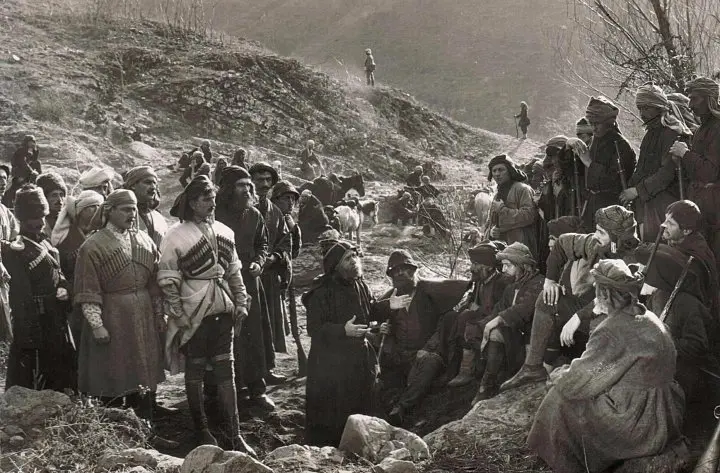
If you are interested in the evolution of cinematic storytelling, Natela is essential viewing. It represents a moment in time when film was discovering its power to shape national narratives. While some of the pacing may feel sluggish to those used to modern rhythms, the payoff is a profound sense of historical immersion.
Is it a masterpiece? Perhaps not in the technical sense of modern perfection. But it is a vital work. It captures the soul of a people in transition. If you enjoyed the atmospheric tension of The Land of the Lost, you will find much to admire in the way Bek-Nazaryan handles the isolation of his characters. It works. But it’s flawed. The flaws, however, are what make it human.
The 19th-century setting isn't just for show. The film was made in 1926, a period where the Soviet influence was beginning to reshape Georgian art. Natela walks a fine line between traditional Georgian storytelling and the burgeoning Soviet montage style. You can see the influence of Sergei Eisenstein in the way the uprising is edited, but the heart of the film remains stubbornly Georgian.
The revolutionary uprising depicted is not just a military action; it is a spiritual one. The film argues that the desire for freedom is an inherent part of the landscape. The rocks, the rivers, and the people are all part of the same rebellious fabric. This is a much more sophisticated take than the simplistic heroics often seen in films like News in Brief.
One surprising observation is how the film handles the antagonists. While they are clearly the 'villains,' they are given a sense of bureaucratic weight that makes them more than just caricatures. They represent a system that is failing, and their desperation is as visible as the revolutionaries' hope. This adds a layer of complexity that is often missing from silent-era melodramas.
Pros:
Cons:
The pacing of Natela is deliberate. It doesn't rush to the action. Instead, it builds a sense of dread and anticipation. This is a film that understands the power of the pause. In the quiet moments before the uprising, the tension is almost unbearable. This rhythmic approach is similar to what we see in Der verlorene Schuh, where the atmosphere does the heavy lifting.
The tone is one of romantic fatalism. There is a sense that the characters are caught in a current they cannot control. This gives the film a tragic weight that stays with you long after the final frame. Even the 'adventure' elements are tinged with a sense of gravity. This isn't a lighthearted romp; it is a struggle for the soul of a nation.
Comparing it to The Slacker, which deals with very different themes, one can see the massive gulf in directorial intent. Bek-Nazaryan is aiming for the rafters. He wants to create something that feels permanent. For the most part, he succeeds. The film’s occasional dips into melodrama are rescued by its sheer visual ambition.
Natela is a relic, but it is a shining one. It is a window into a world that no longer exists, captured by filmmakers who were inventing the rules as they went along. While it may not have the polish of contemporary cinema, it has something much more valuable: a soul. The revolution is loud. The love is quiet. Together, they create a cinematic experience that is both challenging and deeply rewarding. It is a flawed gem that deserves its place in the pantheon of world cinema. If you have any interest in the roots of Georgian film, skipping this would be a mistake. It is a visceral, haunting, and ultimately hopeful piece of art that proves some stories are truly timeless.
IMDb 5.3
1914
Community
Log in to comment.