Summary
In the dimly lit corridors of early German Expressionism, "Der verlorene Schuh" reimagines the Cinderella myth with a chiaroscuro sensibility that strips the tale of its sugary veneer and replaces it with a brooding, almost gothic meditation on desire, class, and the inexorable pull of fate. The narrative opens on a rain‑sodden manor where the young, mute protagonist—portrayed with haunting intensity by Emilie Kurz—endures the relentless oppression of her step‑mother, played by Frida Richard, and the indifferent cruelty of her stepsisters. Unlike the conventional fairy‑tale arc, the film eschews magical intervention; instead, a spectral, dream‑like figure—an embodiment of the titular lost shoe—appears in the protagonist’s subconscious, a symbol of both longing and loss. As the household prepares for a lavish masquerade, the heroine, cloaked in ragged linens, fashions a makeshift shoe from discarded wood, a gesture that becomes the film’s central motif. The masquerade itself is rendered in stark, angular set pieces, where shadows loom like predatory beasts. The prince, a brooding figure rendered by Paul Hartmann, is less a charming savior than an enigmatic aristocrat haunted by his own existential void. Their brief, charged encounter is punctuated by a silent, almost ritualistic exchange of the wooden shoe, which the prince pockets as a talisman. The narrative then spirals into a nightmarish pursuit: the step‑mother, driven by greed, seeks to claim the shoe for her own lineage, while the protagonist, guided by an ethereal choir of unseen voices—echoes of Clemens Brentano and E.T.A. Hoffmann’s lyrical prose—flee through labyrinthine corridors that seem to bend reality itself. In a climactic tableau, the shoe is shattered, its fragments scattering like shards of glass, symbolizing the fracturing of societal constraints. The film concludes on an ambiguous note: the heroine, now free from the physical shackles of her household, stands amid a desolate, moonlit landscape, the broken pieces of the shoe glinting in the darkness, suggesting both liberation and the lingering echo of an unfulfilled destiny.
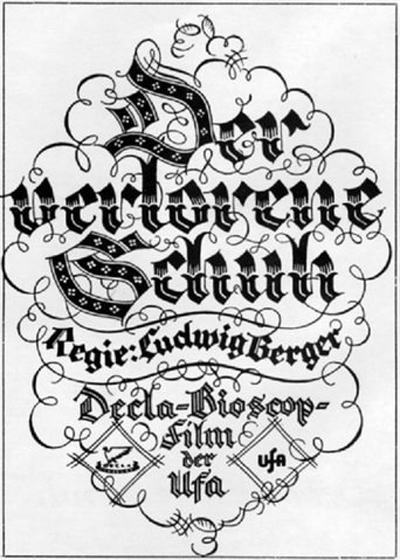
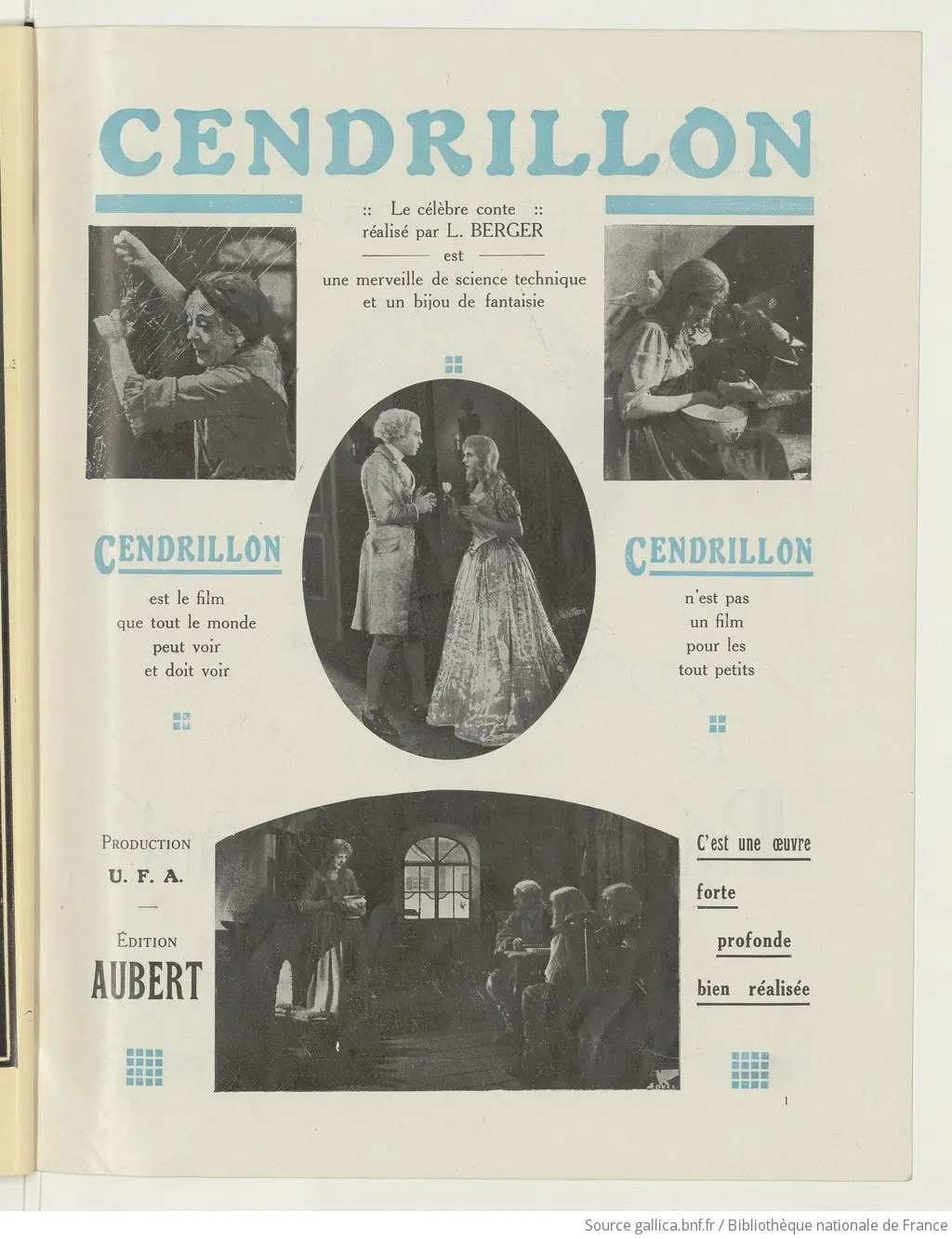
One of the first movies made about the fairy tale Cinderella. The film is part of the current German expressionism. Because of that the film ends up being darker than the fairy tale itself.
Review Excerpt
"
A Shadowed Glass Slipper: Contextualising the Film
When the Weimar Republic teetered on the brink of cultural upheaval, German filmmakers turned to the visual language of Expressionism to articulate collective anxieties. Der verlorene Schuh, directed by the visionary Ludwig Berger, occupies a singular niche within this movement: it is one of the earliest cinematic adaptations of the Cinderella legend, yet it discards the story’s saccharine optimism in favour of a brooding, almost nihilistic..."