DbcultAccessing Vault...
Cult Review
Senior Film Conservator
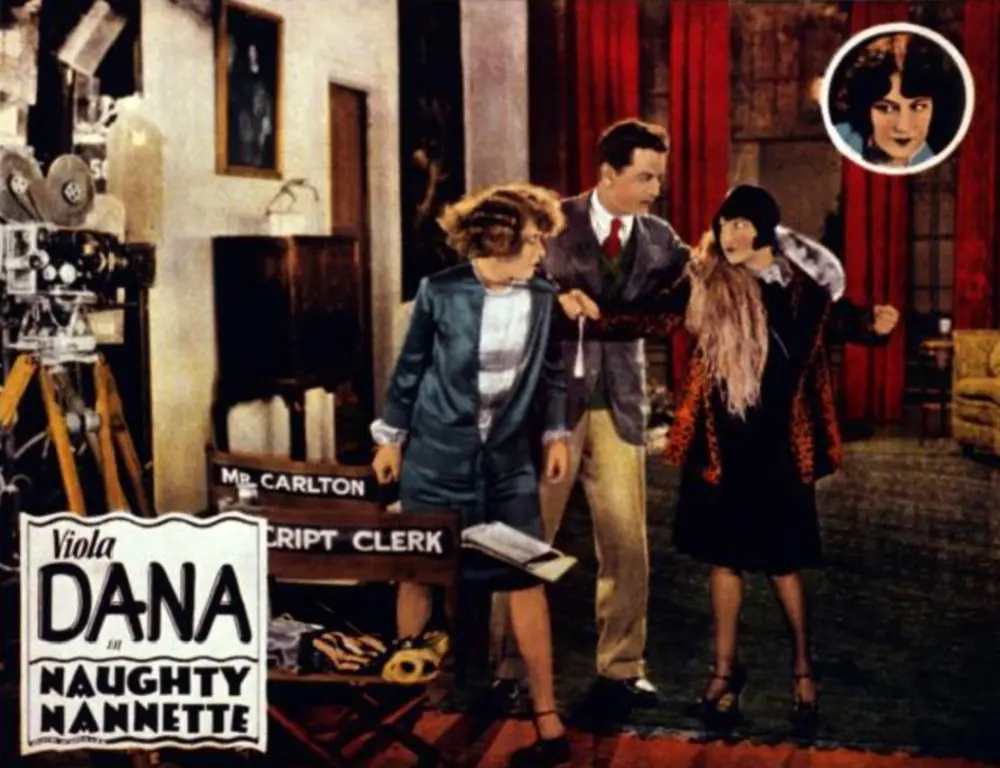
Is Naughty Nanette worth your time in the modern era? Short answer: yes, but only if you view it as a cultural artifact of the flapper craze rather than a narrative powerhouse. This film is designed specifically for silent cinema enthusiasts who enjoy high-energy physical performances, but it will likely frustrate viewers who require logical plot progression or deep character development.
This film works because Viola Dana is a charismatic force of nature who understands the geometry of a gag. This film fails because the script by Doris Schroeder and Charles Henry Smith relies on coincidences so convenient they border on the absurd. You should watch it if you want to understand the transition of the 'rebellious girl' archetype from the innocence of the early 20s to the more cynical late-decade comedies.
The primary reason to engage with Naughty Nanette today is the performance of Viola Dana. In an era where many actresses were still clinging to the Victorian melodrama of the previous decade, Dana brought a modern, jittery energy to the screen. She doesn't just walk; she vibrates. In the opening scenes where Nanette is still in her small-town environment, Dana uses her eyes to signal a restless intelligence that the script doesn't always support.
Consider the sequence where she first arrives in the city. Her reaction to the urban chaos isn't one of fear, but of predatory curiosity. It’s a performance that mirrors the work seen in How Could You, Jean?, yet Dana adds a layer of street-smart cynicism that sets her apart. She manages to make Nanette feel like a real person trapped in a cartoonish plot. Without her, the film would likely have been forgotten alongside other mediocre silents of 1927.
While the acting is vibrant, the writing is undeniably lazy. Doris Schroeder and Charles Henry Smith seem to have written the screenplay by checking off a list of silent comedy tropes. The 'missing sister' plot device is handled with very little grace. It serves merely as a clothesline to hang various comedic set pieces. Unlike the more structured narratives found in films like Cinderella's Twin, Naughty Nanette feels episodic and disjointed.
The most egregious example occurs during the mid-film gala. Nanette manages to infiltrate a high-society event through a series of accidents that defy gravity and logic. While silent film audiences were generally more forgiving of 'movie logic,' the lack of internal consistency here is jarring. One moment Nanette is a penniless traveler; the next, she is the center of attention in a ballroom. It works as a visual spectacle, but it fails as a story. It’s flawed. But in the context of 1927, it was likely seen as 'good enough' for a Saturday matinee.
The cinematography and direction are competent but rarely inspired. The lighting in the city interiors is flat, lacking the expressionistic shadows that were beginning to permeate American cinema from Europe. However, the costume design is exceptional. The way Nanette's wardrobe evolves throughout the film tells a better story than the dialogue titles. Her transition from 'country mouse' to 'urban flapper' is a masterclass in visual character arcs.
The title itself is a fascinating piece of 1920s marketing. By 1927, the word 'naughty' was used to bait audiences into theaters expecting something risqué. In reality, the film is quite wholesome. This bait-and-switch was common at the time, as seen in films like The Society Bug. The 'naughtiness' here is purely social—Nanette breaks the rules of etiquette, not the rules of morality. It’s an innocent film masquerading as a scandal, which is perhaps its most 'human' quality.
If you are looking for a deep emotional experience, look elsewhere. However, if you want to see a peak example of the 'Flapper' genre before the advent of sound changed everything, Naughty Nanette is a valuable watch. It captures a specific moment in American history when the youth were obsessed with speed, motion, and breaking away from the past. It’s a time capsule of energy.
Pros:
- Exceptional lead performance by Viola Dana.
- High-energy pacing that prevents boredom.
- Beautifully preserved 1920s costumes and sets.
- Genuinely funny visual gags involving city life.
Cons:
- Weak supporting cast that fails to match Dana’s energy.
- Narrative reliance on unbelievable coincidences.
- The 'naughty' hook is misleading and dated.
When compared to other films of the same year, like The Show Down or Punches and Perfume, Naughty Nanette stands out for its lightness. It doesn't try to be a heavy drama or a groundbreaking piece of art. It knows it is a comedy, and it stays in its lane. While Sweet Daddy might offer more biting social satire, Nanette offers more pure, unadulterated fun. It’s a minor work, but a pleasant one.
Naughty Nanette is a charming, if disposable, piece of silent cinema. It survives on the sheer willpower of Viola Dana’s performance. While the script is a mess of clichés and the direction is standard for the period, the film possesses a frantic charm that is hard to dislike. It is a reminder that even in the 1920s, movies were often just vehicles for charismatic stars. It’s not a masterpiece. It’s just a good time at the theater, and sometimes, that is exactly what you need.
IMDb 7
1927
Community
Log in to comment.