
DbcultAccessing Vault...
6.7/10
Senior Film Conservator
A definitive 6.7/10 rating for a film that redefined the boundaries of cult cinema. Nelson remains a cornerstone of transgressive art.
Should you invest your time in this century-old portrayal of Britain’s most famous Admiral? Short answer: yes, but only if you view it as a historical artifact rather than a modern blockbuster. This film is a meticulous, if somewhat stiff, reconstruction of a legend, making it an essential watch for silent cinema enthusiasts and history buffs, while likely alienating anyone looking for the high-octane pacing of contemporary naval dramas.
This film works because it treats its subject with a reverence that borders on the religious, capturing the scale of 18th-century naval warfare with impressive practical effort. This film fails because the emotional core—the affair with Lady Hamilton—often feels more like a series of static poses than a living, breathing romance. You should watch it if you want to understand how early British cinema attempted to compete with Hollywood by leveraging its own national history and iconography.
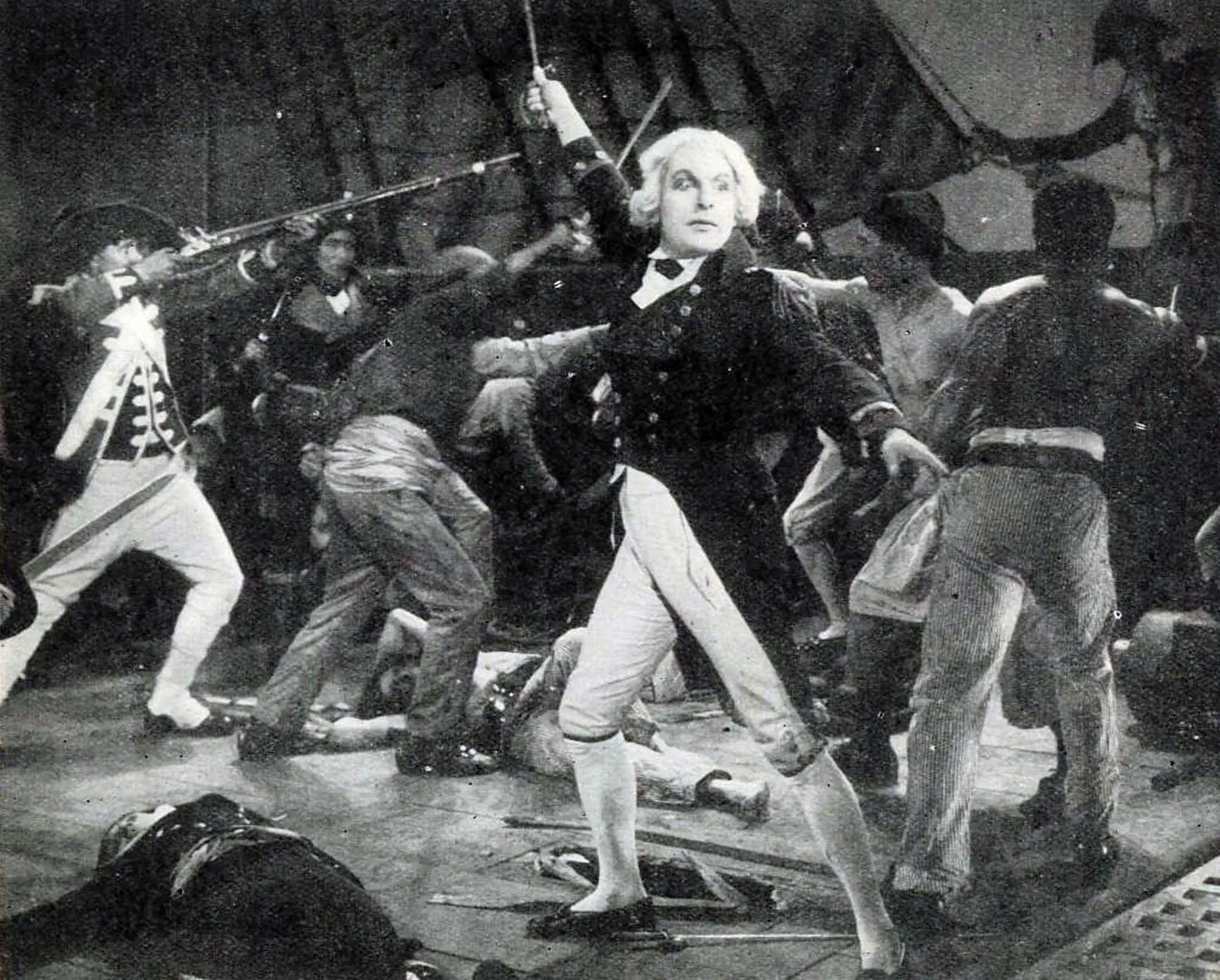
Pat Courtney takes on the title role with a stoicism that was characteristic of the era's leading men. In the early 20th century, Nelson was more than a man; he was a secular saint. Courtney plays him as such, often standing in profile to evoke the famous paintings of the era. While this provides a sense of visual continuity for the audience of 1918, it creates a barrier for modern viewers. We see the uniform, the medals, and the famous eye patch, but the man underneath is often obscured by the sheer weight of the costume.
Take, for instance, the scene where Nelson first meets the French fleet. There is no dialogue, only the frantic waving of signal flags and the stoic gaze of Courtney. It is a moment of pure iconography. It lacks the internal monologue we might expect today, yet it carries a certain gravitas. Compare this to the more experimental character work found in films like The Vow, and you see a director more interested in the 'monument' of the man than the 'mechanics' of his mind.
The introduction of Gertrude McCoy as Lady Hamilton shifts the film’s tone from a naval procedural to a high-society melodrama. McCoy, an American actress, brings a different energy to the production. She is more fluid, her expressions more varied. Her chemistry with Courtney is, frankly, lopsided. She acts toward him, while he mostly acts toward the horizon. This creates a fascinating, if unintended, dynamic: it highlights Nelson’s perceived inability to balance his duty to the Crown with his personal desires.
The dalliances at the Neapolitan court are staged with an eye for opulence that must have been breathtaking in 1918. The sets are crowded, the costumes are heavy, and the lighting is surprisingly nuanced for the time. However, these scenes drag the pacing. While the naval battles feel urgent, the domestic interludes feel trapped in amber. It is a common flaw in early biopics—the desire to include every 'highlight' of a life often results in a disjointed narrative flow.
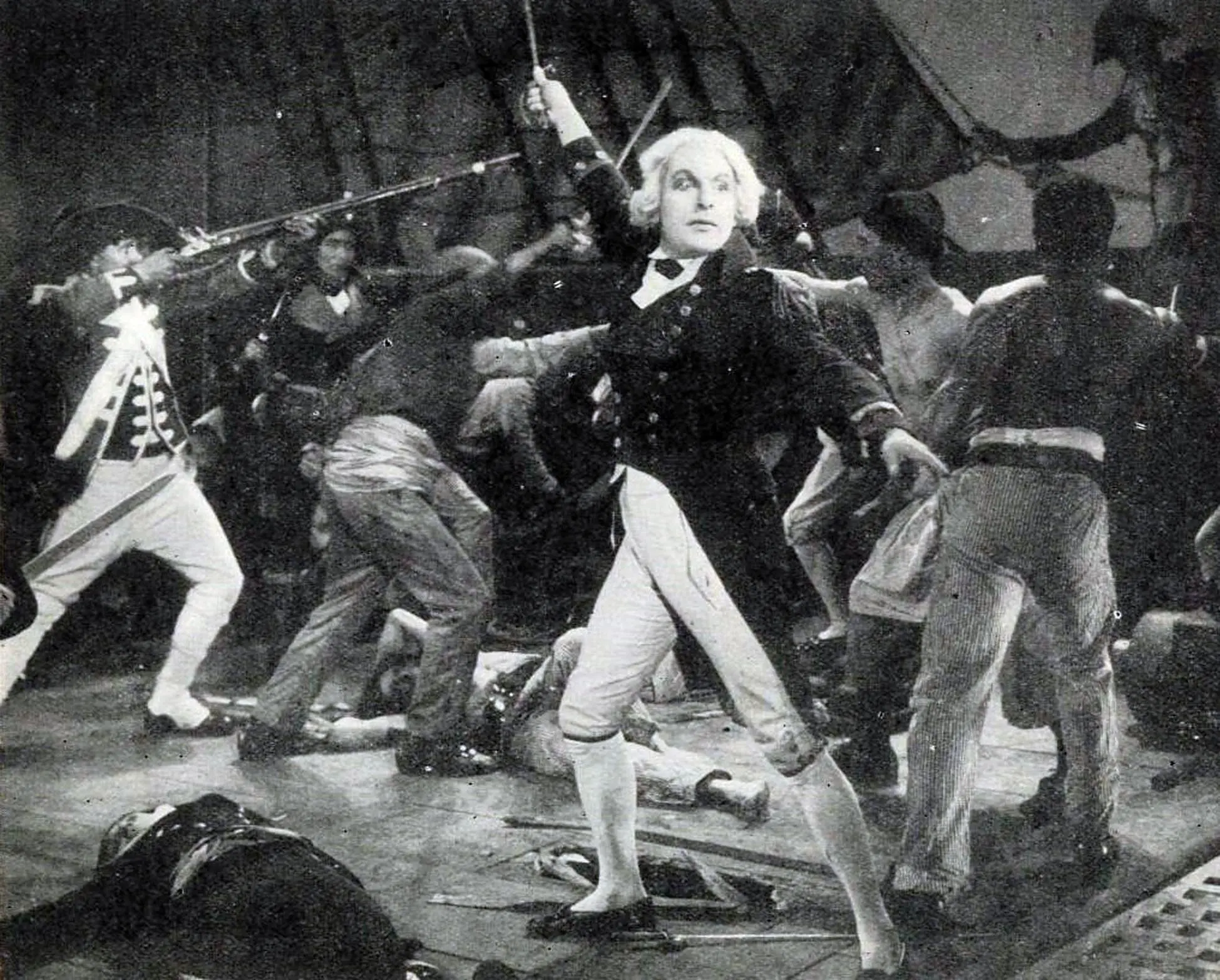
Director Walter Summers was a man obsessed with military precision, and it shows. The reconstruction of the Battle of Trafalgar is the film’s technical peak. Even without the benefit of CGI, the sheer number of extras and the clever use of ship models (and some full-scale vessels) create a sense of claustrophobia and chaos. The smoke from the cannons fills the frame, creating a hazy, nightmarish atmosphere that feels more authentic than many later, cleaner versions of the battle.
Summers doesn't shy away from the brutality. We see the decks cluttered with the wounded and the dying. It is here that the film sheds its stiff theatricality and becomes something visceral. It reminded me of the grit found in The Kelly Gang, where the landscape and the violence are inextricably linked. The framing of Nelson’s death on the Victory is handled with a restraint that is actually quite moving. There is no over-the-top clutching of the chest; just a quiet, inevitable fading away.
Is Nelson (1918) worth a modern viewing? Yes, for those interested in the evolution of the historical epic. It provides a fascinating look at how the British film industry tried to define its own identity through the lens of its naval supremacy. While the pacing is uneven and the acting style is dated, the technical ambition and the attempt to humanize a national icon make it a significant piece of cinematic history.
When placed alongside contemporary works like Sherlock Jr., Nelson feels ancient. While Buster Keaton was pushing the boundaries of film grammar and physical comedy, Summers was content to use the camera as a stationary observer of a stage play. This isn't necessarily a failure, but a choice of genre. Nelson is a 'prestige' film of its time, meant to be viewed with the same respect one might give a history lecture. It lacks the playful meta-narrative of Blind Chance or the raw realism of later silent dramas, but it gains points for its sheer earnestness.
Pros:
- High production value for the 1910s.
- Faithful adherence to the Robert Southey source material.
- Strong supporting performance by Gertrude McCoy.
- Excellent use of practical naval sets.
Cons:
- Stiff lead performance by Pat Courtney.
- Pacing issues during the middle act.
- The romantic subplot feels dated and overly theatrical.
It is easy to dismiss a film like this as a 'museum piece.' It is slow. It is silent. It is monochromatic. But to do so is to miss the point. Nelson was a foundational text for the British film industry. It proved that they could handle large-scale productions that resonated with a national audience. The film’s focus on the 'human' side of the hero—his flaws, his illicit love—was actually quite daring for 1918. It paved the way for more nuanced biopics that would follow in the decades to come.
The cinematography, while static, is often beautiful. The way the light hits the sails of the ships, or the shadows in the cabins of the Victory, shows a burgeoning understanding of how light can dictate mood. It’s not as visually inventive as something like The Light That Failed, but it has a rugged, functional beauty that suits the subject matter perfectly. It works. But it’s flawed. And in those flaws, we see the struggle of a young medium trying to find its voice.
Nelson (1918) is a fascinating, if occasionally tedious, journey into the heart of British mythology. It is a film that demands patience but rewards the viewer with a sense of scale and historical gravity that few other films of its era could match. It isn't a masterpiece of emotion, but it is a masterclass in early 20th-century ambition. If you can get past the theatricality of the performances, you will find a film that still has the power to stir the blood during its climactic moments at sea. It is a relic, yes, but a relic that still shines under the right light.