DbcultAccessing Vault...
6.6/10
Senior Film Conservator
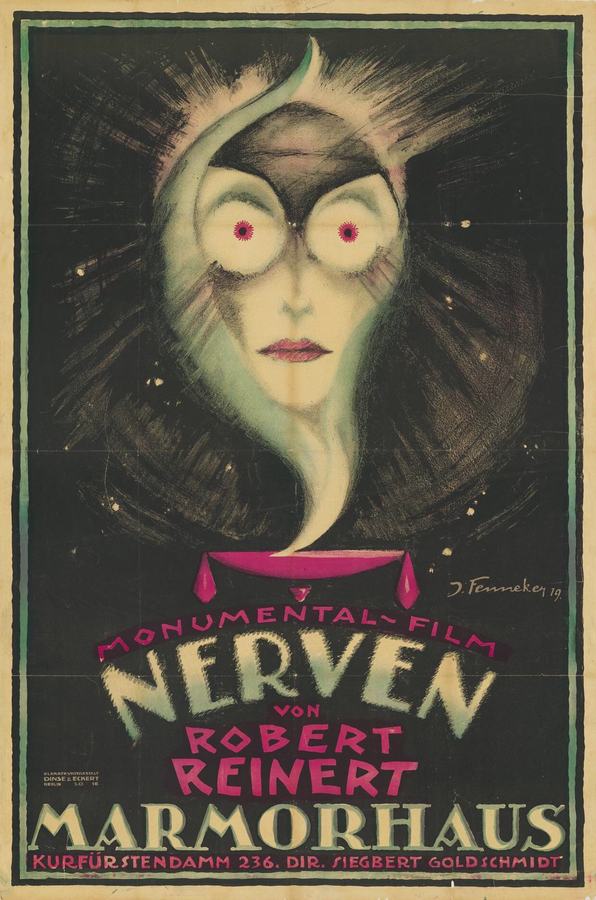
A definitive 6.6/10 rating for a film that redefined the boundaries of cult cinema. Nerven remains a cornerstone of transgressive art.
Lightning fractures the frame in Robert Reinert's electrifying 1919 vision, Nerven, where angular shadows don't merely decorate sets but carve psychological wounds into celluloid. We enter a world still hemorrhaging from the Great War, streets vibrating with revolutionary fervor that coalesces around magnetic labor organizer Thomas Falkner (Paul Burgen). His clenched-fist charisma electrifies the disenfranchised—until the night his silhouette appears in the garret window of seamstress Agnes Frank (Erna Morena), triggering seismic accusations that detonate like mortar shells across the social landscape.
Reinert, that architect of psychological tension, constructs the ensuing trial not as a binary truth-seeking exercise but as an expressionist funhouse where perception warps under pressure. Morena's Agnes becomes the film's trembling center of gravity—watch how her fingers flutter like injured birds during testimony, how her pupils dilate into black pools of fragmented recall. This isn't Anna Karenina's tragic romanticism but clinical dissection of trauma's kaleidoscopic aftermath. When she describes Falkner's hands—"like hot iron on my wrists"—the camera fractures into conflicting perspectives: one juror sees predatory violence, another sees consensual passion misremembered.
Burgen's Falkner undergoes his own metamorphosis—the revolutionary demagogue first radiates wounded indignation, then curdles into toxic arrogance as testimony mounts. Reinert's genius lies in refusing demonization or canonization; observe how Falkner's solidarity speeches at the factory gates mirror his courtroom rhetoric in cadence and calculation. The proletariat's fractured response becomes a chilling forecast of Weimar Germany's political fractures. Strikers who carried Falkner's portrait yesterday now hurl rocks through his apartment windows, their disillusionment captured in a stunning high-angle shot of shattered glass spreading like ice cracks across pavement.
Cinematographer Helmar Lerski transforms light into a moral interrogator. Witness the courtroom sequences: accuser and accused aren't lit individually but locked in antagonistic chiaroscuro, Falkner's shadow literally engulfing Agnes during cross-examination—a visual prophecy of patriarchal power dynamics. Contrast this with The Midnight Wedding's flat romantic lighting. Reinert weaponizes the then-revolutionary Kammerspielfilm techniques, plunging us into Agnes's subjective terror through distorted lenses during flashbacks. The alleged assault unfolds not linearly but in stroboscopic fragments—a glove hitting floorboards, a ripped lace collar, Falkner's belt buckle glinting in moonlight—forcing viewers to assemble evidence like detectives with conflicting testimonies.
Margarete Tondeur delivers career-defining subtlety as Falkner's wife, her glacial courtroom composure thawing in private scenes where she fingers his shaving brush with trembling hands. Their marital bed becomes a forensic site—watch how she scrutinizes sheets for biological evidence while he sleeps—a sequence of domestic espionage worthy of Hamlet's surveillance motifs. Her ultimate choice between loyalty and moral revulsion forms the film's devastating coda.
Reinert populates the periphery with human embodiments of societal collapse: Lia Borré's newspaper editor who crafts headlines like incendiary devices, Eduard von Winterstein's rheumatic judge whose gavel strikes echo with the futility of finding truth in postwar rubble. The film's audacity peaks during Agnes's psychiatric evaluation—a phantasmagoric montage of inkblots transforming into Falkner's menacing eyes, doctors' faces elongating like Munch screamers. This isn't diagnosis but indictment of institutional gaslighting.
Modern viewers will recognize Nerven's DNA in Forbandelsen's ambiguity and Das Geheimnis der Lüfte's expressionist anxiety, yet Reinert surpasses them through sheer moral complexity. His camera lingers obsessively on hands—Agnes scrubbing hers raw in a washbasin, Falkner's gripping a courtroom railing until knuckles bleach, jurors nervously shuffling papers. This tactile focus makes consent's ambiguities horrifically tangible.
The revolutionary backdrop proves devastatingly prescient. Falkner's movement collapses not from state oppression but internal moral rot—a prophecy of fascism's rise from fractured leftist movements. Reinert juxtaposes communist graffiti with bourgeois salons where elites dissect the trial like opera patrons, their champagne flutes catching reflections of starving workers outside. This isn't Old Wives for New's soapy melodrama but socio-political autopsy.
Lerski's visual motifs achieve Kafkaesque potency—endless staircases coil like intestines through tenements, windows become barred frames separating accuser from accused. During the verdict delivery, Reinert holds a three-minute close-up of Agnes's left ear as whispers assault her; we see tears gather but never fall, a masterclass in suspended anguish. Contrast this with the broad theatrics of The Beggar of Cawnpore.
The film's structural audacity emerges through nested narratives—juror #9 (Paul Bender) recounts his own wartime rape of a Belgian woman, his confession blurring with Falkner's alleged crime in a terrifying montage. Reinert suggests trauma isn't individual pathology but societal pandemic. When Rio Ellbon's neurologist character diagrams nerve pathways on a chalkboard, the camera pushes in until they resemble trench maps, merging physical and psychic battlegrounds.
Morena's performance remains epoch-defying. Watch the deposition scene: as lawyers bombard her with questions, her eyes fixate on a vibrating lightbulb—a hypnotic focus conveying dissociation better than any dialogue. Her final confrontation with Falkner bypasses hysterics for terrifying stillness; they share a cigarette, ashes trembling like unspoken confessions in the air between them. This isn't Purity's victim paradigm but agency reclaimed through ambiguity.
Reinert weaponizes silence like physical absence. The alleged assault occurs without audible struggle—we hear only a ticking clock and distant factory whistles. Sound designer Otto Erdmann pioneered techniques later adopted in Runaway Romany, using offscreen noises as psychological triggers: Agnes's scream when a door slams mimics her remembered terror. This auditory subjectivity makes viewers complicit investigators.
The film's cultural impact radiates in unexpected directions. Feminist scholars note Agnes's agency in refusing victimhood tropes—she neither crumbles nor transforms into avenging angel. Queer readings proliferate around Margarete Tondeur's character, whose devotion to Falkner carries unsettling erotic dimensions. Marxists dissect how the trial commodifies suffering—newspapers literally price headlines by sensationalism level.
Lerski's camera movements feel revolutionary even now. A 360-degree pan around the jury box reveals each member's hidden biases through micro-expressions—the clergyman's lip-licking prurience, the socialist's conflicted loyalty. This kineticism shames the static tableaux of The Mainspring.
Consider the production design's symbolic weight: Agnes's tenement features crooked doorways suggesting psychological distortion, while Falkner's modernist apartment has cold right angles reflecting his rigid ideology. Costume designer Lili Dominici dresses Agnes in progressively lighter fabrics as testimony proceeds—from oppression-dark wool to near-translucent cotton—charting her metamorphosis from silenced victim to agent of truth.
The controversial denouement remains fiercely debated. Without spoilers, Reinert rejects courtroom drama conventions—there's no Perry Mason revelation. Instead, we get epistemological vertigo as conflicting accounts achieve brutal coexistence. The final shot of Falkner's abandoned spectacles on a courtroom rail—one lens shattered, one intact—becomes Weimar Germany's perfect metaphor.
Restoration comparisons reveal startling nuances. The 2014 digital transfer uncovers background details lost for decades: a juror's doodle of hanging gallows, Agnes's torn fingernail scratching a wooden bench. These textures deepen the moral quagmire—proof that Reinert layered meaning like archaeological strata.
Nerven's enduring provocation lies in its refusal of catharsis. Unlike The Fighting Grin's crowd-pleasing resolutions, it maroons viewers in ambiguity where both accuser and accused retain humanity. We leave not with answers but scalding questions about memory, power, and the unbearable weight of doubt—a masterpiece that claws at your conscience long after the projector lamp dims.

IMDb —
1919
Community
Log in to comment.