DbcultAccessing Vault...
Cult Review
Senior Film Conservator
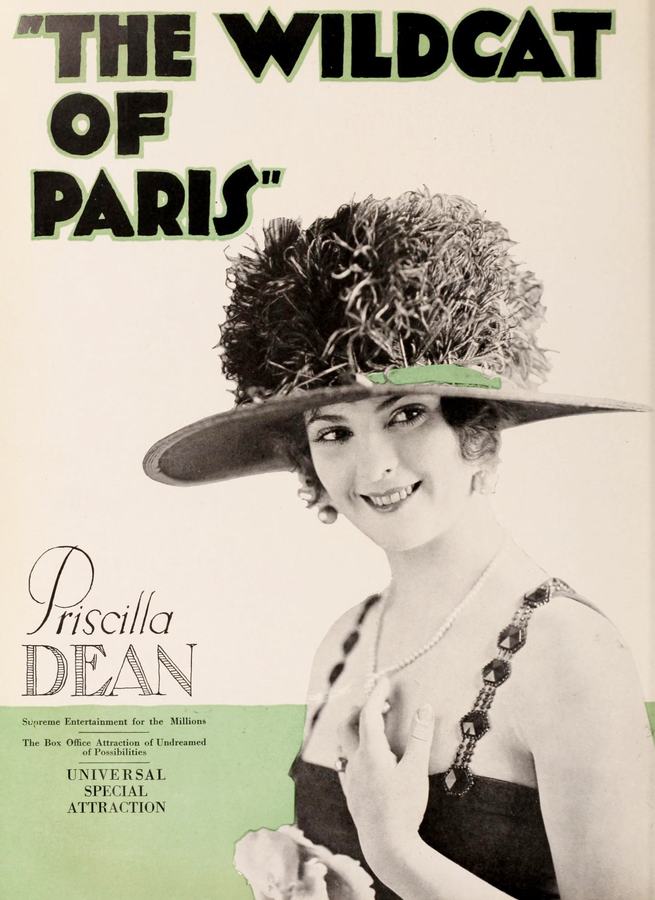
If you’ve been scavenging streaming menus for a proto-noir that feels as electrically alive as a third-rail kiss, stop scrolling. The Wildcat of Paris—shot in the jittery autumn of 1919 when Europe still stank of cordite—delivers the kind of jolt that makes contemporary revenge sagas look like polite tea invites.
Forget whatever you think you know about silent “damsel” yarns. This is a film where the damsel flosses her teeth with barbed wire, then grins at you through the blood. Director William A. Wellman—years before his Hawksian bravado in Wings—channels the existential whiplash of a continent asking itself: what in hell did we just survive, and who gets to sell the souvenirs?
Harvey Gates’ screenplay is less a linear story than a stack of dynamite wrapped in lace. Gisele’s arc—from back-alley cutpurse to insurgent icon—mirrors Paris itself: a city cannibalizing its own entrails to stay alive. The famed Belle Époque glitter is here reduced to shrapnel-studded absinthe glasses; the guillotine’s ghost hovers over every cabaret table.
What astonishes is the refusal of moral hand-holding. When Gisele pickpockets a dying soldier’s last letter, we’re denied the usual sentimental score. Instead, the camera lingers on her nostrils flaring—half-predator, half-scavenger—while Maurice Lefèbvre’s orchestra scrapes a tango that sounds like rats skittering across harp strings. You realize this is not a heroine in any conventional sense; she is a weather pattern, a low-pressure system of pure need.
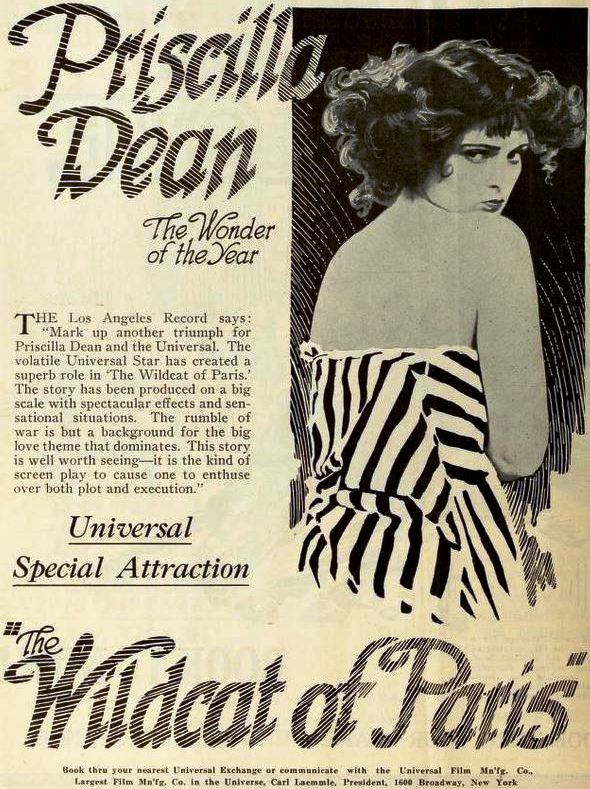
Priscilla Dean—often dismissed in her day as a “vamp” manqué—turns Gisele into a kinetic sculpture of cartilage and grit. Watch the sequence where she vaults across the Opéra rooftop: kohl-smudged eyes catch the magnesium flare of a signal rocket, and for eight razor-edited seconds you swear she’s about to punch a hole through the night itself. No stunt double, no CGI, just sinew and conviction.
Likewise, Louis Darclay’s Vallon sidesteps the cardboard nobleman trap. His shell-shock is not indicated by the usual trembling-hand cliché; instead, he blinks like a man perpetually surprised to still exist. In close-up, his pupils look burnt-out—two tiny Verduns. When Gisele teaches him to pick locks, it’s less flirtation than battlefield triage: survival as foreplay.
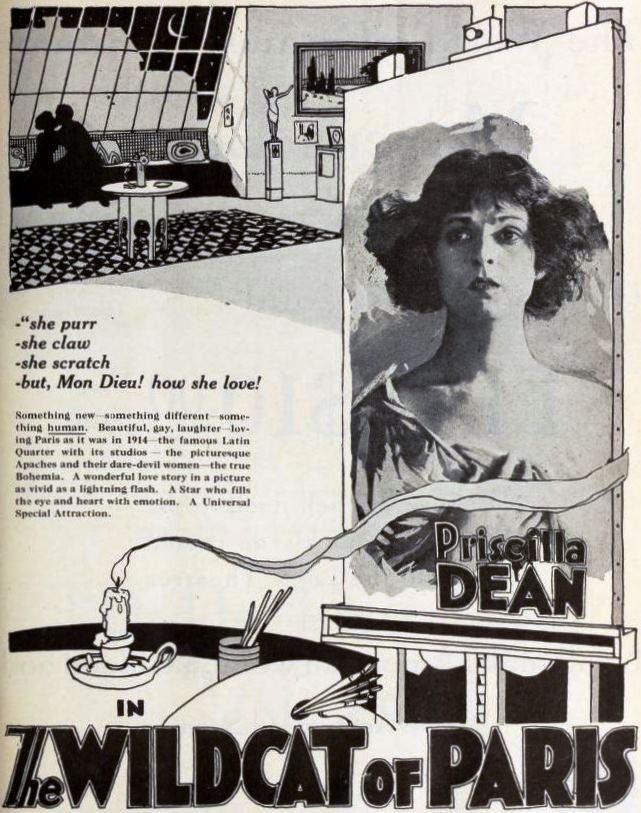
Cinematographer Joseph H. August shot most interiors in a moth-eaten warehouse in Montreuil, yet he conjures expressionist nightmares worthy of Caligari. Shadows are slashed at hard Dutch angles; faces half-swallowed by darkness seem to float in limbo. One unforgettable shot frames Gisele inside a shattered metro window: behind her, a poster of Marianne is riddled with bullet holes, the word « Liberté » now reading like blackmail.
The tinting strategy is equally subversive. Night scenes are bathed in arsenic green, evoking the color of cheap absinthe and gangrene. Dawn raids explode into sulfuric yellow, suggesting both hope and mustard gas. When the film finally erupts into crimson—during the Grand-Guignol showdown—it feels like the iris has been slashed open to let arterial spray hit the lens.
Contemporary audiences encountering the recent 4K restoration (with a commissioned score by Kronos Quartet) report something uncanny: the pizzicato strings mimic machine-gun patter so precisely that viewers instinctively duck. During the love scene—silhouetted against a bakery’s coal stove—the cello sustains a single note until it warbles like tinnitus. You’re reminded that WWI veterans called shell-shock “the music that follows you home.”
Post-MeToo readings clash over whether the film empowers or exploits. On one hand, Gisele weaponizes her sexuality with the calculating glee of a blackjack dealer. On the other, the camera ogles Dean’s gams every time she straddles a parapet. Yet Wellman complicates the gaze: when a leering commissar tries to corner her in a holding cell, she fractures his larynx with a lunch pail—and the film denies him a single cutaway of pity. The moment plays as cathartic inversion rather than titillation.
Compare this with the comparatively sanitized rebellion in The Plow Woman where the heroine’s agency is filtered through pastoral symbolism. Here, liberation is visceral, scented with gun oil and cheap tobacco.
The arms-dealer subplot anticipates today’s military-industrial critique. When the baronne coolly notes that “every bullet fired is a dividend earned,” you hear echoes of Halliburton and drone stocks. The film refuses to pin villainy on a single mustache-twirling mogul; instead, it exposes an ecosystem—bankers, bureaucrats, bored aristocrats—feeding on the carrion of national trauma. In that sense, The Wildcat of Paris feels closer to Succession than to Les Mis.
Buffs tracking silent-era DNA strands will spot chromosomes shared with The Dead Alive: both pivot on forged identities in wartime chaos. Yet while the latter clings to courtroom theatrics, Wildcat hurls its protagonist into urban guerrilla warfare. Likewise, the gender politics here make The Prince and the Pauper look like a boys-only treehouse.
Conversely, fans of South American silents will detect tonal kinship with Vivo ou Morto: both weaponize kinetic editing to evoke societal free-fall. The difference is geography; Rio’s sun-scorched favelas replace Paris’s dripping catacombs, yet the scent of cordite is identical.
At a brisk 73 minutes, Wildcat is a caffeine shot straight to the optic nerve. It’s imperfect—intertitles occasionally belabor the obvious, and one comic-relief pickpocket seems airlifted from a Mack Sennett two-reeler—but these scars only amplify its feral charisma.
Stream it on your largest TV, volume cranked until the violins feel like shrapnel. Then, when the screen cuts to black and the bells toll, ask yourself: in our age of curated rebellion and brand-safe radicals, do we still have the stomach to cheer for a heroine who would sell your kidneys for subway fare yet somehow embodies the soul of a bleeding city?
If the answer is yes, congratulations—you’ve just been scratched by the wildcat. The wound, delightfully, never quite scabs.
IMDb —
1919
Community
Log in to comment.