DbcultAccessing Vault...
Cult Review
Senior Film Conservator
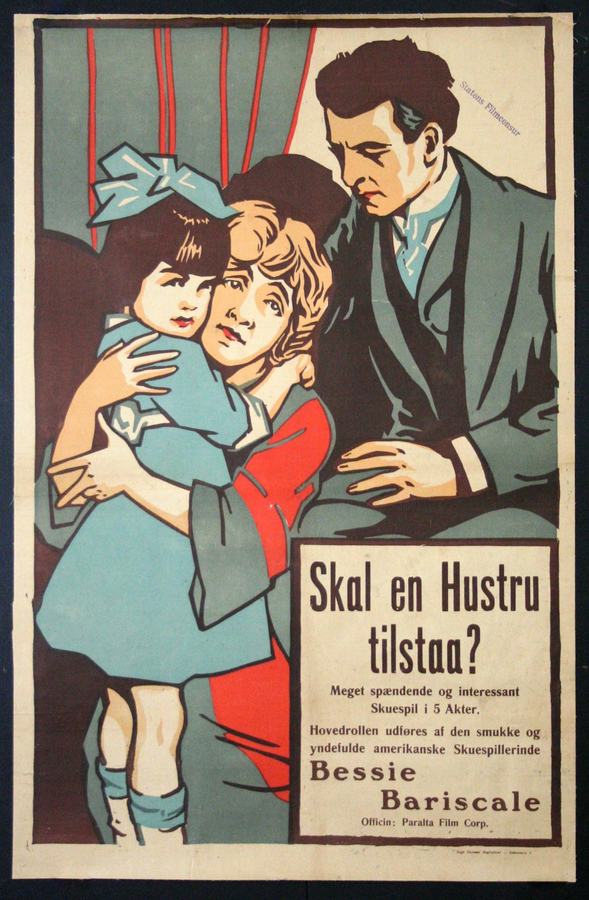
Silence, in 1918, was never empty; it quivered with the rustle of taffeta, the metallic click of a revolver hammer, the soft intake of breath before a lie. The White Lie wields that silence like a scalpel, dissecting the placid surface of domestic life to expose the raw sinew of fear and yearning beneath.
Director Julian La Mothe, moonlighting from his usual screenwriting perch, orchestrates a chamber piece of glances and withheld letters. Bessie Barriscale’s Dorothy is no florid victim; her eyes telegraph the arithmetic of panic—how many seconds until the door opens, until the teacup trembles, until the truth detonates? The performance is a masterclass in micro-movement: a thumbnail pressed against a note card, a shoulder blade brushing a doorframe as if the wood itself might absolve her.
Cinematographer Friend Baker shoots San Francisco as a chiaroscuro dream: the Mason residence looms like a mausoleum of modernism, all cantilevered shadows and vertiginous staircases that seem to exhale menace. Compare this spatial dread to the claustrophobic parlors of The Devil at His Elbow where every doorknob might be turning, or the passport-paranoia of The Yellow Ticket; here the threat is interior, familial, uterine.
The screenplay, co-penned by William Parker, is a nesting doll of reversals. Each act ends on a hinge that swivels moral polarity: the cuckold becomes confessor, the sinner becomes savior, the child—radiant Mary Jane Irving—becomes both MacGuffin and miracle. Adoption, usually the territory of tear-stained morality fables like The Poor Little Rich Girl, is recast as erotic thriller fuel, a secret co-written by two mothers: the one who cannot bear, the one who cannot keep.
Edward Coxen’s Gordon is calibrated with bourgeois rectitude so impeccable it curdles into cruelty. Watch how he fingers the brim of his straw boater, turning it like a steering wheel toward damnation. His jealousy is not hot but glacial, a creeping frost that blights every room he enters. When he finally steps from behind the screen—literally and figuratively—the close-up holds on his eyes longer than decency allows; we see not rage but a vertiginous relief, as if the worst thing he could imagine has finally happened and thereby lost its power to wound.
Charles Gunn’s Frank Mason could have been a mere cad in jodhpurs; instead he exudes the bruised glamour of a man repaying a karmic debt in installments of self-denial. His refusal to rejoin the criminal fraternity feels less like moral epiphany than exhaustion, the way a veteran declines a second tour. The death scene—shot in a single take that dollies from foyer to studio to crumpled body—earns its gasp without a drop of blood shown, only the slow eclipse of lamplight across his face.
The titular lie is, of course, white only in the way a iceberg is white: ninety percent of it submerged, capable of sinking anything that brushes its flank. The film’s true radicalism lies in refusing to punish Dorothy. Victorian melodrama would drown her in shame or suicide; here she is granted clemency by the very husband she deceived. That grace note, played without intertitle commentary, feels almost Protestant in its understatement.
Musically, the surviving prints often arrive with a patchwork score; I recommend pairing with Saint-Saëns’ Introduction and Rondo Capriccioso—its nervous violin arpeggios mirror the film’s clockwork tension. The rhythm of editing accelerates like tachycardia: the average shot length collapses from eight seconds in the opening pastoral to three in the final reel, a metronome of doom.
Compare the film’s ethical calculus to the continental fatalism of Lyubov statskogo sovetnika or the carnivalesque punishment in The Fates and Flora Fourflush. The White Lie lands closer to the American ethos of reinvention: sins are not expiated by tragedy but by paperwork—adoption decrees, murder convictions, blueprints for a new house whose hallways will never know the echo of these particular footfalls.
Yet the film is not flawless. A comic-relief maid wanders in midway, her pratfalls puncturing the mood like a pin in a tire. One wishes La Mothe had the nerve of New York Luck which excised every ounce of levity to serve its grim trajectory. Similarly, the detective who arrives at the climax is pure expository furniture, a walking intertitle in a bowler.
Still, these are hairline cracks in a porcelain so delicate it hums. The final shot—Dorothy and Gordon descending the exterior staircase as fog swallows Mason’s modernist mausoleum—feels like the cliff-edge of modernity itself: the couple stepping into an America that will soon binge on jazz, Prohibition, and the right to rewrite its own past. Their silhouettes dissolve, leaving only the faint outline of a child’s ribbon flapping against a streetlamp, a visual ellipsis implying that every family is merely the current draft of a story still being ghost-written.
For the cine-curious, The White Lie survives in a 35-mm nitrate print at the Library of Congress; a 2K scan circulates among private torrents, grainy yet gorgeous. If you track it down, project it on a wall painted the exact shade of Mason’s studio walls—gunmetal grey—then watch how the yellow lamplight pools like spilled yolk over every secret face. You will emerge blinking into your own living room, suspicious of every picture frame, every child’s laugh, every white lie you ever told yourself was harmless.
Verdict: a chamber-thriller miracle, half Revelation-style moral parable, half pulp confession, wholly unforgettable.
IMDb 5.7
1936
Community
Log in to comment.