DbcultAccessing Vault...
Cult Review
Senior Film Conservator
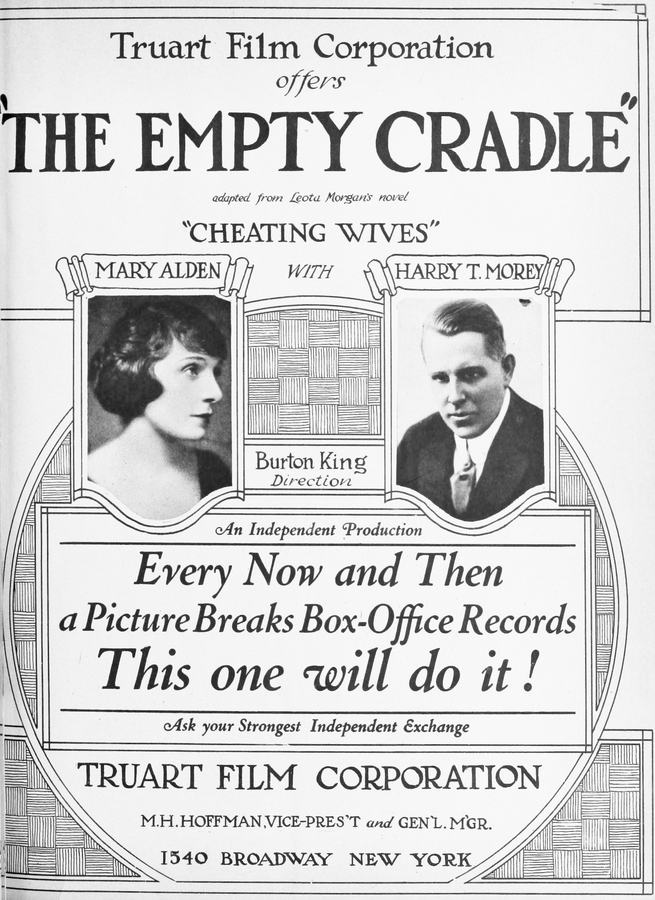
What elevates The Empty Cradle beyond its contemporaries is its unflinching examination of class as a social virus. Alice’s disownment by her family for marrying "beneath" her status mirrors the broader societal disdain for upwardly mobile women. The Lewis estate, with its gilded interiors and barren halls, becomes a character itself, a monument to wealth’s inability to fill emotional voids. This architectural symbolism recalls the opulent decay in Aladdin from Broadway, though Morgan trades musical whimsy for stark realism. The film’s tension between domesticity and autonomy resonates with the feminist undertones of The Matinee Girl, yet here the stakes are visceral, not aspirational.
The script’s pivot to a dream sequence—a narrative device common in 1930s cinema—feels surprisingly modern in its subversion of genre expectations. By framing the climax as a hallucination, Morgan critiques the very real trauma of Alice’s situation, suggesting that her subconscious is more honest than her waking choices. This twist also undercuts the film’s potential descent into gothic tragedy, instead positioning it as a psychological case study. The decision to have Alice reject the lawyer’s offer in reality, after her dream exposes its moral rot, is a subtle but powerful act of narrative justice.
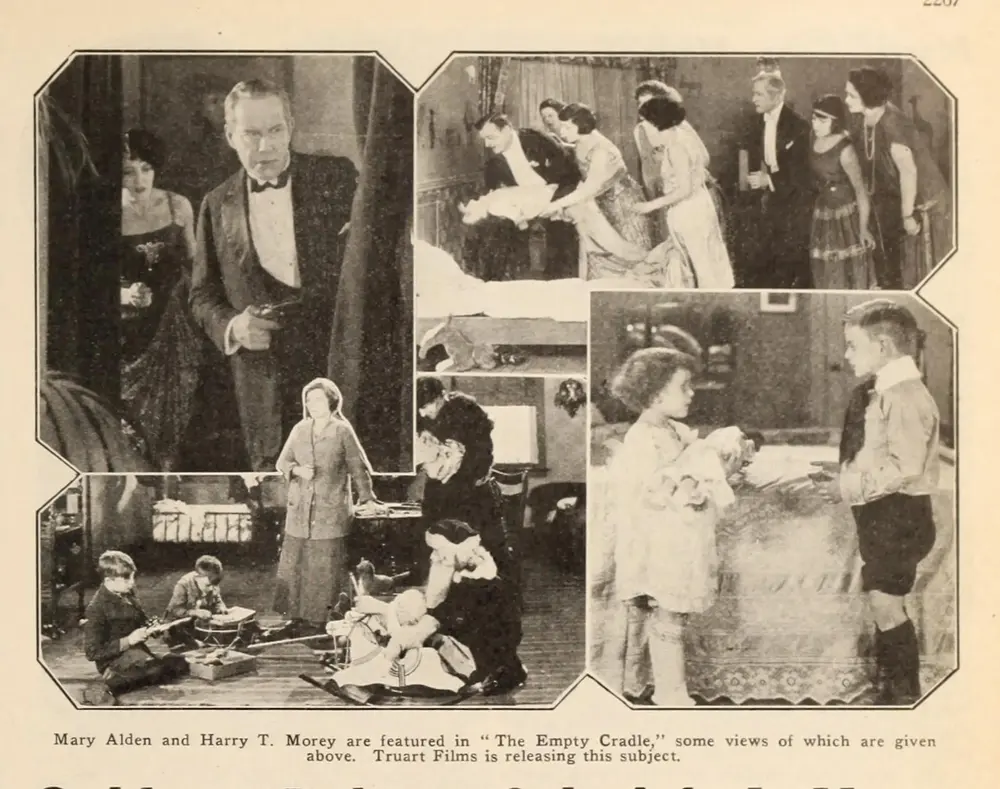
Technically, the film is a marvel of its era. The use of shadow and light in the Lewis home scenes—particularly the chiaroscuro during Alice’s tense interactions with Robert—echoes the visual language of German Expressionism. This technique, later popularized in films like Im Schatten des Glücks, lends weight to the film’s themes of duality. The score, though underused, swells at key moments to punctuate emotional beats without overpowering the dialogue. These choices coalesce into a film that feels both of its time and eerily prescient in its exploration of identity crises.
Critics of the era dismissed The Empty Cradle as "overwrought" and "morally simplistic," but modern reappraisal reveals its layered complexity. The characters are not archetypes but flawed, breathing figures. John’s jealousy, which culminates in the botched shooting, is portrayed with tragic nuance—his actions are less a product of malice than of a man drowning in his own inadequacies. Similarly, Ethel’s desperation to possess a child is never framed as purely villainous; her yearning is a mirror of Alice’s own maternal instincts, distorted by privilege.
The film’s historical context is inescapable. Released during the Great Depression, its themes of economic disparity and familial fragmentation resonated with a public grappling with their own uncertainties. Morgan’s decision to include Aunt Martha’s Christmas gifts as the story’s resolution—a trite symbol of familial reconciliation—has been criticized as a cop-out. Yet this choice may also be read as a sly indictment of the era’s false optimism, a balm for wounds too deep for cinematic cures.
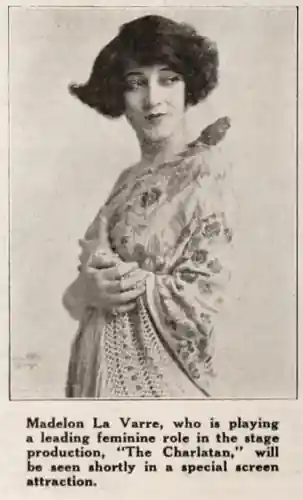
Comparisons to Get-Rich-Quick Edgar are inevitable, given both films’ preoccupation with class mobility. However, The Empty Cradle distinguishes itself through its focus on women’s internalized oppression. The dynamic between Alice and Ethel—two women pitted against each other by circumstance—echoes the adversarial relationships in A Pardoned Lifer, though here the conflict is softened by moments of unexpected empathy. These parallels highlight Morgan’s skill in weaving socially conscious narratives without sacrificing emotional authenticity.
The film’s pacing, however, is its most divisive element. The first act, steeped in exposition, risks alienating modern viewers accustomed to brisk storytelling. Yet this deliberate unfolding is essential to the film’s thesis: life, like Alice’s journey, is a slow unraveling of lies and compromises. The supporting cast—particularly Helen Rowland as the lawyer and Mary Alden as Louise—adds texture without overshadowing the leads. Their performances, while constrained by their roles, are imbued with a quiet dignity that elevates the film’s moral gravity.
In its final act, The Empty Cradle transcends its genre limitations to pose existential questions. Is Alice’s refusal to accept the lawyer’s money an act of self-preservation or a failure of courage? Does the dream sequence absolve her of complicity, or does it condemn her to a cycle of self-deception? Morgan leaves these questions hanging, a testament to the film’s refusal to offer easy answers. This ambiguity, coupled with its sharp social critique, ensures its place as a cornerstone of 1930s cinema.
For contemporary audiences, the film serves as both a window into the past and a cautionary tale for the present. Its exploration of motherhood as a commodity—whether through adoption, surrogacy, or social engineering—remains startlingly relevant. The film’s final image, of Alice holding her newborn while Aunt Martha’s gifts clutter the floor, is a masterstroke of visual irony. The cradle may be full, but the emptiness it symbolizes lingers, a silent indictment of a society that values status over substance.
In conclusion, The Empty Cradle is a film of remarkable ambition, its flaws inseparable from its strengths. It is a work that demands repeated viewings, each uncovering new layers of meaning beneath its surface melodrama. For cinephiles seeking to understand the evolution of women’s narratives in cinema, this film remains an essential text. Its legacy, like Alice’s journey, is one of resilience—a testament to art’s power to illuminate the darkest corners of the human experience.
IMDb —
1912
Community
Log in to comment.