DbcultAccessing Vault...
7.1/10
Senior Film Conservator

A definitive 7.1/10 rating for a film that redefined the boundaries of cult cinema. Niebezpieczny romans remains a cornerstone of transgressive art.
Is Niebezpieczny romans worth a look today? Absolutely, if you're into those early sound films, especially Polish ones. It's a fun ride for folks who appreciate film history and don't mind a story that feels a bit like a stage play sometimes. If you need super fast action or perfect digital effects, you might find yourself a little bored.
The movie kicks off with a kind of charming chaos. We meet Elwira, played by Zula Pogorzelska, who owns a pet shop. But it's not really about the pets, is it? It’s about her tangled life.
You get this immediate sense of the era, you know, the way people dressed, the street scenes. There's a moment when the camera just lingers on a busy marketplace for a beat too long, and you almost expect someone to wave at the lens.
Eugeniusz Bodo pops up, and he's just got that charisma. He plays a somewhat shady character, maybe a bit of a scoundrel. But you can't help but like him, even when you know he's up to no good. His smile just sort of gets you.
The plot, about these bank cashiers and robbers, it's not super complicated. It’s more about the web of misunderstandings and mistaken identities that unfolds. A classic trope, but done with a certain Polish flair here.

There’s this one scene where a character tries to sneak around, and the shadows are just so dramatic. It felt like they spent ages setting up that single light. Really makes you think about how hard they worked with limited tech back then.
And the sound! Oh, the sound. It's early talkie territory, so sometimes the dialogue feels a bit stilted. Like everyone's waiting for their cue, almost too carefully. But then, you get these moments of genuine laughter that break through, and it's quite something.
I liked how the pet shop owner, Elwira, isn't just a damsel. She's got her own schemes, her own way of trying to get by. She's not perfect, not by a long shot. Maybe a little too trusting, but who isn't when love is involved? 🤷♀️
There’s a part where the robbers are planning something, and their hideout looks like it’s just someone's basement. Very low budget, but it kinda works. It adds to the gritty, not-so-glamorous feel of their criminal enterprise.
One character, I think it was one of the cashiers, has this incredible nervous tick. Like, every time he's stressed, his hand goes to his tie. It's a small thing, but it really sticks with you. Someone on set must've told him to lean into it.
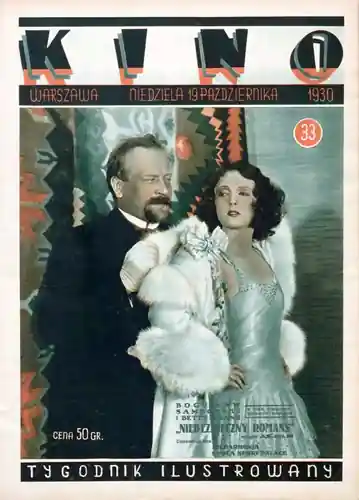
The whole "deception" part of the plot, it gets pretty tangled. You’re never quite sure who’s tricking who. It keeps you guessing, which is good for a film from 1930. They weren't always masters of suspense then.
You can tell they're trying to figure out how to move the camera with sound recording going on. Sometimes it's locked down, almost like a stage play. Then suddenly, a little pan, and you’re like, "Woah, progress!"
The music, too, it’s often very upbeat, almost bouncy. Even when things are supposed to be serious, there's this underlying cheerfulness. It's a bit jarring sometimes, but also very charming in its own way. Chór Dana's involvement makes sense here.
It’s not a film that tries to be deep or philosophical. It’s just trying to tell a fun story. And for the most part, it does. It's a snapshot of a different time, a different style of filmmaking.
The ending, without giving anything away, it leaves you with a smile. It's not a grand, dramatic conclusion. It's more of a gentle shrug, a "well, that's life, isn't it?" kind of feel.
For fans of Adolf Dymsza, he has some great comedic timing here. He really knew how to milk a scene for laughs. A few of his facial expressions were just priceless.
IMDb —
1924
Community
Log in to comment.