DbcultAccessing Vault...
6.7/10
Senior Film Conservator
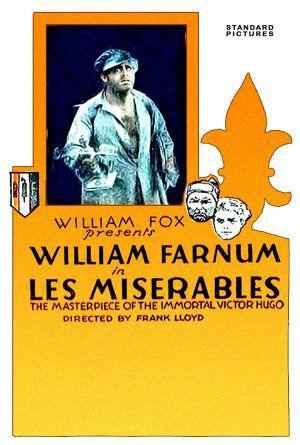
A definitive 6.7/10 rating for a film that redefined the boundaries of cult cinema. Les Misérables remains a cornerstone of transgressive art.
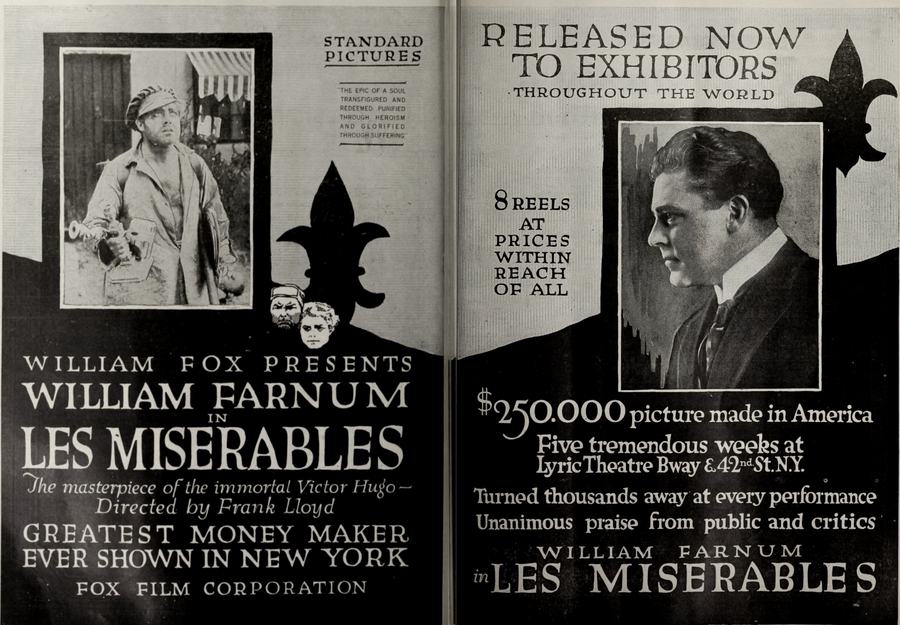
Stepping back into the cinematic annals of 1917, one encounters a monumental endeavor: Frank Lloyd’s adaptation of Victor Hugo’s timeless epic, Les Misérables. This silent film, a sprawling tapestry woven with threads of social commentary, moral philosophy, and raw human emotion, stands as a testament to the ambitious storytelling capabilities of early cinema. Before the advent of synchronized sound, directors like Lloyd had to rely entirely on visual cues, the power of performance, and the evocative nature of intertitles to convey the profound depth of Hugo’s narrative. The challenge was immense, yet the resulting film, starring the formidable William Farnum as Jean Valjean, managed to capture the essence of a story that continues to resonate with audiences over a century later.
The narrative, at its core, is a relentless exploration of justice versus mercy, a theme that Hugo himself championed with fervent conviction. We are introduced to Jean Valjean, a man whose life is irrevocably altered by a petty act of desperation – stealing a loaf of bread to feed his starving nephew. This seemingly minor transgression results in a disproportionately cruel sentence, transforming him from an ordinary man into an outcast, a pariah branded by the law. His subsequent escape from the galleys marks the beginning of a lifelong flight, not just from the law, but from the very identity society has imposed upon him. This struggle for reinvention, for the right to a new life, forms the beating heart of the film.
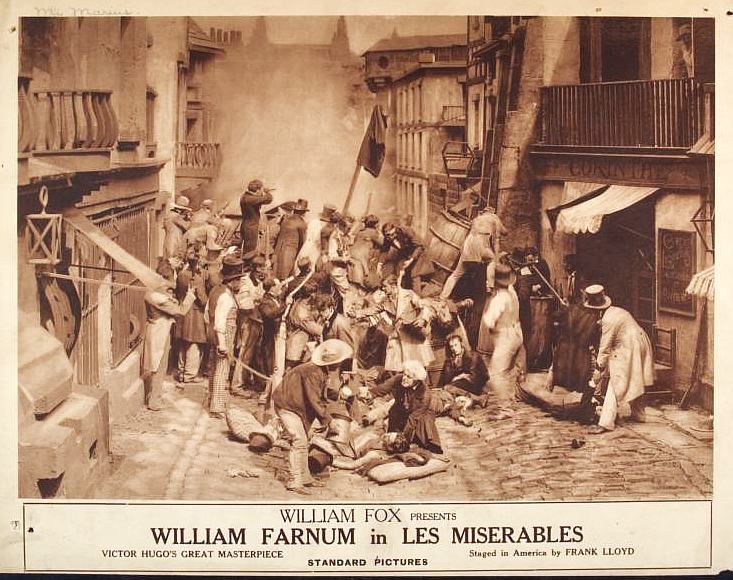
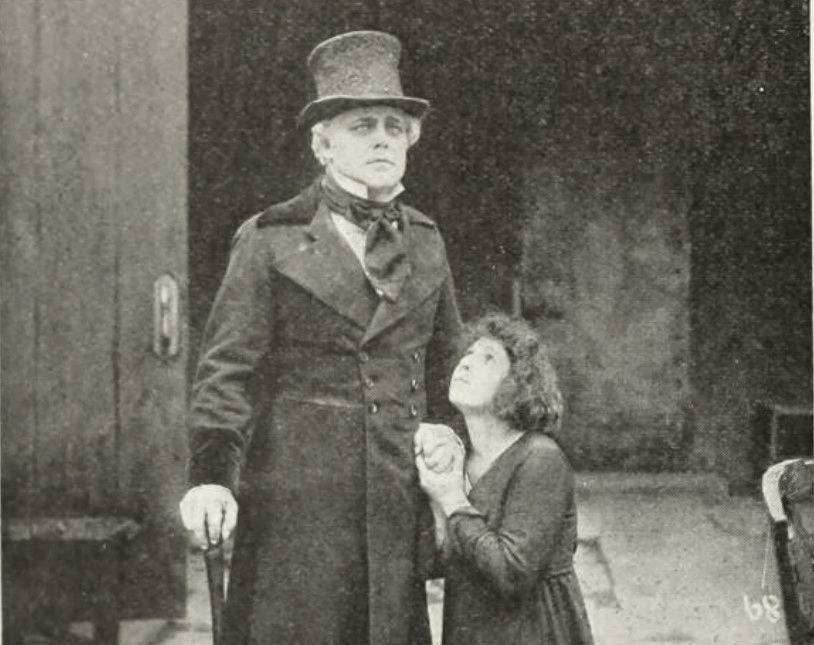
William Farnum’s portrayal of Valjean is nothing short of captivating. In an era where exaggerated gestures and facial expressions were the lingua franca of silent acting, Farnum delivers a performance that manages to be both grand and intensely personal. His eyes, in particular, convey a universe of suffering, resilience, and burgeoning compassion. We witness his initial bitterness, the dehumanizing effect of imprisonment, and then, crucially, the transformative power of a single act of kindness – a bishop’s unexpected mercy. This pivotal moment, though conveyed through intertitles and visual metaphor, feels genuinely profound, setting Valjean on his path toward redemption. Farnum’s physical presence, coupled with his nuanced emotional range, ensures that Valjean’s journey from hardened convict to benevolent mayor, and ultimately to a selfless protector, is utterly believable, even without a single spoken word. It’s a masterclass in conveying complex inner turmoil through the sheer force of screen presence.
Opposing Valjean is the relentless Inspector Javert, played with chilling precision by Gus Alexander. Javert is not a villain in the traditional sense; rather, he is an embodiment of unyielding, unthinking legalism. For him, the law is an absolute, an unassailable truth that must be upheld at all costs, regardless of circumstance or human compassion. Alexander’s Javert is a figure of stark, almost monolithic conviction. His pursuit of Valjean is not personal malice, but a duty, a sacred trust to maintain order. The silent medium perfectly amplifies this rigidity; Javert’s steely gaze, his unsmiling demeanor, and his unwavering pursuit become symbols of an unforgiving system. The moral conflict between Valjean’s evolving sense of justice and Javert’s rigid adherence to the letter of the law is the engine that drives much of the film’s dramatic tension. It’s a fascinating study of how two men, both driven by a profound sense of right, can find themselves on opposite sides of an unbridgeable chasm.
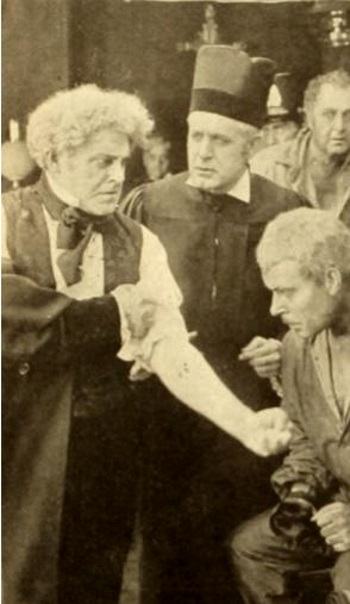
Frank Lloyd’s directorial vision for this epic was remarkably ambitious for its time. Adapting a novel of such immense scope and intricate plotting into a visual narrative required immense skill and a keen understanding of cinematic language. Lloyd expertly uses the camera to frame the vastness of the French landscape, the squalor of its urban underbelly, and the intimate emotional struggles of its characters. His use of deep focus and well-staged crowd scenes helps to establish the societal context, making the personal dramas unfold against a backdrop of widespread poverty and social injustice. The film's pacing, a common challenge in early cinema, is handled with a measured hand, allowing the story to breathe and its emotional beats to land with impact. The visual storytelling techniques employed by Lloyd, particularly in conveying the passage of time and the inner thoughts of characters, demonstrate a nascent understanding of cinematic grammar that would influence generations of filmmakers.
The supporting cast, while perhaps less prominent than Farnum and Alexander, contributes significantly to the film’s emotional resonance. Gretchen Hartman as Fantine, the tragic figure forced into prostitution to support her child, embodies the devastating consequences of societal neglect. Her suffering, conveyed through poignant expressions and desperate gestures, is heartbreaking. Jewel Carmen’s portrayal of the adult Cosette brings a ray of hope and innocence into Valjean’s life, becoming the ultimate embodiment of his redemptive purpose. Their performances, though brief in comparison to the central duo, are crucial in grounding the philosophical debates in tangible human suffering and joy. The film’s ability to evoke such powerful emotions through purely visual means is a testament not only to the actors’ talent but also to Lloyd’s masterful direction.
In an era marked by burgeoning cinematic experimentation, Les Misérables (1917) stands alongside other ambitious literary adaptations of its time. Much like David Copperfield, which would see various cinematic iterations, Lloyd's film demonstrates the burgeoning appetite for bringing beloved novels to the silver screen. However, where some adaptations might focus solely on plot mechanics, Lloyd’s Les Misérables delves deeper, striving to capture the philosophical and emotional core of Hugo’s work. The film’s success lies in its ability to translate complex moral dilemmas into compelling visual drama, a feat that distinguishes it from more straightforward narratives like The Running Fight, which, while entertaining, often lacked the profound thematic weight.
The thematic resonance of Les Misérables is particularly striking when viewed through the lens of other films exploring societal injustice and the plight of the marginalized. One might draw parallels to the stark realities depicted in A Factory Magdalen, another film from the same period that unflinchingly portrayed the struggles of working-class women. Both films, in their own ways, serve as powerful indictments of societal structures that condemn individuals to cycles of poverty and despair. However, Les Misérables elevates this critique by introducing the element of personal redemption and the internal conflict between law and morality, a struggle that even a film like The Avenging Conscience: or 'Thou Shalt Not Kill', with its focus on psychological torment, doesn't quite match in its grand scale of societal implication. The silent era, surprisingly, lent itself well to these larger-than-life themes, allowing audiences to project their own emotions and understanding onto the characters, thereby forging a deeper, more personal connection to the story.
Reflecting on the film’s historical context, 1917 was a tumultuous year globally, embroiled in the throes of World War I. While Les Misérables is set in an earlier century, its themes of suffering, resilience, and the search for peace and justice would have resonated deeply with audiences grappling with the profound disruptions of their own time. The film offered a timeless message of hope and the enduring human spirit amidst adversity, a message that transcended the immediate anxieties of the war. It reminded viewers that even in the darkest times, acts of kindness and the pursuit of a moral life hold immense power.
The very architecture of silent film, with its reliance on expressive acting and evocative cinematography, often amplified the emotional weight of a narrative. Without dialogue to guide or distract, the viewer is compelled to engage more directly with the visual cues and the implied emotional states of the characters. This immersive quality is particularly evident in the chase sequences between Valjean and Javert, which, despite the limitations of early special effects, manage to convey a thrilling sense of urgency and dread. The stark contrast between the squalor of the Parisian streets and the grandeur of certain societal settings is visually striking, painting a vivid picture of the stark class divisions that Hugo so powerfully critiqued. The film’s visual language becomes a character in itself, speaking volumes where words cannot.
Comparing it to other films that delve into complex moral quandaries, such as The Lords of High Decision, which often explored ethical dilemmas within powerful social circles, Les Misérables distinguishes itself by focusing on the morality of the common man and the extraordinary journey of an individual against an unyielding system. It’s a story less about the decisions of the powerful and more about the existential struggle for decency in the face of overwhelming odds. Even films like The Light at Dusk, which might touch upon themes of hope and despair, rarely achieve the epic sweep and intricate character development that Lloyd’s adaptation bravely attempts, and largely succeeds in, presenting.
In conclusion, Frank Lloyd’s Les Misérables (1917) is more than just a historical curiosity; it is a remarkably potent and ambitious cinematic achievement. It showcases the formidable talents of its cast, particularly William Farnum, and the visionary direction of Lloyd, who managed to distill the essence of a literary masterpiece into a compelling visual narrative. For those interested in the evolution of film, the art of silent acting, or simply a powerful story of redemption and justice, this early adaptation of Hugo’s enduring novel remains an essential viewing experience. It reminds us of the profound capabilities of early cinema to tackle complex human themes with grace, power, and an unforgettable emotional resonance that transcends the absence of spoken dialogue. It's a foundational piece in the cinematic legacy of one of the world's most beloved stories, proving that the human spirit's journey through trials and triumphs can be eloquently told, even in silence.
IMDb 6.4
1925
Community
Log in to comment.