DbcultAccessing Vault...
Cult Review
Senior Film Conservator
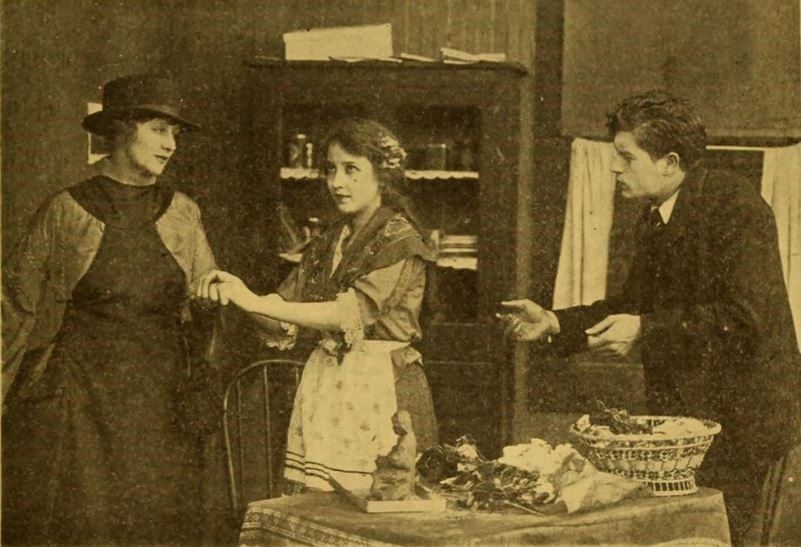
Stepping back into the nascent days of cinema, one encounters narratives that, despite their age, resonate with an almost primal emotional force. Nina, the Flower Girl stands as a quintessential artifact from this era, a melodrama imbued with a delicate pathos and a surprising depth of character. It’s a film that, through its silent storytelling, speaks volumes about perception, self-worth, and the transformative power of both love and art. This isn't just a simple tale; it's a tapestry woven with threads of hardship, aspiration, and a profound yearning for acceptance, reflecting the societal anxieties and romantic idealism of its time. The movie, rather than merely recounting events, invites us to ponder the internal landscapes of its protagonists, a feat quite remarkable for a medium still finding its voice.
At the heart of this poignant drama is Nina, portrayed with an ethereal grace that transcends her physical affliction. She is blind, yet her spirit is anything but dimmed. Her livelihood, the meticulous creation of artificial flowers, becomes a potent symbol of her resilience – crafting beauty in the absence of sight, a poignant irony that underpins much of the film's thematic weight. Her world, though confined, is brightened by the unwavering presence of Jimmie, a crippled newsboy. Jimmie isn't merely a companion; he is her protector, her confidant, and, crucially, her sweetheart. Their bond is forged in the crucible of shared vulnerability and mutual reliance, a relationship that feels both tender and fiercely possessive. This dynamic immediately sets up a compelling tension: two marginalized individuals finding solace and strength in each other, a common trope in early cinema that often highlighted the struggles of the working class, much like the social commentary found in films such as Father John; or, The Ragpicker of Paris.
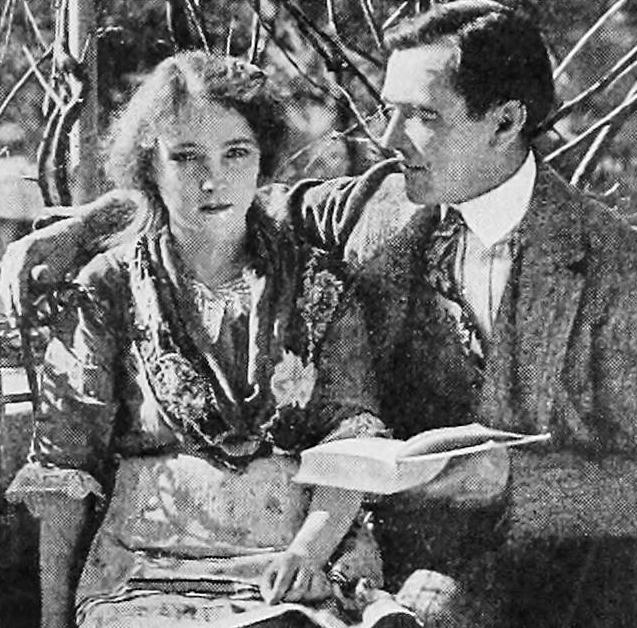
The death of Nina's grandmother, the initial anchor in her life, serves as a pivotal turning point, deepening her reliance on Jimmie. It’s a moment that strips away Nina’s last vestiges of familial support, leaving her utterly dependent on the young newsboy. This tragic event, while sorrowful, solidifies the central romantic axis of the narrative, preparing the audience for the trials and tribulations that will inevitably test their nascent love. Jimmie's immediate, almost instinctive, assumption of responsibility underscores his deep affection and his innate, if sometimes misguided, sense of duty. His protectiveness, however, soon manifests in a violent outburst against another newsboy, a perceived rival for Nina's affections. This scene, raw and visceral, not only showcases Jimmie's fierce loyalty but also his volatile nature, hinting at deeper insecurities simmering beneath his tough exterior. It’s a moment of dramatic escalation that, crucially, sets the stage for the narrative's unexpected shift into the realm of art and patronage.
Serendipity often plays a starring role in silent melodramas, and Nina, the Flower Girl is no exception. Miss Fifi Chandler, an artist of considerable social standing and keen observation, witnesses Jimmie's street brawl. Intrigued by the intensity of his emotion and the delicate beauty of Nina, she follows the pair to their humble dwelling. What she discovers there transcends mere curiosity; it's a revelation. Jimmie, the crippled newsboy, is also a gifted sculptor, having fashioned a magnificent plaster cast of Nina. This unexpected artistic talent elevates Jimmie beyond his perceived social station, offering a glimmer of hope for a future far removed from the grit and struggle of the street. Fifi, recognizing raw genius, becomes the benevolent catalyst, introducing Jimmie and his muse to her fellow artist, Fred Townsend.
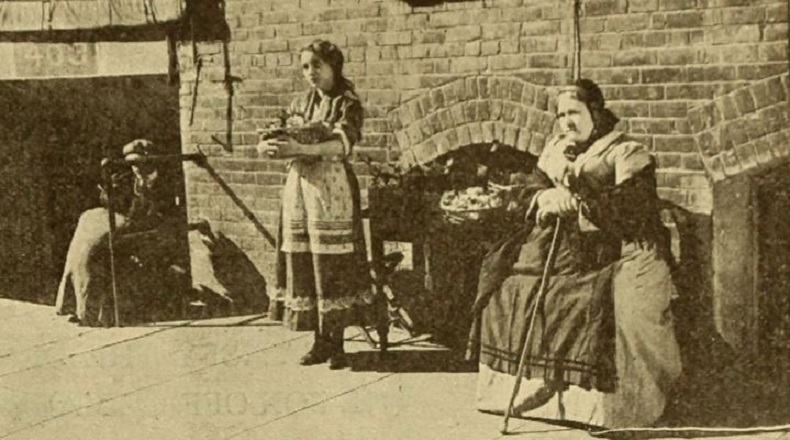
Townsend, a man of means and artistic sensibility, is immediately captivated by Nina. His interest, however, quickly shifts from artistic appreciation to romantic infatuation. This introduces a classic love triangle, a staple of dramatic narratives across all eras, where the benefactor inadvertently becomes a rival. Fred's intentions, while genuinely kind, sow the seeds of profound insecurity in Jimmie, whose physical disability becomes a gnawing fear in the face of Nina's potential restoration of sight. Fred's generosity extends to arranging a consultation with a renowned specialist for Nina’s eyes, promising the miraculous return of her vision. This act, while ostensibly a blessing, paradoxically becomes the catalyst for Jimmie's deepest torment. The prospect of Nina seeing him, truly seeing his crippled form, shatters the idealized image he believes she holds in her blind imagination. It’s a cruel twist of fate, where the very act of healing one person inadvertently inflicts a deeper wound upon another. This thematic thread of perception versus reality, and the fear of exposure, adds a rich psychological layer to the otherwise straightforward melodrama. Such complex emotional landscapes, often explored through stark contrasts, were central to many films of the period, including those grappling with personal identity and social standing, echoing perhaps the aspirations and anxieties depicted in One Million Dollars, albeit through a different lens.
The dramatic tension ratchets up considerably as Nina prepares for her life-altering surgery. Townsend's well-meaning assurance to Jimmie that the operation will be a success is met not with relief, but with an agonizing torrent of words, a raw outpouring of Jimmie's deepest fears. He vocalizes the terrifying prospect: Nina will see him for what he is, a cripple, and not the straight, handsome youth her imagination has crafted. This confession is heartbreaking, a stark revelation of his profound insecurity and the immense pressure he feels to live up to an imagined ideal. His self-worth, intrinsically tied to Nina's perception of him, crumbles under the weight of impending sight. This internal conflict, where love and fear collide, is a powerful engine for the film's emotional drive, forcing the audience to empathize deeply with Jimmie's impossible dilemma.
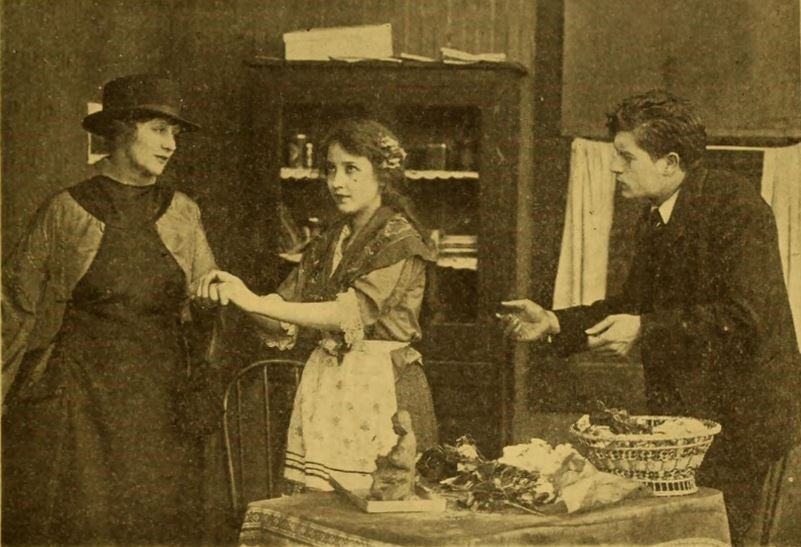
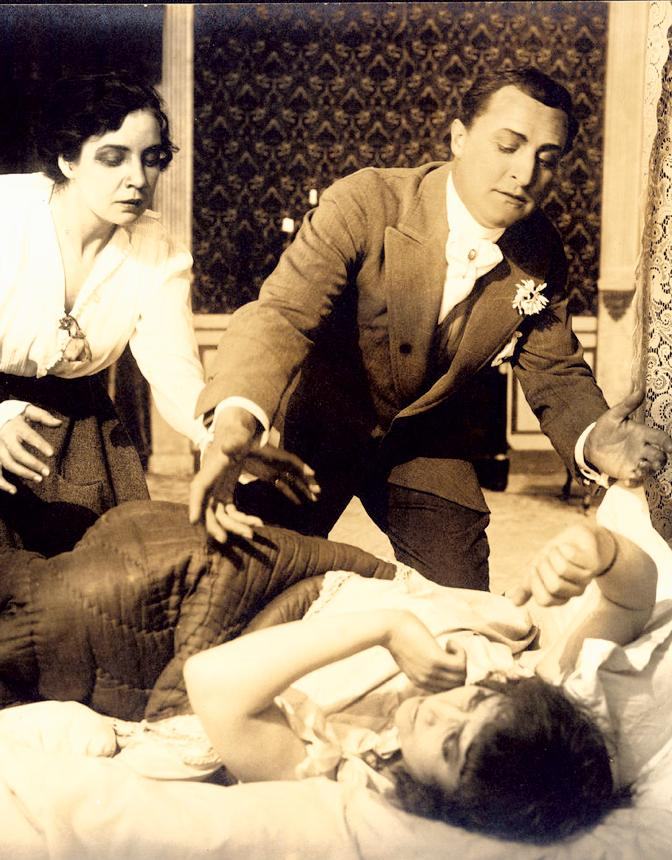
In a desperate act of self-preservation, or perhaps self-sacrifice, Jimmie flees. His disappearance during Nina's critical post-operative period, when she must remain in a darkened room, amplifies the sense of tragic irony. The very moment Nina is on the cusp of seeing the world, and him, Jimmie removes himself from it. This period of Nina's enforced darkness mirrors Jimmie's own descent into emotional gloom. The film masterfully uses this parallelism to heighten the dramatic stakes, leaving the audience to wonder about Jimmie's fate and Nina's eventual reaction to his absence. The removal of Nina's bandages is a moment of profound anticipation, not just for the character but for the viewer. Her sight is restored, a triumphant moment of medical science and human hope. Yet, this victory is immediately overshadowed by Jimmie's continued absence, creating a bittersweet emotional landscape. The film skillfully balances joy with lingering sorrow, preventing the narrative from becoming overly saccharine, a common pitfall in less nuanced melodramas. This delicate balance of emotional highs and lows is a hallmark of effective storytelling in any medium, and Nina, the Flower Girl navigates it with commendable skill.
Just as Nina's world bursts into visual clarity, Jimmie's plunges into profound darkness. That same night, a crippled boy, rescued from a desperate suicide attempt in the river, is brought to a general hospital. The physician, recognizing Jimmie, hears his harrowing tale of despair and fear. This parallel narrative, unfolding simultaneously with Nina's recovery, is a stroke of narrative genius. It ensures that Jimmie's emotional journey remains central, preventing his character from being merely a plot device for Nina's story. The physician, moved by Jimmie's plight, performs an operation, and in another miraculous turn, Jimmie too is transformed. He will walk forth as straight and whole as Nina's blind imagination had once pictured him. This symmetry of healing – Nina's sight restored, Jimmie's body mended – is a powerful thematic statement about the unexpected ways destiny can intervene and the profound impact of compassion. The film suggests that true love and worth are not solely contingent on physical perfection, but it also grants its characters the very physical ideals they yearn for, a classic melodramatic resolution that satisfies the era's taste for poetic justice.
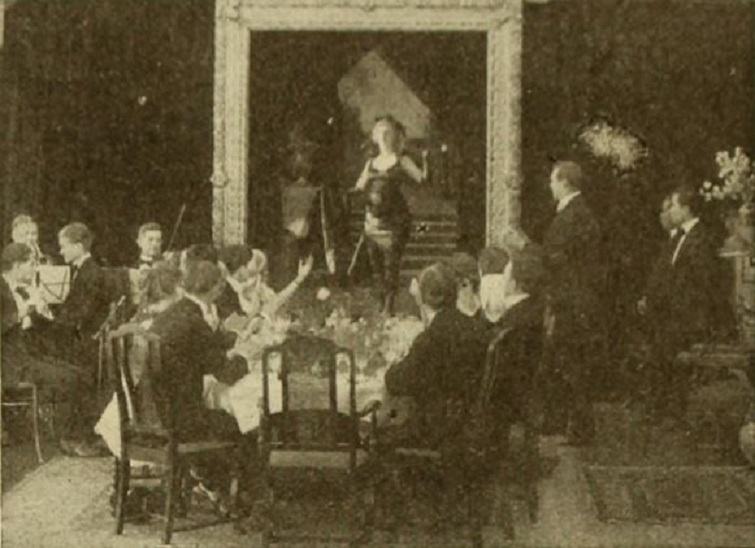
Meanwhile, Nina, unaware of Jimmie's own ordeal or his subsequent transformation, grapples with his inexplicable absence. Her newly acquired sight, instead of bringing unadulterated joy, is tinged with confusion and longing. This period of separation, where both lovers undergo profound individual changes, serves to heighten the emotional impact of their eventual reunion. The film builds suspense by withholding information from Nina, and by extension, from the audience, about Jimmie's fate, making his re-entry into her life all the more impactful. The narrative skillfully manipulates emotional peaks and valleys, a technique common in silent film to engage the audience without dialogue. The eventual reunion, orchestrated by Fred Townsend, is the climactic emotional release. Townsend, the benevolent rival, finds his reward not in winning Nina's affection for himself, but in witnessing the pure, unadulterated happiness of the two youthful lovers. His act of selfless generosity completes his character arc, transforming him from a potential antagonist into a noble facilitator of true love. This resolution, while undeniably sentimental, provides a deeply satisfying conclusion, affirming the power of enduring affection and the triumph of the human spirit over adversity. The film’s ability to weave together these complex emotional threads, culminating in a doubly miraculous resolution, speaks to its enduring appeal, much like other narratives of social uplift and romantic triumph from the period, such as The Love Girl.
Nina, the Flower Girl, beyond its compelling plot, offers a fascinating glimpse into the artistic conventions and thematic preoccupations of early cinema. The emphasis on visual storytelling, necessitated by the absence of synchronized sound, elevates gestures, facial expressions, and symbolic imagery to paramount importance. The plaster cast of Nina, crafted by Jimmie, is not just a plot device but a profound symbol. It represents Jimmie's ability to see Nina's inner beauty, his artistic insight transcending his own limitations and her blindness. It’s an idealized vision, one he fears will be shattered by Nina's restored physical sight. This central metaphor of sight versus insight, of physical appearance versus true essence, permeates the entire film, giving it a philosophical depth that belies its melodramatic surface. The film explores how we perceive ourselves and how we believe others perceive us, a universal human anxiety that remains relevant.
The performances, though often broad by modern standards, convey emotion with an intensity characteristic of the silent era. Loyola O'Connor as Nina likely imbued her character with a delicate vulnerability, while Elmer Clifton as Jimmie would have portrayed the raw passion and deep-seated insecurity that drives his character's dramatic arc. The film’s reliance on dramatic irony and parallel narratives showcases a sophisticated understanding of storytelling, even in cinema's infancy. The double transformation—Nina gaining sight, Jimmie gaining physical wholeness—could easily feel contrived, yet within the context of the film's earnest emotional landscape, it feels earned, a testament to the power of hope and the belief in second chances. This narrative structure, where destiny intercedes to correct physical misfortunes, aligns with other optimistic narratives of the period, such as The Matrimaniac, which also explored the unpredictable nature of human connection and resolution, albeit in a more comedic vein.
Ultimately, Nina, the Flower Girl endures as more than just a historical curiosity. It’s a compelling emotional journey that speaks to the enduring power of love to overcome adversity, both external and internal. The film’s exploration of disability, self-image, and the redemptive potential of art and compassion offers a surprisingly nuanced perspective for its time. It challenges the audience to consider what truly constitutes beauty and worth, and how our own perceptions can either liberate or imprison us. The narrative's trajectory, from the gritty streets to the hallowed halls of medical and artistic patronage, illustrates a prevalent societal belief in the possibility of uplift and transformation, a theme echoed in narratives of social mobility like What Happened to Mary, which also focused on an individual's journey through various challenges. The film's conclusion, while unequivocally happy, is not arrived at without significant emotional cost and profound personal sacrifice, particularly on Jimmie's part. His journey from insecurity and despair to physical and emotional wholeness is the film's most powerful arc, demonstrating that true love necessitates not just sacrifice for the beloved, but also the arduous journey towards self-acceptance.
The enduring charm of Nina, the Flower Girl lies in its ability to tap into universal human experiences: the yearning for connection, the fear of inadequacy, and the profound joy of being truly seen and loved. It’s a testament to the fact that even in its earliest forms, cinema possessed the unique capacity to transport, to move, and to reflect the deepest facets of the human condition. This silent masterpiece, with its rich tapestry of emotion and its surprisingly complex characters, continues to bloom brightly in the garden of cinematic history, inviting new generations to appreciate its delicate beauty and profound message. It reminds us that sometimes, the most extraordinary stories are found in the simplest of settings, and that the greatest transformations often begin with an act of genuine kindness and an unwavering belief in the potential for good.
IMDb —
1917
Community
Log in to comment.