DbcultAccessing Vault...
6.9/10
Senior Film Conservator
A definitive 6.9/10 rating for a film that redefined the boundaries of cult cinema. Nip and Tuck remains a cornerstone of transgressive art.
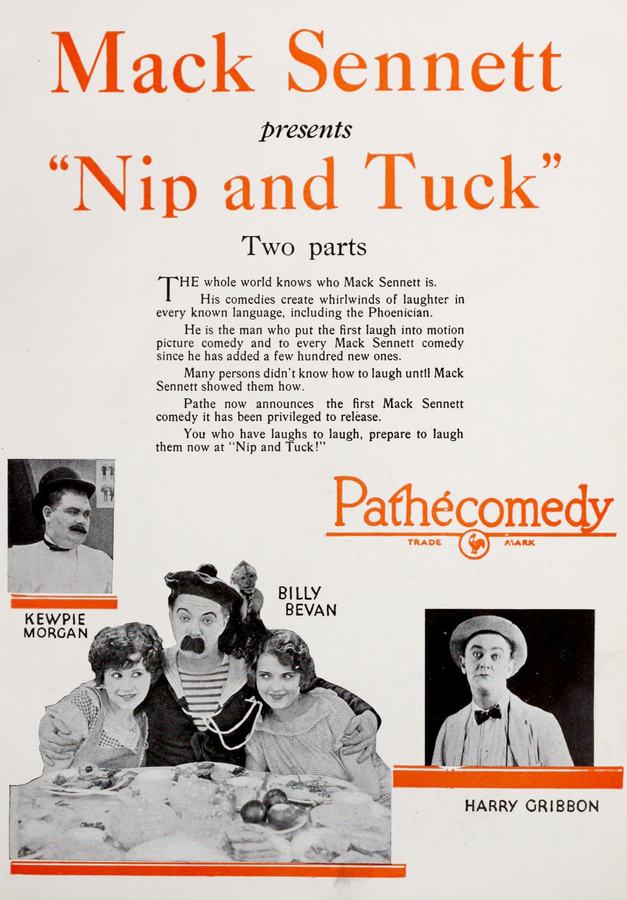
To understand the visceral impact of Nip and Tuck, one must first divest themselves of the modern expectation for narrative cohesion and character arcs. This 1923 short is not a story in the literary sense; it is a symphony of movement, a frantic ballet of the absurd orchestrated by the master of mayhem, Mack Sennett. While the 1920s offered grand spectacles like The Rug Maker's Daughter, the true heartbeat of the era often resided in these bite-sized explosions of comedic energy. Here, we see Andy Clyde before he became the wizened, pop-eyed character actor of the sound era. In this film, he is a creature of pure motion, a limber vessel for the frantic whims of writers John A. Waldron and Arthur MacArthur.
The brilliance of the Sennett school of comedy lay in its understanding of space and timing. In Nip and Tuck, every doorway is a portal for potential disaster, and every staircase is a platform for a choreographed descent. The interaction between Al Cooke and Kewpie Morgan creates a fascinating visual contrast—the former’s wiry agility pitted against the latter’s immovable bulk. This is a recurring motif in the silent era, seen with varying degrees of success in films like Brass Buttons, but rarely executed with the sheer velocity found here. The film operates on a principle of escalation; a minor disagreement over a triviality blossoms into a full-scale riot, involving the entire ensemble including Billy Bevan and Harry Gribbon in cameo roles that feel like nods to the audience's shared history with the Sennett stable.
"The silent screen was not silent; it was a cacophony of visual cues and rhythmic timing that demanded more from the viewer's imagination than any modern blockbuster."
One cannot discuss this film without acknowledging the presence of Alberta Vaughn and Mildred June. Often, in these shorts, the female roles are relegated to the 'damsel' or the 'shrew,' but there is a spark of agency in their performances here. They are not merely observers of the chaos; they are often the catalysts. This sophistication in character dynamics, however slight, elevates the film above the mere 'pie-in-the-face' antics of lesser productions like Wanted - $5,000. There is a sense of shared community in the Sennett lot, a feeling that these actors have worked together so frequently that their timing has become telepathic. When Billy Armstrong enters a scene, the audience already knows the specific brand of nervous energy he will bring, allowing the film to skip the exposition and dive straight into the comedic meat.
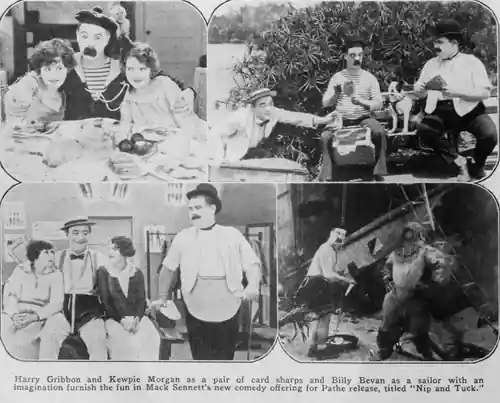
Then there is Cameo the Dog. In an era where animal stars were becoming a lucrative trope—think A Bear, a Boy and a Dog—Cameo stands out for his uncanny ability to mirror the human actors' frustration. His presence adds a layer of surrealism to the proceedings. When the humans are engaged in a frantic pursuit, the dog’s steady, purposeful movement provides a grounding counterpoint that makes the human antics seem all the more ludicrous. It is a sophisticated use of a non-human actor that predates the more sentimentalized animal portrayals found in later decades.
When we look at Nip and Tuck alongside its contemporaries, the differences in tone and intent are striking. While a film like Das Geheimnis von Bombay sought to transport the audience to exotic locales with a sense of mystery and drama, Sennett’s work is stubbornly rooted in the mundane made extraordinary. The 'exotic' here is the sheer impossibility of the physical stunts. Similarly, while The Top of New York explored the verticality of the burgeoning metropolis through a dramatic lens, Nip and Tuck uses that same urban environment as a giant playground. The city is not a place of struggle; it is a place of endless comedic possibility.
The film also stands in stark contrast to the European sensibilities of Dockan eller Glödande kärlek. Where the European avant-garde was experimenting with psychological depth and surrealist imagery, the American slapstick tradition, as exemplified here, was perfecting the mechanics of the laugh. It is a blue-collar aesthetic—unpretentious, hardworking, and relentlessly focused on the reaction of the crowd. Even when compared to the more romanticized visions of American life like My American Wife or the aspirational tones of Every Girl's Dream, Nip and Tuck feels refreshingly honest in its commitment to pure, unadulterated nonsense.
The cinematography in Nip and Tuck is deceptive in its simplicity. To capture the high-speed chases and complex physical interactions required a level of precision that is often overlooked. The hand-cranked cameras of 1923 allowed for subtle variations in speed, often 'under-cranking' to make the action appear faster and more frantic. This technique, while common, is used with particular finesse here to emphasize the mechanical nature of the comedy. The characters aren't just people; they are parts of a larger machine that is slowly breaking down. This mechanical philosophy of humor is something that would later be explored in more depth by the likes of Buster Keaton, but the seeds are clearly visible in the work of Clyde and Cooke.
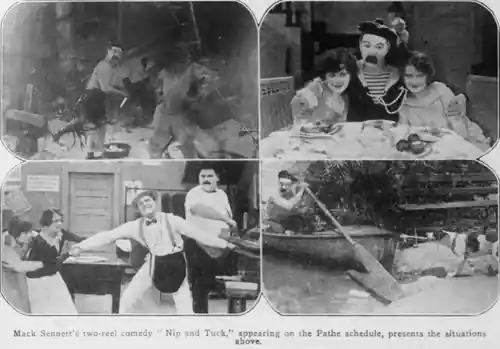
The editing, too, is a marvel of efficiency. In an age before digital precision, the cuts in Nip and Tuck are sharp and rhythmic. There is no wasted space. Every frame serves the gag. This lean approach to storytelling is something that modern filmmakers, often bogged down by bloated runtimes and excessive exposition, could learn from. Contrast this with the slower, more deliberate pacing of Love in the Dark or the procedural nature of A Phantom Fugitive. In Nip and Tuck, the momentum is the message. If the camera stops moving, the magic evaporates.
Why does Nip and Tuck still resonate over a century later? Perhaps it is because the film taps into something primal. The frustration of navigating a world that seems designed to trip you up is a universal experience. Whether it's the social competition found in Konkurrencen or the emotional turmoil of Two Kinds of Love, the themes of human struggle are always present in cinema. But Nip and Tuck chooses to laugh at that struggle. It takes the anxieties of modern life—the crowds, the technology, the social hierarchies—and turns them into a game of tag.
The performance of Marvin Loback and the rest of the supporting cast shouldn't be dismissed as mere background noise. They are the 'straight men' to the universe's absurdity. In the world of Nip and Tuck, sanity is the outlier. The film invites the audience to join in this collective madness, to find catharsis in the destruction of order. It is a philosophy of comedy that is as relevant today as it was in the smoke-filled theaters of 1923. While we may have moved on to more complex narratives like Body and Soul, there is an undeniable purity in the slapstick short that remains unmatched.
In the final analysis, Nip and Tuck is more than just a relic of a bygone era. It is a testament to the ingenuity of the early pioneers of the screen. It reminds us that cinema, at its most basic level, is about the joy of seeing. Seeing a man lose his hat, seeing a dog outsmart a human, seeing the world fall apart and then miraculously put itself back together in time for the next reel. It is a masterpiece of the minor key, a small film with a massive heart, and a necessary viewing for anyone who wishes to understand the foundations of visual humor. The work of Waldron and MacArthur, brought to life by the incomparable Andy Clyde and his cohorts, remains a high-water mark for the American silent short.
Reviewer's Note: This analysis was conducted using restored archival footage. The nuances of the physical performances are best appreciated in their original frame rate to fully grasp the 'Sennett Speed' that defined the decade.
IMDb 5.3
1936
Community
Log in to comment.