DbcultAccessing Vault...
Cult Review
Senior Film Conservator
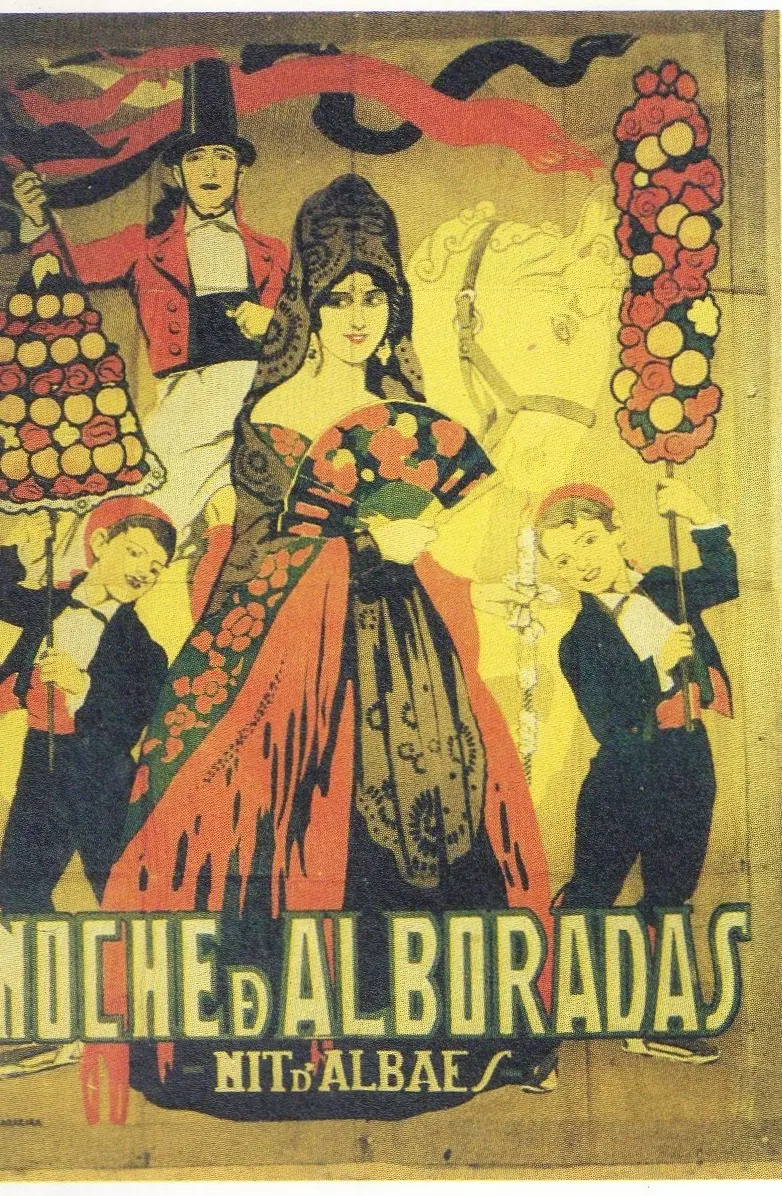
Is Nit d'albades worth watching today? Short answer: yes, but with significant caveats. This is a film for those who appreciate slow-burn character studies and atmospheric storytelling, particularly viewers drawn to introspective European cinema that prioritizes mood over plot. It is decidedly not for audiences seeking fast-paced narratives, overt action, or easily digestible resolutions.
This film works because of its unflinching commitment to character authenticity and its masterful use of setting to amplify emotional resonance. The performances, particularly from Anita Giner, elevate what could have been a pedestrian narrative into something genuinely affecting. It fails because its deliberate pacing occasionally veers into stagnation, and the narrative, while rich in subtext, can feel frustratingly opaque for those accustomed to clearer story arcs. You should watch it if you are prepared for a contemplative experience, willing to invest in a protagonist's internal journey, and enjoy films that linger in your thoughts long after the credits roll.
Salvador Giner’s Nit d'albades is a film that demands patience and offers, in return, a deeply resonant exploration of tradition versus individual will. At its heart lies Elena, portrayed with a mesmerizing intensity by Anita Giner, a woman seemingly trapped by the unspoken rules of her small, coastal community. The film uses the impending 'Albades' festival not merely as a backdrop, but as a symbolic crucible for Elena’s burgeoning desire for change. It’s a clever narrative device, allowing the vibrant rituals to contrast sharply with Elena’s internal quietude.
The thematic threads are subtly woven, exploring the suffocating nature of communal expectation and the quiet courage it takes to defy it. We witness Elena’s daily life, a repetitive cycle of duty and unspoken yearning, which feels both universal and acutely specific to her isolated world. The film suggests that true rebellion isn't always loud; sometimes, it's a whisper, a silent decision made against a tide of ingrained custom. This resonates with the introspective nature of films like The Dragon Painter, where inner turmoil drives the narrative more than external conflict.
One of the film's most potent themes is the burden of inherited sorrow. Elena carries a weight that is never fully articulated, yet it permeates every frame of her existence. This ambiguity is a strength, forcing the audience to lean in, to infer, to connect the dots of her past with her present struggles. It's a bold choice by writer Salvador Giner, trusting the viewer to engage with the narrative on an emotional, rather than purely expositional, level. The film’s refusal to provide easy answers is, for some, its greatest virtue, but for others, its most frustrating aspect.
The ensemble cast of Nit d'albades delivers performances that are uniformly understated, yet profoundly impactful. Anita Giner, in the lead role of Elena, is nothing short of captivating. Her portrayal is a masterclass in non-verbal communication, conveying a spectrum of emotions – from quiet desperation to nascent hope – through subtle shifts in posture, gaze, and the almost imperceptible tremor of her hands. The scene where she visits the old lighthouse, standing against the relentless wind, her face a canvas of conflicting emotions, is a testament to her profound talent. It’s a performance that anchors the entire film, making Elena’s journey feel deeply personal and authentic.
María Priego, as Elena’s more spirited cousin, offers a crucial counterpoint. Her character injects moments of much-needed levity and externalizes some of the frustrations Elena feels internally. Priego’s energetic presence prevents the film from becoming entirely somber, providing a dynamic contrast that highlights Elena’s quietude. Their interactions, particularly a tense but ultimately bonding conversation during the town's preparations for the festival, feel genuine, illustrating the complex ties of family and expectation.
Francisco Villasante, portraying the stern, traditional patriarch, embodies the conservative forces at play within the village. His performance is less about grand speeches and more about the weight of his presence, the unspoken authority he wields. The subtle disapproval in his eyes during a family dinner, barely perceptible yet deeply felt by Elena, speaks volumes. Carmen Corro and Antonio Gil Varela 'Varillas' also contribute solid, grounding performances, each adding another layer to the intricate social fabric of the town. Even smaller roles, like José Latorre and Leopoldo Pitarch, feel fully realized, contributing to the film's rich tapestry of characters.
Salvador Giner’s directorial hand is both delicate and firm. He crafts a world that feels lived-in, authentic, and steeped in tradition. His choice to shoot predominantly with natural light, particularly in the early morning and late evening, lends an ethereal quality to the film, enhancing its dreamlike, contemplative tone. The lingering shots of the rugged coastline, the ancient stone houses, and the intricate details of the festival preparations are not just pretty pictures; they are integral to the storytelling, acting as silent characters that reflect Elena’s inner state.
The cinematography, while not overtly flashy, is exceptionally effective. The camera often acts as a silent observer, allowing scenes to unfold organically, giving the audience space to interpret and feel. Consider the sequence where Elena walks through the deserted streets after the initial 'Albades' ceremony. The long takes, combined with the dim, almost melancholic lighting, create a powerful sense of isolation and introspection. This approach is reminiscent of the observational style seen in films like The Little Samaritan, where the environment plays a crucial role in shaping character.
However, Giner's commitment to this observational style can be a double-edged sword. While it builds atmosphere beautifully, it occasionally sacrifices narrative propulsion. There are moments where the film feels almost too patient, testing the limits of an audience's engagement. This is not necessarily a flaw for its intended audience, but it is a critical distinction for those expecting a more conventional narrative pace. The decision to prioritize mood over a clear, driving plot is a deliberate artistic choice, but one that undeniably dictates who will connect with the film most profoundly.
The pacing of Nit d'albades is deliberately slow, a languid drift that mirrors the unhurried rhythm of the coastal village it depicts. This allows for an immersive experience, drawing the viewer into Elena's internal world with a gentle, persistent pull. The film takes its time with moments, allowing emotions to simmer and observations to deepen. A scene depicting Elena preparing a meal, for instance, isn't rushed; it's a quiet meditation on routine and the small acts that define a life. This unhurried approach can be incredibly rewarding, offering a meditative quality often absent in modern cinema.
The tone is predominantly melancholic and reflective, tinged with moments of quiet hope. There's a pervasive sense of nostalgia, not just for a bygone era, but for a simpler, perhaps more constrained, way of life. The sound design plays a crucial role here, with the constant presence of the ocean, the distant sounds of village life, and the evocative music of the 'Albades' festival creating an auditory landscape that perfectly complements the visual storytelling. It’s a beautifully constructed soundscape that enhances the film’s rich, textured mood.
Nit d'albades isn't just a movie; it's an experience. But it's an experience that demands you meet it on its own terms, without expectation of a conventional narrative payoff.
My unconventional observation is that the film feels less like a story being told and more like a memory being recalled, hazy around the edges but sharp in its emotional core. This contributes to its unique charm but also to its potential for alienating viewers who prefer a more direct narrative. It works. But it’s flawed. The deliberate slowness, while integral to its artistic vision, occasionally crosses the line from contemplative to sluggish, particularly in the second act where certain scenes feel prolonged without adding significant new insight. This is where some viewers might find their patience tested, longing for a more decisive narrative turn or a quicker resolution to Elena’s internal struggle.
Absolutely, Nit d'albades is worth watching if you are in the mood for a deeply introspective, character-driven drama. It offers a rich tapestry of human emotion and cultural observation, presented with an admirable commitment to artistic integrity. However, it's crucial to manage your expectations regarding pacing and plot. This isn't a film that will spell everything out for you; it invites you to participate in its emotional landscape.
It's a perfect fit for cinephiles who appreciate European art-house cinema, ethnographic studies, or anyone looking for a film that prioritizes atmosphere and performance over plot mechanics. Think of films that linger, like Paddy the Next Best Thing or Ungdomssynd, where the emotional journey is paramount. If you prefer high-octane thrillers or comedies, this will likely not be your cup of tea. It requires a specific kind of engagement, a willingness to surrender to its rhythm.
Nit d'albades is a challenging but ultimately rewarding film for those willing to embrace its unique rhythm. It is a testament to Salvador Giner's vision and the quiet power of its performances, particularly Anita Giner's, that it manages to create such a profound emotional impact with so little overt drama. While its deliberate pacing and subtle narrative might deter some, it offers a deeply resonant experience for those who appreciate cinema as a reflective art form. It’s a film that asks you to sit with its characters, to absorb its atmosphere, and to ponder its unspoken questions. And for that, it deserves recognition.
It might not be a film for every palate, but for those who find beauty in quiet rebellion and the intricate dance between tradition and self-discovery, Nit d'albades is a compelling watch. It lingers, it provokes thought, and it reminds us that some of the most profound stories are told in the hushed tones of everyday life.

IMDb 6.3
1936
Community
Log in to comment.