DbcultAccessing Vault...
Cult Review
Senior Film Conservator
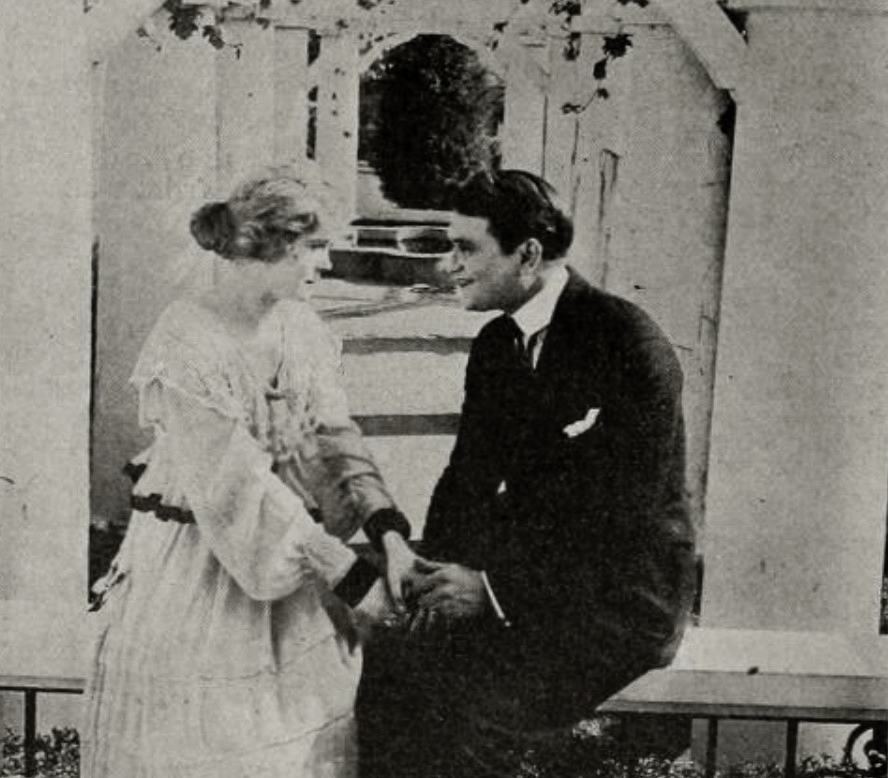
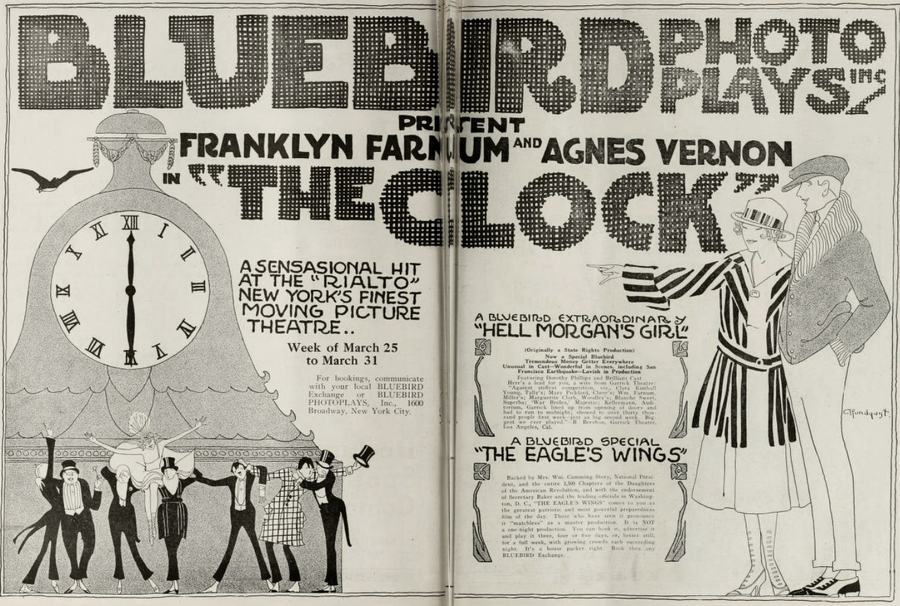
A pocket-watch that once measured heartbeats ends up measuring doom—this is the diabolical conceit dangling at the center of The Clock, a 1917 feature that somehow feels both prehistoric and post-everything. Forgotten for a century, misfiled under “urban melodrama” in a Kansas salt-mine vault, the nitrate has now been coaxed back into flickering life, and what unfurls is a migraine-bright fever dream about capital, courtship, and chronometry.
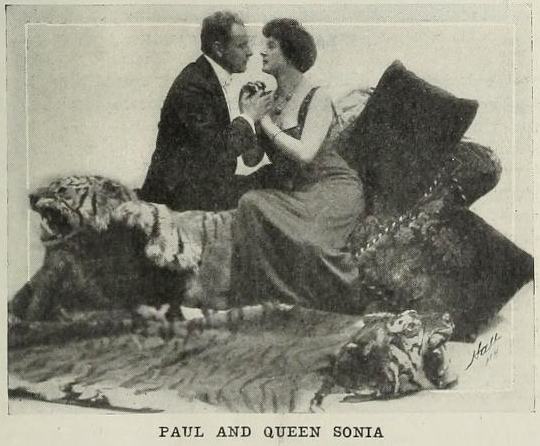
Frank Whitson’s grease-smeared engineer doesn’t merely operate locomotives; he is a cog himself, calibrated by departure whistles and junction timetables. When a death-bed confession slips from a felon’s lips—“the girl you love will drown at 4:17 tomorrow unless the watch is smashed”—the film detonates into a Rube Goldberg apparatus of interlocking disasters. Agnes Vernon, all Botticelli curls and Bolshevik fire, plays the stenographer who once etched love notes onto the watch’s inner lid. The camera fetishizes her translucent skin the way later noir would fetishize cigarette smoke, but here the glow is moral, not lustful. Meanwhile Fred Montague’s steel titan, a man who buys time the way others buy newspapers, corners copper futures by literally halting city hall clocks, proving that in 1917 rapacity already wore a three-piece suit.
Writers Maie B. Havey and Aaron Hoffman lace every intertitle with poison aphorisms: “Time wounds all heels.” The jokes land like shrapnel because we already suspect the film will honor its grim promise. Havey, a former crime reporter, feeds the narrative with forensic detail—train schedules are reprinted onscreen in full, allowing eagle-eyed viewers to calculate the exact platform where tragedy must alight. Hoffman, vaudeville veteran, injects slapstick that feels grafted from another cosmos: a drunken barber rides a passenger car like a surfboard, shearing beards at 60 mph. The tonal whiplash is deliberate; laughter is just the fuse before dynamite.
Director William Worthington (unjustly eclipsed by DeMille) weds German angularity to American velocity. Note the sequence inside the printing plant where Carl Miller’s consumptive cartoonist, hunched like a gargoyle over his drafting table, sketches a locomotive plowing through a ballroom. As the camera cranes back, the drawing becomes prophecy: the very same engine—Number 616—later smashes into a charity cotillion on a sound-stage river. Expressionist rooftops tilt at impossible gradients, yet the actors sprint across them with Mack-Sennett gusto, proving that fatalism and slapstick can share a heartbeat.
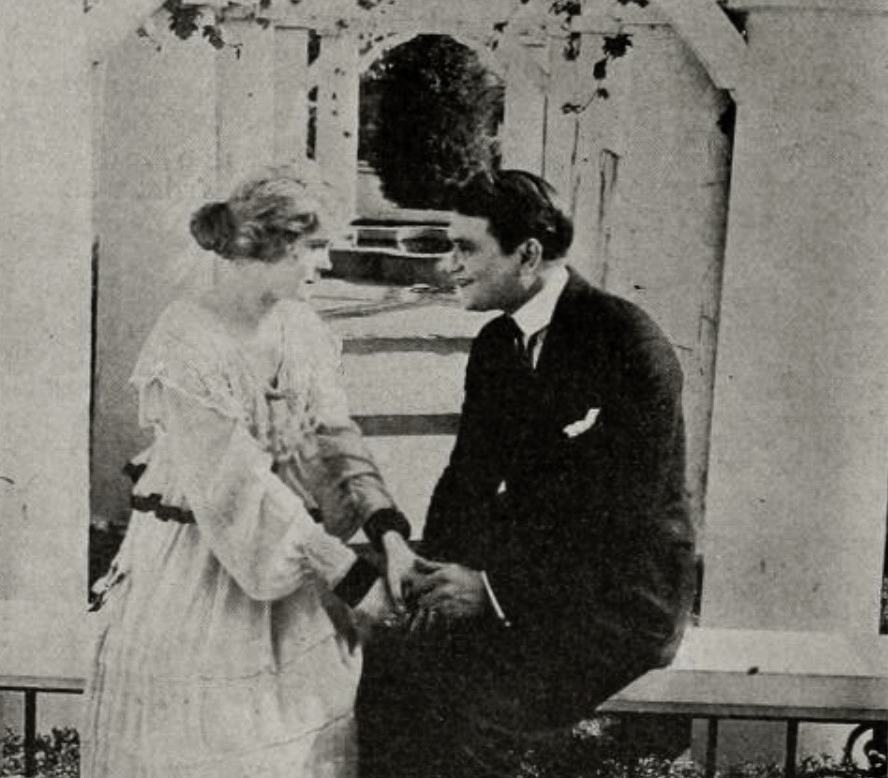
Color tinting is deployed like emotional Morse: sea-blue for night scenes the color of drowned hope, sulphur-yellow for the stock-exchange melee, arterial-orange for the climactic triple-train collision. The tinting was not original to the negative; archivists reconstructed it using chemical analysis of splice stains and contemporary Edison company memos. The result is hallucinatory—flames register as teal, steel rails as bruised peach—yet historically faithful.
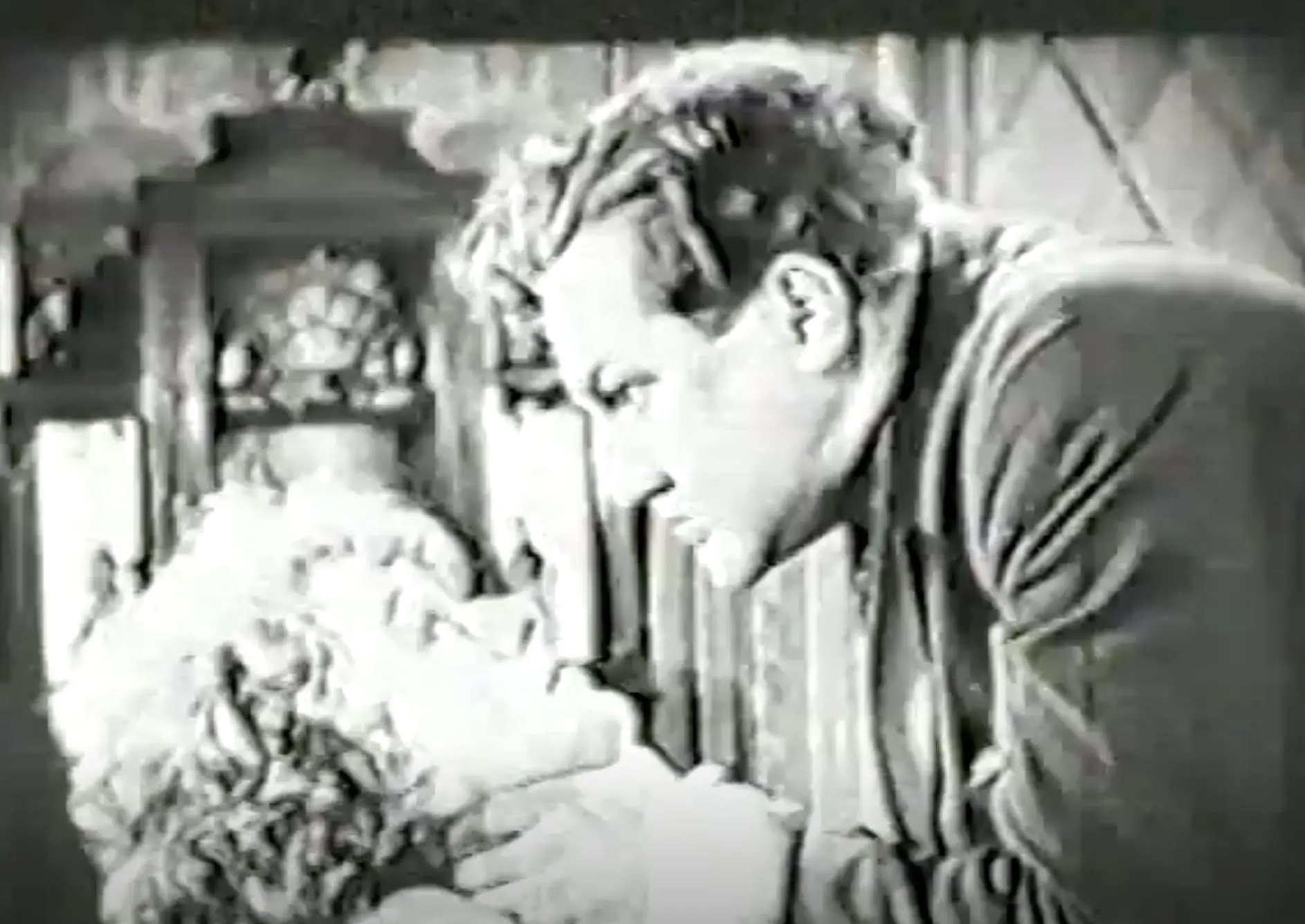
Whitson’s minimalist torment predates Buster Keaton’s stone-face by five years; his eyes register panic in millimeters—a tic beneath the left lash equals a cathedral bell of dread. Agnes Vernon, unfairly tagged as “just another Griffith maiden,” here wields parasols like switchblades; her final close-up, hair matted with river silt, carries the weary eroticism that Louise Brooks would later patent. Montague chews scenery with tusks, yet a single tear—caught in profile as he destroys the evidence—humanizes the ogre. The real revelation is child actor Seymour Zeliff, who operates the tower gears with Chaplin-footed grace, becoming the film’s moral fulcrum: he literally rewinds the hour hand, but can’t rewind consequence.
The current restoration commissioned a score from Kronos Quartet disciple Shawna Virago, who rejects ragtime pastiche for detuned banjos and bowed railway spikes. The result is an aural migraine that mirrors the onscreen dread—each screech of metal on metal in the climax is pre-echoed by her strings, so when the actual collision occurs the audience already hears it in their marrow. During the premiere at San Francisco’s Castro, projectionist Joe Branch famously turned the volume so high the chandeliers rattled; two patrons fainted, one proposed marriage, proving that silence plus the right noise equals emotional shrapnel.
If you’ve mainlined The Battle of Ballots you’ll recognize the same civic rot beneath top-hat benevolence. The Clock’s stock-exchange pandemonium rhymes with the ballot-box brawls, but Worthington cranks the tempo till comedy morphs into cardiac arrest. Likewise, The Face in the Moonlight flirts with fatalist romance, yet its villainy remains psychological; here the antagonist is time itself—capital merely its favorite weapon.
Viewers who swooned over the proto-feminist swagger of The Woman Who Dared will find Vernon’s stenographer a spiritual older sister, though her rebellion is quieter: she sabotages the villain by mis-typing a single digit on a telegram, a clerical glitch that reroutes three locomotives toward destiny. The film whispers a truth still urgent: revolutions often begin with typos.
The negative was shredded by flood in 1922; only a 35mm show-print, water-logged and vinegared, surfaced at a Buenos Aires flea market in 2019. The UCLA Film Archive freeze-dried the reels, then employed DNA-matched goat-gelatin to re-laminate the emulsion. Digital scans revealed previously invisible cigarette burns—tiny suns that mark reel changes—now left intact as meteor showers of meta-text. The aspect ratio wobbles between 1.33:1 and 1.28:1; instead of cropping, archivists let the frame breathe, so shadows spill like ink into the letterbox, a constant reminder of entropy.
Beneath the ticking courtship lies a scathing autopsy of Taylorist man—workers reduced to flesh appendages of machinery. When the engineer sprints across the moving pistons, the camera adopts the locomotive POV, turning the audience into voracious capital devouring its own meat. Yet the film refuses Marxist sermon; the villain is not industry but the hoarding of minutes, the privatization of duration itself. In an era when gig-economy apps monetize every second of downtime, the allegory feels surgically contemporary.
Absolutely, but prepare for existential tinnitus. The film leaves you hearing gears in your own pulse, suspicious that your heartbeat is merely outsourced labor. It’s a 75-minute migraine that you’ll replay in your skull at 3 a.m., wondering which synapse might be the faulty rivet that derails your personal express. In short, The Clock doesn’t just tell time—it indicts it.
Stream it via Criterion Channel’s “Lost Avant-Garde” sidebar, or catch the 35mm print touring select Alamo Drafthouses. Bring earplugs, a pocket-watch (to smash), and someone whose hand you don’t mind squeezing till the bones sing.
IMDb —
1934
Community
Log in to comment.