DbcultAccessing Vault...
Cult Review
Senior Film Conservator
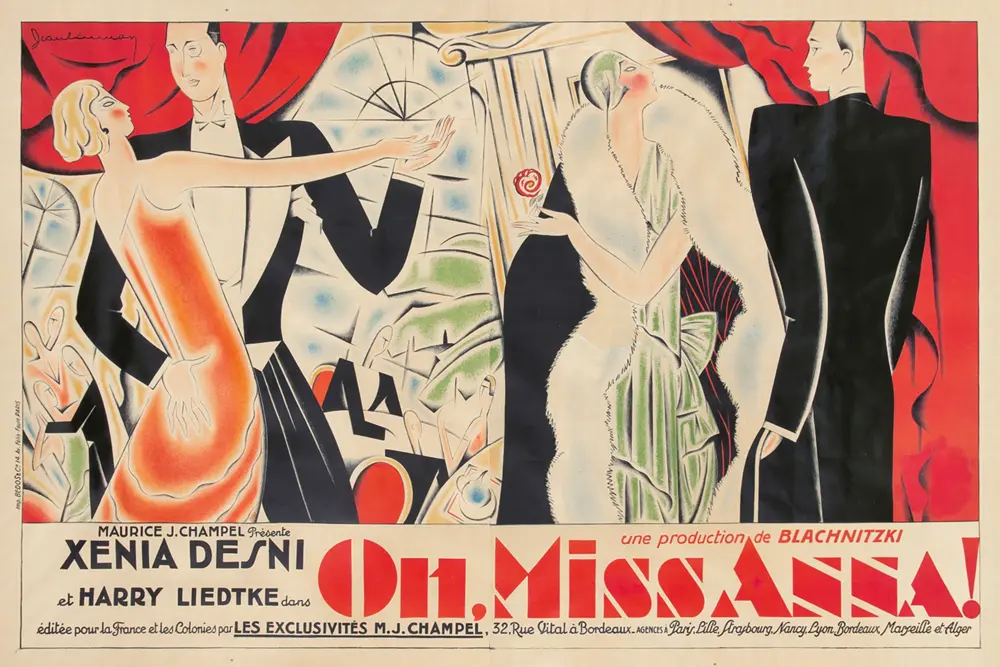
Is Nixchen (1926) a film that demands your attention in the crowded landscape of modern cinema? Short answer: yes, but with significant caveats. This silent-era romantic drama, while undeniably a product of its time, offers a fascinating window into the social anxieties and burgeoning cinematic techniques of 1920s Germany, making it a valuable watch for specific audiences.
This film is unequivocally for cinephiles, historians, and those with a genuine interest in the evolution of storytelling on screen. It’s a masterclass in silent-era performance and visual narrative, best appreciated by viewers willing to engage with its deliberate pacing and symbolic weight. However, if your preference leans towards fast-paced contemporary narratives, or if you struggle to connect with the unique demands of silent film acting and exposition, Nixchen is likely not the entry point you’re looking for.
In the annals of German silent cinema, Nixchen often finds itself overshadowed by its more overtly Expressionist contemporaries or the grand epics that defined the era. Yet, to dismiss it as a mere footnote would be a profound oversight. Directed with a keen eye for visual poetry by Hans von Kahlenberg, and penned by Fanny Carlsen and von Kahlenberg himself, this 1926 feature is a delicate, yet potent, examination of innocence, ambition, and the often-harsh realities of societal expectation in a rapidly modernizing world. It’s a film that quietly asserts its relevance, not through bombast, but through the subtle power of its performances and its surprisingly timeless thematic core.
At its heart, Nixchen is a character study, centered on the titular protagonist, brought to life with captivating grace by Xenia Desni. Desni, a star whose luminous presence often lit up the screens of the Weimar Republic, embodies Nixchen not just as a figure of beauty, but as a crucible of conflicting desires. Her journey from naive idealism to a more hardened understanding of the world is painted with nuanced gestures and expressions, a testament to the power of silent acting when executed with precision. The film’s strength lies in its refusal to offer easy answers, instead opting for a portrayal of human struggle that feels remarkably authentic despite the melodramatic flourishes typical of the period.
The film works because of its unwavering commitment to character depth, allowing the audience to truly invest in Nixchen's predicament through Xenia Desni's magnetic performance. It captures a specific societal moment with surprising nuance. This film fails because its pacing can be excruciatingly slow for modern viewers, particularly in its protracted middle act, and some of the supporting character arcs feel underdeveloped. You should watch it if you are fascinated by silent film acting, social dramas of the 1920s, or the early career of its talented cast.
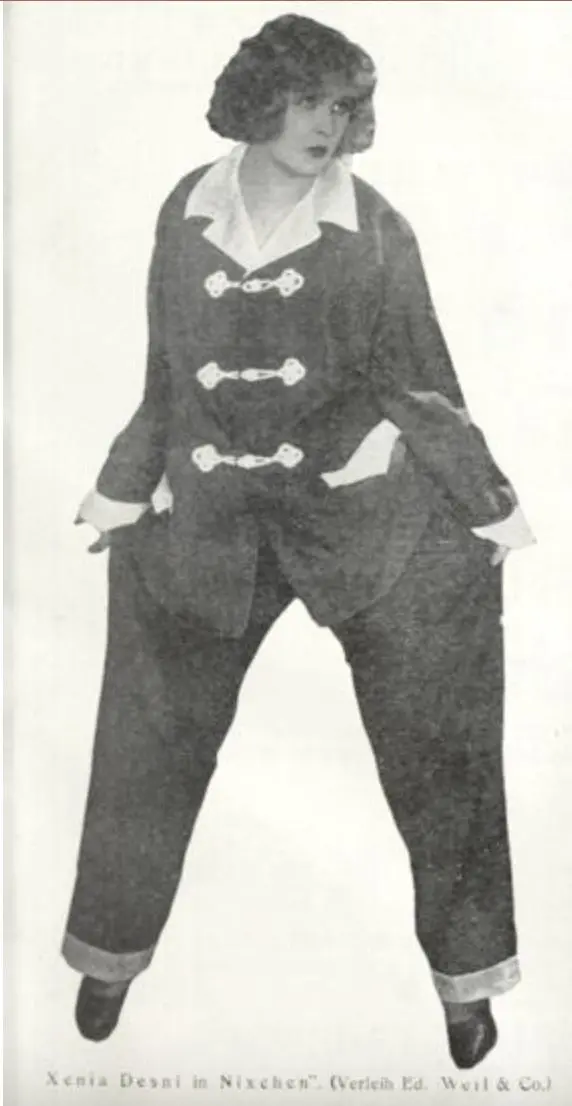
The ensemble cast of Nixchen is a veritable who's who of German silent cinema, each contributing a distinct flavour to the narrative tapestry. Xenia Desni, as Nixchen, is the undeniable anchor. Her performance is a masterclass in conveying complex inner turmoil without uttering a single word. Observe her in the scene where she first encounters Harry Liedtke's charming, yet manipulative, socialite at a glittering ball; her eyes, initially wide with wonder, slowly cloud with a flicker of apprehension, a subtle shift that speaks volumes about her dawning awareness of the world’s complexities. It’s a performance that transcends mere pantomime, achieving genuine emotional resonance.
Harry Liedtke, a stalwart of romantic leads, delivers a performance that, while charming, carries an undercurrent of superficiality that perfectly suits his character’s role as the alluring but ultimately hollow suitor. His easy smile and confident stride are juxtaposed against moments of subtle deceit, creating a compelling antagonist who isn't overtly villainous but rather a product of his entitled environment. His interactions with Desni are charged with a believable tension, a delicate dance of attraction and potential danger.
Perhaps the most surprising turn comes from Hans Albers, in an early role, as the earnest, working-class suitor. Albers, who would later become a celebrated star of German sound cinema, here showcases a raw, unpolished sincerity that contrasts sharply with Liedtke’s polished artifice. His scenes, though fewer, resonate with a genuine warmth and protectiveness, offering Nixchen a stark alternative to the glittering but perilous world of the upper echelons. Adele Sandrock, a veteran of the stage, provides a formidable presence as a matriarchal figure, her stern gaze and imperious posture conveying authority and traditional values with effortless command.
"The silent era demanded a unique breed of actor, capable of articulating entire emotional landscapes through gesture, posture, and the nuanced play of facial muscles. Desni, Liedtke, and Albers, each in their own way, demonstrate this mastery, making Nixchen a rich study in the art of non-verbal storytelling."
Hans von Kahlenberg, working from a screenplay he co-wrote with Fanny Carlsen, directs Nixchen with a discerning eye for visual storytelling and atmosphere. His direction is less about grand, sweeping gestures and more about intimate character moments framed within meticulously constructed sets and evocative lighting. The contrast between the opulent, often claustrophobic, interiors of the city's elite and the more open, naturalistic settings associated with Nixchen's simpler origins is particularly striking. This visual dichotomy reinforces the central thematic conflict of the film: the clash between authenticity and artificiality.
Kahlenberg demonstrates a solid understanding of cinematic rhythm, even if the film's overall pace might feel leisurely to contemporary audiences. He employs a judicious use of close-ups to emphasize emotional states, a technique that was becoming increasingly sophisticated in the mid-1920s. For instance, the recurring motif of Nixchen gazing out of a window, her face illuminated by soft, natural light, beautifully conveys her longing and introspection. It’s a simple shot, yet incredibly effective, speaking volumes about her inner world without the need for intertitles.
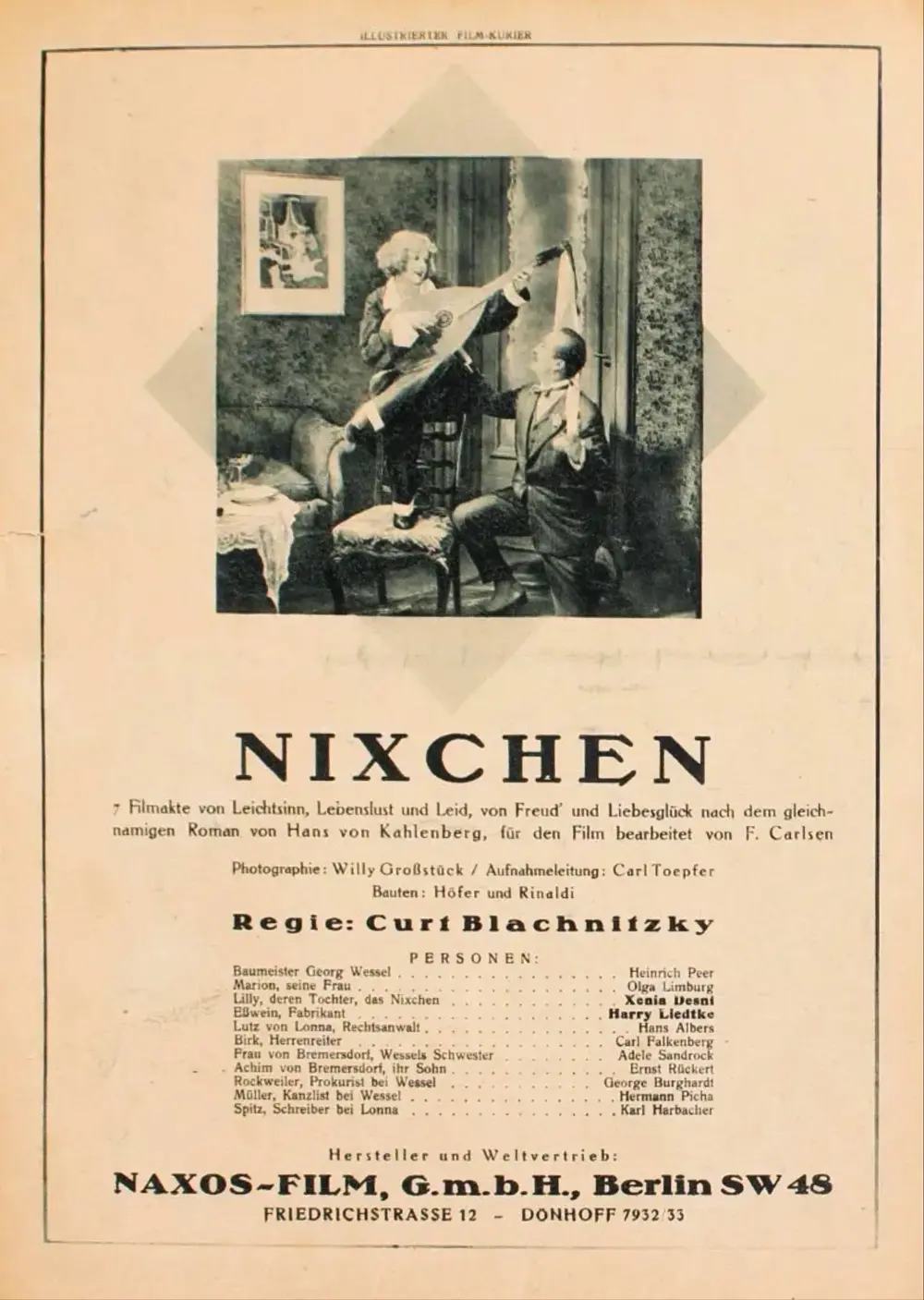
His staging of crowd scenes, while not on the epic scale of a Fritz Lang, is nonetheless impressive. The ballroom sequence, for example, is a whirlwind of movement and social interaction, capturing the intoxicating, yet potentially corrupting, allure of high society. Kahlenberg manages to maintain clarity and focus on Nixchen amidst the chaos, ensuring her emotional journey remains the audience's primary concern. The film’s tone, while leaning towards romantic melodrama, is handled with a surprising degree of restraint, allowing the inherent drama of the situation to unfold organically rather than being forced.
The cinematography in Nixchen is a silent film enthusiast's delight. The unnamed cinematographer (a common oversight in early film credits, though likely an uncredited master) utilizes light and shadow with a painterly precision, creating rich, atmospheric images that enhance the film's emotional depth. The use of soft focus for dreamlike sequences, or sharp, almost stark lighting for moments of harsh reality, demonstrates a sophisticated understanding of visual rhetoric. The film often employs chiaroscuro lighting, particularly in scenes involving introspection or moral ambiguity, adding a layer of psychological complexity.
Consider the scene where Nixchen is confronted with a difficult choice; the subtle play of shadows across her face, obscuring one side while illuminating the other, visually represents her internal conflict. It's a classic silent film technique, but executed here with particular grace and effectiveness. The production design, too, is commendable, meticulously recreating the various social strata of 1920s Berlin. From the cramped, modest living quarters of Nixchen’s early life to the sprawling, ornate ballrooms and drawing-rooms of the wealthy, every set feels lived-in and authentic.
The attention to detail in costumes and props further immerses the viewer in the period. The elegant flapper dresses and tailored suits worn by the elite contrast sharply with the simpler, more functional attire of the working class, serving as visual shorthand for social status and aspiration. This meticulous world-building provides a robust foundation for the narrative, allowing the emotional drama to unfold against a believable and visually engaging backdrop. The film is not 'visually stunning' in a modern, CGI-laden sense, but it is visually intelligent and evocative.
The pacing of Nixchen is undeniably a product of its era. Silent films, by their very nature, often moved at a more deliberate speed, allowing audiences to absorb the visual information and the emotional beats without the constant barrage of dialogue. For modern viewers accustomed to rapid-fire editing and exposition, this can be a hurdle. The film takes its time establishing Nixchen’s world, her aspirations, and the various characters who will influence her journey. While this allows for a deeper immersion into the narrative, there are moments, particularly in the mid-section, where the narrative momentum flags slightly.
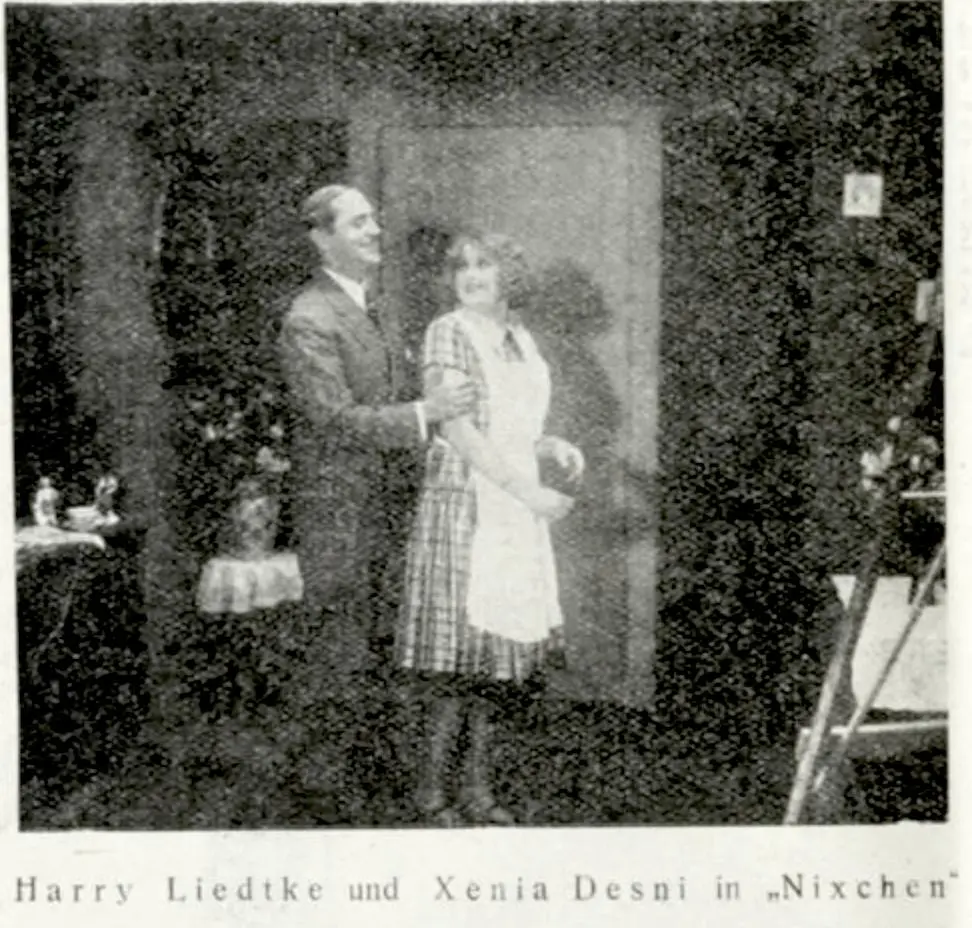
However, this deliberate pace also grants the film a certain contemplative quality. It allows moments of quiet introspection to breathe, emphasizing the internal struggles of its protagonist over external action. The tone is primarily that of a romantic melodrama, tinged with social commentary. It explores themes of class disparity, the corrupting influence of wealth, and the search for genuine happiness beyond superficial appearances. While it flirts with sentimentality, it largely avoids becoming overly saccharine, maintaining a grounded sense of realism thanks to the strong performances and Kahlenberg’s measured direction.
It works. But it’s flawed. The film’s exploration of societal pressures on young women navigating complex relationships feels surprisingly prescient, even today. Its gentle critique of the superficiality of high society, while not groundbreaking, is delivered with conviction. The film occasionally dips into predictable silent-era tropes, but it usually recovers with a genuine emotional beat or a striking visual.
This is the million-dollar question for any film of this vintage. Nixchen is more than just a historical curiosity; it’s a genuinely engaging silent film that offers real value to contemporary viewers, provided they approach it with the right mindset. While it may not possess the avant-garde experimentalism of a The Perils of Divorce or the epic scale of a Cameo Kirby, its strength lies in its intimate portrayal of human experience.
Its themes of self-discovery, the struggle against societal expectations, and the search for authentic connection are universal and remain relevant. The performances, particularly Desni’s, are compelling enough to bridge the temporal gap, drawing the audience into her struggles. It serves as an excellent example of how character-driven drama flourished in the silent era, relying on visual cues and emotional depth rather than dialogue to tell its story effectively. For students of film history, it's an indispensable piece of the Weimar Republic's cinematic output, offering insights into popular tastes and artistic trends of the time.
Nixchen is not a film for everyone, nor does it pretend to be. It is a quiet, contemplative piece of cinema that rewards patience and an appreciation for the unique artistry of the silent era. Xenia Desni’s performance alone is worth the price of admission, anchoring a narrative that, while occasionally slow, resonates with themes that remain pertinent. It’s a film that asks you to slow down, to observe, and to immerse yourself in a world crafted through gesture, light, and expression.
For those willing to make that investment, Nixchen offers a rich, emotionally rewarding experience. It's a reminder that compelling storytelling doesn't require dialogue or special effects, but rather a profound understanding of the human condition and the subtle ways it can be expressed on screen. It’s a flawed gem, certainly, but a gem nonetheless, deserving of a place in any serious film lover's viewing list.
IMDb 6.2
1930
Community
Log in to comment.