DbcultAccessing Vault...
5.4/10
Senior Film Conservator
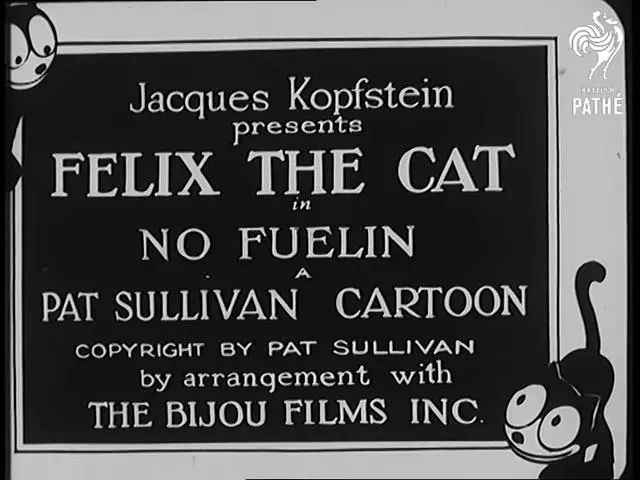
A definitive 5.4/10 rating for a film that redefined the boundaries of cult cinema. No Fuelin' remains a cornerstone of transgressive art.
Is No Fuelin' worth your time in the age of high-definition CGI? Short answer: Yes, but primarily as a masterclass in visual economy and historical wit. It is a film for those who appreciate the skeletal origins of animation, though it may test the patience of viewers accustomed to modern pacing.
This film works because it treats the protagonist’s body as a flexible tool rather than a fixed anatomy. This film fails because the central gag—the search for fuel—is stretched slightly too thin across its brief runtime. You should watch it if you want to see the exact moment where animation transitioned from simple 'moving drawings' into a sophisticated language of character-driven comedy.
No Fuelin' is absolutely worth watching if you are a student of cinema or a fan of the 'rubber-hose' animation style. While it lacks the narrative complexity of contemporary features like The Way of a Girl, it offers a level of pure, unadulterated creativity that is often lost in modern productions. It is a short, punchy reminder that you don't need a massive budget to tell a compelling visual story.
Otto Messmer, the creative force behind Felix, understood something that many of his contemporaries missed: animation is not a replacement for reality, but a rejection of it. In No Fuelin', this is evident from the first frame. When Felix’s car runs out of gas, he doesn't just walk to a station. He engages with the world in a way that is both mechanical and magical.
Take, for instance, the scene where Felix utilizes his own tail. In the world of 1925, a tail wasn't just a body part; it was a crank, a hook, and a question mark. This kind of visual punning was revolutionary. It allowed Felix to inhabit a space between the gritty realism of films like The Silent Lie and the pure slapstick of the era. Messmer’s direction is lean. There is no wasted movement. Every frame serves a purpose, a stark contrast to some of the more bloated live-action productions of the time.
Beyond the animation, No Fuelin' serves as a fascinating cultural time capsule. The 1920s were defined by the boom of the automobile, and with that boom came the inevitable frustrations of maintenance and fuel. Messmer taps into this collective anxiety with a smirk. Felix’s struggle with his car mirrors the real-world frustrations of the first generation of motorists, albeit with a feline twist.
While other films like The Traveling Salesman might have dealt with the logistics of trade and travel, No Fuelin' focuses on the absurdity of our dependence on machines. The film suggests that even in a world of steel and gasoline, human (or feline) ingenuity is the true engine. It is a simple message, but it resonates even today as we face our own technological transitions.
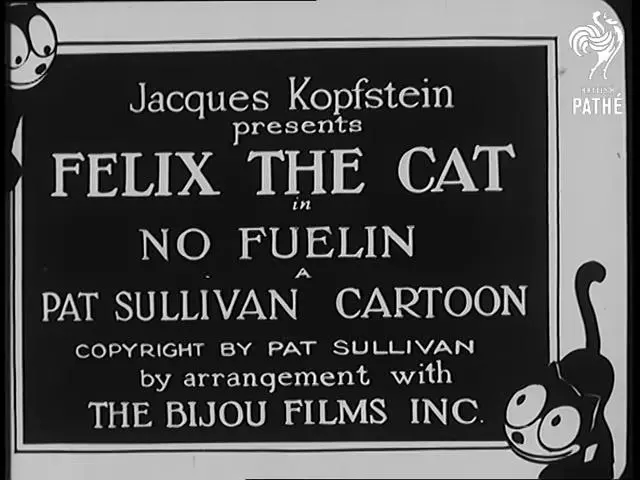
The pacing of No Fuelin' is a bit of a double-edged sword. On one hand, the rapid-fire gags keep the energy high. On the other, the repetition of the 'empty tank' motif can feel slightly redundant. However, Messmer compensates for this by escalating the stakes of each gag. What starts as a simple problem ends in a surrealist crescendo.
The contrast in the black-and-white ink work is exceptionally sharp. Unlike the more muddy visuals found in early prints of The Untamed, the lines in No Fuelin' remain crisp. This clarity is essential for the visual gags to land. If you can't see the specific way Felix’s eyes shift or the way the car vibrates, the comedy dies. Fortunately, Messmer was a master of the silhouette, ensuring that Felix remained expressive even in the simplest compositions.
The animation is fluid and surprisingly modern in its logic. Felix is a genuinely charismatic lead, possessing more personality in his ears than most silent film actors had in their entire bodies. The film is also a perfect length—it doesn't overstay its welcome, making it an easy 'snack' for a movie marathon involving other shorts like The Smilin' Kid.
The lack of a musical score (in its original form) means the viewer is at the mercy of whatever modern track is slapped onto the restoration. Some of the environmental gags feel a bit dated, relying on tropes that were fresh in 1925 but have since been beaten to death by a century of cartoons. It lacks the emotional weight of a film like Umanità, but then again, it’s not trying to be a tragedy.
It is impossible to talk about No Fuelin' without acknowledging the shadow it cast over the industry. Before a certain mouse took over the world, Felix was the king. Messmer’s work here shows a level of cynicism and edge that Disney would later polish away. Felix isn't always a 'good' cat; he is a survivor. He is mischievous, sometimes selfish, and incredibly resourceful. This edge makes No Fuelin' feel more 'adult' than many later animations.
When you compare this to a film like The Fates and Flora Fourflush, you see how animation was pushing boundaries that live-action wouldn't touch for decades. Messmer was playing with the medium, testing its limits, and No Fuelin' is a testament to that experimental spirit.
No Fuelin' is a vibrant piece of cinematic history that remains surprisingly watchable. It works. But it’s flawed. The gags are clever, the character is iconic, and the direction is precise. While it may not provide the narrative depth of The Merchant of Venice, it offers something arguably more important: a glimpse into the birth of a visual language that still dominates our screens today. If you have six minutes to spare, you owe it to yourself to see why Felix was the first true superstar of the silver screen.

IMDb —
1930
Community
Log in to comment.