DbcultAccessing Vault...
Cult Review
Senior Film Conservator
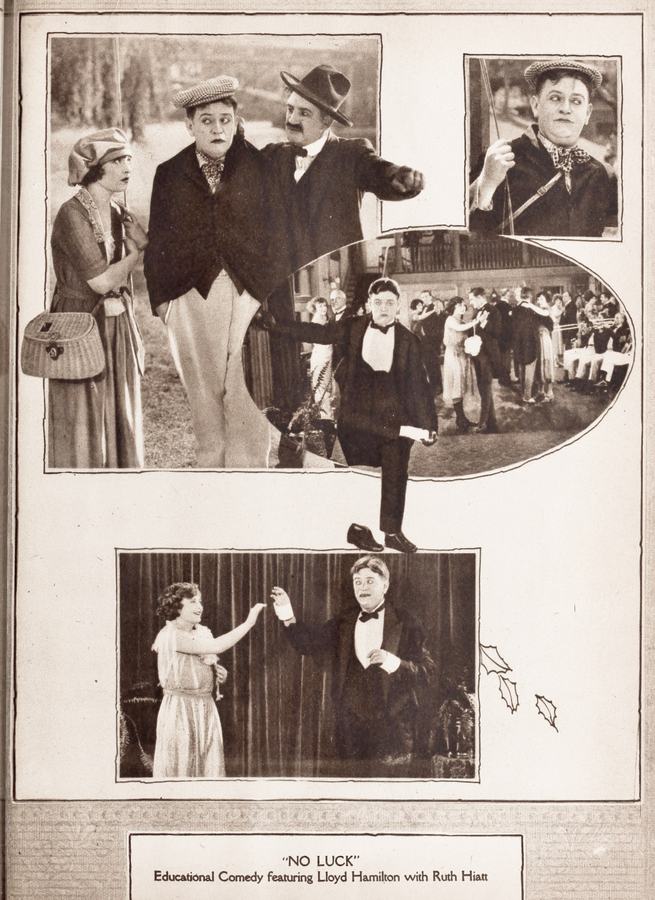
In the vibrant, often experimental, tapestry of early 20th-century cinema, certain films emerge not just as historical artifacts but as fascinating glimpses into the collective comedic consciousness of a bygone era. No Luck, a 1923 silent comedy starring the inimitable Lloyd Bacon, is precisely one such gem. Directed by Archie Mayo, a filmmaker who would later navigate the talkies with considerable success, this short feature stands as a testament to the ingenious storytelling and physical prowess that defined the silent screen. It’s a narrative born from a simple premise, yet it blossoms into a surreal exploration of the subconscious, all triggered by an ill-advised puff of tobacco. Far from being a mere relic, No Luck offers a delightful, if fleeting, journey into the absurd, reminding us of the enduring power of visual comedy and the peculiar anxieties of the human condition.
The film opens with Lloyd, a character portrayed with Bacon's characteristic blend of earnestness and latent susceptibility to misfortune, participating in the season's inaugural fishing tournament at a rather exclusive private club. The atmosphere is one of genteel competition, replete with tweed, tackle boxes, and perhaps a touch of performative masculinity. Lloyd, eager to fit in or perhaps just to assert a newfound maturity, makes a fateful decision. Post-tournament, in a moment of what one might interpret as misguided aspiration, he lights his very first cigar. The immediate aftermath is anything but sophisticated; the world begins to spin, colors blur, and a profound nausea takes hold, swiftly rendering our protagonist incapacitated. This initial scene, though brief, brilliantly sets the stage for the ensuing chaos, establishing Lloyd's vulnerability and the seemingly innocuous catalyst for his extraordinary journey.
What follows is the heart of No Luck: a wild, hallucinatory dream sequence that rivals some of the more elaborate visual spectacles of its time. As Lloyd drifts into unconsciousness, his mind becomes a canvas for the anxieties, desires, and recent experiences that have shaped his day. The fishing club, its members, the very fish he sought to catch, all become distorted, exaggerated figures in his nocturnal drama. We witness a world where the scales of justice might literally be fish scales, where fellow anglers transform into menacing, cigar-chomping giants, and where the trophy fish he failed to land now mocks him with human-like glee. It's a testament to the creative ingenuity of silent film, where the absence of dialogue necessitated a heightened reliance on visual metaphor and physical comedy to convey complex psychological states. The dream is not merely a series of random images; it's a meticulously crafted descent into the subconscious, revealing Lloyd's hidden fears of inadequacy, his social anxieties, and the physical repercussions of his ill-fated foray into the world of tobacco.
At the core of No Luck's appeal is the magnetic performance of Lloyd Bacon. While he is perhaps better known today for his extensive directorial career, his early acting roles, particularly in two-reel comedies such as this, showcase a performer of considerable talent. Bacon possesses that rare ability to convey a myriad of emotions through facial expressions and precise physical movements, a prerequisite for success in the silent era. His portrayal of Lloyd's escalating discomfort, from the initial green hue of nausea to the full-blown contortions of his dream-state, is a masterclass in comedic timing. He doesn't just act; he embodies the character's every twitch and tremor, making the audience feel his plight with an almost visceral empathy.
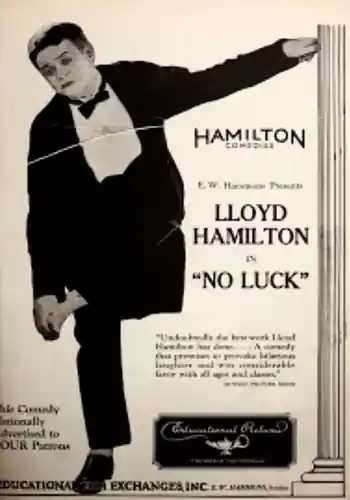
The supporting cast, including Estella Hickman, Tom Kennedy, Ruth Hiatt, Coy Watson, Tom McGuire, Lloyd Hamilton, and Robert DeVilbiss, though perhaps given less screen time, each contribute to the film's vibrant atmosphere. Their reactions to Lloyd's initial collapse and their fleeting appearances in his dream world add layers of comedic texture. Tom Kennedy, often a formidable presence, might appear as a gruff, exaggerated rival, while Estella Hickman could embody the concerned, yet slightly exasperated, observer. These performances, though brief, are crucial in grounding the more fantastical elements of the narrative in a relatable, if exaggerated, reality. Their collective efforts underscore the collaborative nature of silent filmmaking, where every gestural nuance and expressive glance counted towards the overall impact.
Archie Mayo, the film's director, demonstrates a keen understanding of silent comedy's mechanics. His direction of the dream sequence, in particular, is noteworthy. He doesn't shy away from visual trickery and imaginative staging, utilizing camera effects and rudimentary special effects to create a truly disorienting experience. The pacing is brisk, ensuring that the gags land effectively and that the audience remains engaged throughout Lloyd's fantastical journey. Mayo's ability to seamlessly transition from the mundane reality of the fishing club to the chaotic realm of the subconscious speaks volumes about his nascent talent. He orchestrates a symphony of sight gags and escalating absurdity, building tension and humor through purely visual means. This approach is reminiscent of the dream sequences found in other silent films that played with altered realities, such as the more dramatic and fantastical elements sometimes seen in films like Jagd nach dem Glück, though No Luck firmly plants its feet in the realm of lighthearted comedy.
While ostensibly a straightforward comedy, No Luck subtly explores several compelling themes. The most apparent is the consequence of indulgence and the perils of succumbing to peer pressure or the desire to appear sophisticated. Lloyd's foray into cigar smoking is a direct catalyst for his ordeal, serving as a cautionary tale wrapped in a comedic package. Furthermore, the film delves into the nature of dreams as a reflection of our waking anxieties. Lloyd's subconscious mind processes his recent experiences, exaggerating his failures and fears, turning them into a vivid, often frightening, spectacle. This psychological dimension adds a layer of depth to what might otherwise be a simple slapstick affair.
The fishing club setting itself can be seen as a microcosm of societal expectations and performances. Lloyd's initial desire to participate and perhaps impress others highlights the social pressures of the era. The dream sequence, then, becomes a kind of internal rebellion or a subconscious critique of these very pressures. It's a moment where the polite facade crumbles, revealing the chaotic inner world beneath. This playful satire of social customs and personal aspirations aligns with the spirit of many silent comedies, which often used humor to gently poke fun at the conventions of the day.
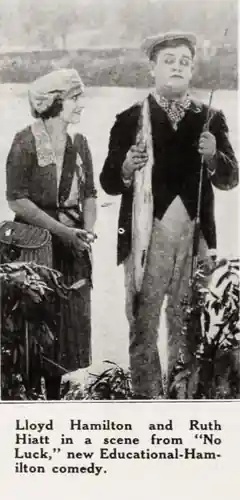
The cinematography of No Luck, though not credited to a specific individual in the provided information, would have been paramount in conveying the story's visual gags and the disorienting nature of the dream. Silent films relied heavily on expressive lighting, dynamic camera angles, and creative editing to communicate narrative and emotion. For the dream sequence, one can imagine inventive use of superimpositions, dissolves, and perhaps even early forms of animation or stop-motion to achieve the desired surreal effect. The choice of sets and props for the fishing club would have been carefully selected to establish the initial tone of genteel sport, contrasting sharply with the distorted, minimalist, or exaggerated backdrops of the dream world.
The efficacy of the film lies in its ability to tell a complete story with minimal intertitles, relying instead on the universal language of visual comedy. This emphasis on visual narrative makes it accessible even to modern audiences, provided they are attuned to the stylistic conventions of the era. The exaggerated gestures, the rapid-fire succession of gags, and the clear visual cues for Lloyd's physical and mental state are all hallmarks of a well-executed silent comedy. One might draw parallels to the physical comedy and inventive stunts seen in other contemporary shorts like Hustlin' Hank, though No Luck carves its own niche with its unique dream-state premise.
Like many silent films, No Luck might not occupy the same hallowed ground as the masterpieces of Chaplin or Keaton in the popular consciousness. However, for film historians and enthusiasts of early cinema, it represents a valuable piece of the puzzle, illustrating the breadth and diversity of comedic output during the 1920s. It showcases a period where filmmakers were constantly experimenting, pushing the boundaries of what was possible with the nascent medium. The film's short runtime, typical of many comedies of the era, meant it was often screened as part of a larger program, perhaps accompanying a dramatic feature like The Woman Pays or a grand epic such as Quo Vadis?, providing a much-needed burst of levity.
Its continued existence allows us to appreciate the foundational elements of screen comedy that still resonate today. The universal themes of physical discomfort, social embarrassment, and the bewildering logic of dreams are timeless. While the specific context of a 1923 fishing club and a first cigar might feel quaint, the underlying human experience remains profoundly relatable. The film serves as a charming reminder that even in an age without synchronized sound, cinema possessed an incredible capacity to evoke laughter, stir imagination, and subtly comment on the human condition. It underscores the ingenuity of writers like Archie Mayo (credited here solely as writer, though he directed as well) in crafting narratives that, despite their brevity, left a lasting impression through sheer inventiveness and comedic flair. For those interested in the evolution of cinematic comedy, or simply seeking a delightful diversion into the past, No Luck is a serendipitous discovery, a small but significant testament to the enduring magic of the silent screen.
IMDb —
1916
Community
Log in to comment.